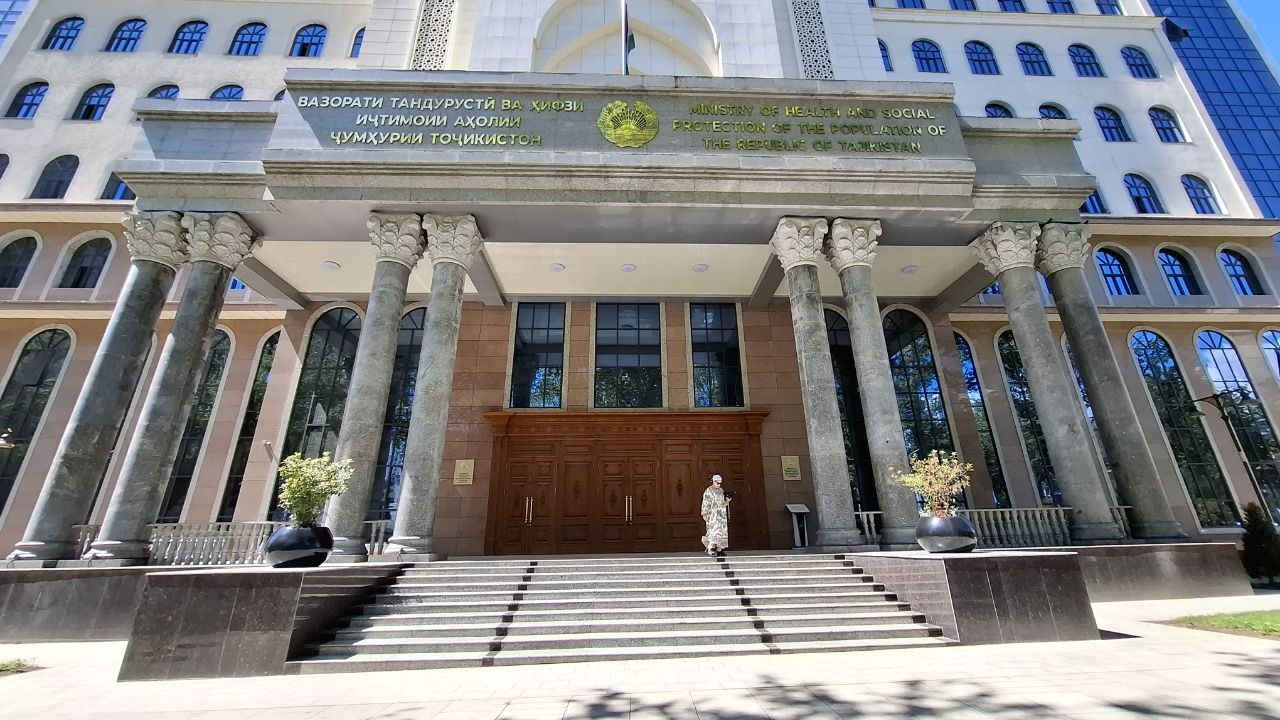
The Ministry of Health and Social Protection of the Population of Tajikistan responded to a video on social media, claiming that after taking the anti-parasitic drug “Albendazole,” the health condition of several schoolchildren worsened and they were hospitalized.
The video circulated on social media a few days ago. In it, a woman shows a weakened schoolchild and claims that after taking “Albendazole,” intended for the treatment of helminthiasis, the health of a student in the Farhor district deteriorated.
In a statement by the ministry, published on April 8, it is stated that the hospitalization of children was not related to the intake of the drug. The investigation revealed that the video was shot in the Mir Said Ali Hamadoni district, and the child in the footage is a 10-year-old minor.
“Medical examination showed that the deterioration of the boy’s condition was not related to the intake of ‘Albendazole.’ The child was diagnosed with type 1 diabetes, the main cause of which is heredity,” the ministry noted.
From April 6 to 11, as part of the prevention of helminthiasis among children aged 7–14 in cities and districts of the country, “mass deworming with the drug ‘Albendazole,’ 400 mg” continues. No adverse reactions among students have been recorded, the Ministry of Health added.
The Ministry of Health urged citizens “not to trust rumors and unfounded panic regarding medical services.”
Earlier, the agency had already refuted rumors about the harm of other drugs, including “Pantogam,” as well as information about an “unknown group of doctors going door-to-door,” emphasizing that such information is not true.