DUSHANBE, February 11, 2014, Asia-Plus – The World Bank Vice President for Europe and Central Asia, Ms. Laura Tuck, visited Tajikistan on February 9-11 as part of her trip to the countries of Central Asia.
According to the World Bank Country Office in Tajikistan, the goal of the visit was to discuss with key counterparts the World Bank’s current program in the country, which focuses on supporting higher living standards for the Tajik people.
During the visit, Ms. Tuck met with the President of Tajikistan, Emomali Rahmon, and counterparts in the Government and city administration; visited a World Bank-financed water supply project in Dushanbe; and discussed the role of education in poverty reduction with students and faculty of the Tajik National University.
During the meeting with President Rahmon, Ms. Tuck reportedly discussed the World Bank Group’s ongoing development program in Tajikistan, which includes 13 projects totaling US$223 million on a grant basis, as well as the Bank’s new Country Partnership Strategy for FY15-18. The current program aims to increase private investment for sustainable growth, while addressing human development needs such as food security, access to drinking water, and better health and education services.
“Strong economic growth averaging 8 percent annually over the past decade has helped Tajikistan achieve impressive results in reducing poverty. The World Bank is pleased to work with the Government on reforms that have contributed to better delivery of social services and greater opportunities for farmers and businesses,” said Ms. Laura Tuck, the World Bank Vice President for ECA. “With the new Country Partnership Strategy for Tajikistan, which is currently under development, the World Bank is committed to further support Tajikistan by investing in people – the country’s greatest asset – and undertaking second-generation reforms that are needed to build institutions to enable private sector growth.”
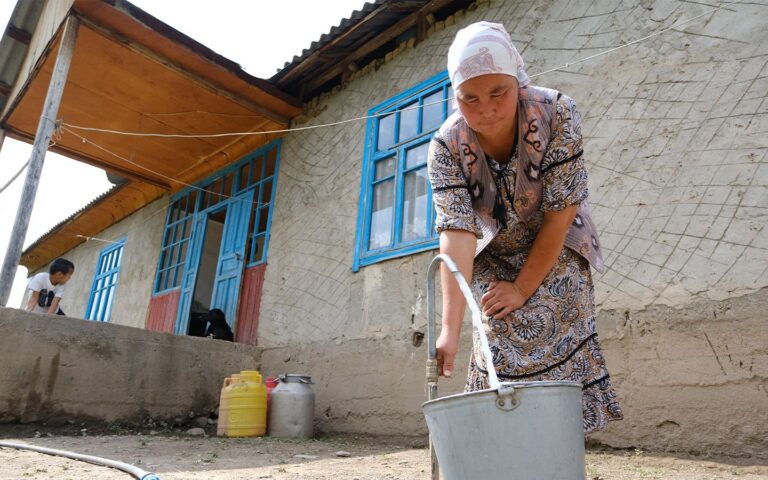
As part of her trip, Ms. Tuck visited the “Samotechnaya” Water Treatment Plant site, associated with the Second Dushanbe Water Supply Project (DWSP2). This project, financed through a US$16 million International Development Association (IDA) grant, aims to improve the quality and reliability of water supply services to the residents of Dushanbe, as well as improve the performance of the city’s water utility. The ongoing Municipal Infrastructure Development Project supports the Government of Tajikistan’s efforts to increase access to improved water and sanitation services in several municipalities.
During a lecture at Tajik National University in Dushanbe, Ms. Tuck stated that better education will be key to further reducing poverty, strengthening the middle class, and achieving more equitable outcomes for the men and women of Tajikistan. These outcomes are in line with the World Bank Group’s twin goals of supporting countries in reducing poverty and ensuring that the poorest members of society can share the growing prosperity of the nation. As Ms. Tuck noted, Tajikistan’s young population is one of its greatest assets in the quest for higher growth and living standards. To harness this potential, however, the education system will need to equip young people with the right skills to compete effectively in the labor market.
The World Bank, as one of Tajikistan’s long-standing partners in the education sector, recently joined other development partners in supporting the Fourth Global Partnership for Education Fund Grant for a total of US$16.20 million. The grant aims to support improvements in pre-school and general education and strengthens institutional capacity to undertake reforms in the education sector.
Since 1996, the World Bank has provided approximately US$900 million in grants from IDA and trust fund resources to Tajikistan. The largest share of the Bank’s current portfolio is in agriculture and rural development (34%), followed by water (19%), energy (16%), public sector management and economic policy (10%), education (8%), health and social protection (8%), and private sector development (5%). The World Bank Group is committed to further support Tajikistan as it strives to improve the lives of its people and meet the aspirations of its young and growing population.