DUSHANBE, September 24, Asia-Plus — On the sidelines of the 69th session of the UN General Assembly, Tajik Prime Minister Qohir Rasoulzoda held a number of bilateral meetings in New York.
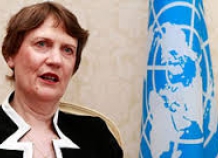
Subhiddin Muhiddinova, a senior aide to the president’s press center, says Rasoulzoda’s talks with the United Nations Development Programme (UNDP) Administrator Helen Clark focused on cooperation between Tajikistan and the United Nations on the issues of human development, social care, sustainable development, etc.
While in New York, Prime Minister Qohir Rasoulzoda also held talks with Serbian
First Vice-Premier and Foreign Minister Ivica Dacic. The two reportedly discussed issues related to expansion of bilateral trade and economic cooperation between Tajikistan and Serbia.
Helen Elizabeth Clark (born 26 February 1950) was the 37th Prime Minister of New Zealand, serving three consecutive terms from 1999 to 2008. She was the first woman elected, at a general election, as the Prime Minister, and was the fifth longest serving person to hold that office.
Helen Clark became the Administrator of the United Nations Development Programme on 17 April 2009, and is the first woman to lead the organization. She is also the Chair of the United Nations Development Group, a committee consisting of the heads of all UN funds, programs and departments working on development issues. The current government of New Zealand strongly supported her nomination, along with Australia, the Pacific Island nations and Prime Minister of the United Kingdom, Gordon Brown. She also received the support of the five countries on the UNDP board (Iran, Haiti, Serbia, The Netherlands and Tanzania) and was unanimously confirmed by the General Assembly on March 31. She was sworn in by UN Secretary-General Ban Ki-moon on 27 April 2009. In this position, Forbes deemed Helen Clark the 23rd most powerful woman in the world.
The United Nations Development Programme (UNDP) is the United Nations’ global development network. Headquartered in New York City, UNDP advocates for change and connects countries to knowledge, experience and resources to help people build a better life. It provides expert advice, training, and grant support to developing countries, with increasing emphasis on assistance to the least developed countries.
UNDP has been on the ground in Tajikistan since 1994. UNDP Tajikistan works in partnership with the Government of Tajikistan and plays an active part to harmonize the efforts of all the UN agencies active in the country. The development work of the UN agencies in Tajikistan is regulated by the United Nations Development Assistance Framework (UNDAF).