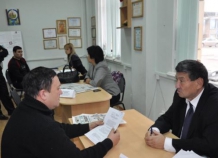
DUSHANBE, October 23, 2014, Asia-Plus — Tajikistan has asked Russia to organize the history and language tests for migrant workers inside Tajikistan.
Mahmadsaid Ubaidulloyev, Chairman of the Majlisi Milli (Tajikistan’s upper chamber of parliament) met with Russian First Deputy Prime Minister Igor Shuvalov, who is also co-chairman of the Tajik-Russian commission for trade and economic cooperation, in Moscow in the evening of October 22.
Shavkat Saidov, an aide to the Majlisi Milli speaker, says the sides discussed state and prospects of further expansion of bilateral cooperation between Tajikistan and the Russian Federation.
Issues related to application of the simplified system of the Russian history and language tests for Tajik migrant workers were also among major topics of the meeting.
The Tajik side reportedly asked to consider the possibility of organization of the tests for migrant workers inside Tajikistan.
We will recall that according to new regulations that came into force on September 1 this year, those applying for work permits in Russia will need to pass a Russian history and civics exam. The new requirement, which adds to an existing mandatory language test for foreign workers, will affect millions of migrants seeking employment in the country.
Russian officials portray the measure, signed into law by President Vladimir Putin on April 21, as an effort to legalize and better integrate migrant workers, most of whom come from former Soviet Central Asia and many of whom work illegally in the shadow economy.
Four universities in Moscow and Saint Petersburg — including the capital”s People”s Friendship University, which has a long history of teaching foreign students — have been authorized to organize the tests in conjunction with educational institutions across the country.
Meanwhile, Svetlana Gannushkina, who heads the Moscow-based advocacy group Migration and Rights, dismisses the new requirement as “pointless both in legal and practical” terms. She also warns that the new tests could easily become a pretext for corruption.