DUSHANBE, January 28, 216, Asia-Plus – Human Rights Watch (HRW) has released the
World Report 2016
, which is its 26th annual review of human rights practices around the globe. It summarizes key human rights issues in more than 90 countries and territories worldwide, drawing on events from the end of 2014 through November 2015.
The report reflects extensive investigative work that Human Rights Watch staff undertook in 2015, usually in close partnership with human rights activists in the country in question.
According to the report, Tajikistan’s already poor rights record dramatically worsened in 2015, as authorities declared the country’s leading opposition party a terrorist organization and banned it, imprisoned approximately 200 opposition activists, extradited and kidnapped government critics abroad, arrested several lawyers and at least one journalist, and harassed workers at nongovernmental organizations (NGOs) with onerous checks.
As in previous years, the government regularly blocked numerous Internet sites and continued a campaign to enforce severe restrictions on religious practice, the report says, noting that NGOs reported several cases of torture and ill-treatment in pretrial custody and prisons. Domestic violence against women also continues to be a serious problem.
The report notes that Tajik authorities expanded repressive measures against the political opposition last year. Since October 2014, authorities have reportedly actively sought to arrest anyone associated with the opposition organization Group 24, convicting several people in Tajikistan on vague charges of extremism and seeking the extradition of activists for the group who live in Russia, Belarus, and Moldova.
In the run-up to Tajikistan’s parliamentary elections, the government sought to suppress the activities of the Islamic Revival Party of Tajikistan (IRPT). In March, for the first time in Tajikistan’s modern history, the party was unable to win any seats in parliamentary elections. In June, IRPT’s leader, Muhiddin Kabiri, went into exile, fearing prosecution on bogus charges, according to the report. In public statements and sermons, some officials and state-controlled imams have tried to link the IRPT to Islamic terrorism.
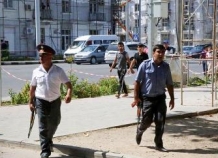
The Justice Ministry banned the party in August. In September, following clashes between government forces and militants loyal to Abduhalim Nazarzoda, the deputy defense minister, which left at least 17 fighters and 9 police officers dead, authorities arrested dozens of IRPT members, accusing them of involvement in the violence, despite a lack of evidence. By November, authorities had reportedly arrested or detained approximately 200 IRPT members as well as at least 3 lawyers, who sought to represent the detained IRPT members. The charges brought against them for fraud appeared to be trumped-up and retaliatory for their attempts to represent the detained IRPT members.
The report noted that authorities’ restrictions on media freedoms and access to independent information, including on the Internet, and the intimidation of journalists and NGOs, violated Tajikistan’s obligations on freedom of expression.
According to the report, Tajikistan severely restricts religious freedom, regulating religious worship, dress, and education, and imprisons individuals on overbroad charges of religious extremism. Regulations also restrict the naming of children, headscarves are banned in educational institutions, and beards are prohibited in public buildings. Authorities suppress unregistered Muslim education throughout the country, control the content of sermons, and have closed many unregistered mosques. Authorities kept in place a Parental Responsibility law, which requires parents to prevent their children from participating in religious activity until they turn 18.
During a June visit to Tajikistan, United Nations Secretary-General Ban Ki-moon urged the government to strengthen “national coordination mechanisms and [implement] UN human rights recommendations holistically and in cooperation with civil society,” emphasizing the importance of Tajikistan’s second Universal Periodic Review, coming in April 2016. In June, the European Union held its annual human rights dialogue with Tajikistan, raising concerns about torture and restrictions on freedoms of expression and religion. For the third year in a row, the United States Commission on International Religious Freedom recommended that Tajikistan be designated a “country of particular concern,” highlighting “systematic, ongoing, [and] egregious violations of religious freedom,” but the Obama administration elected not to make that designation, the report says.