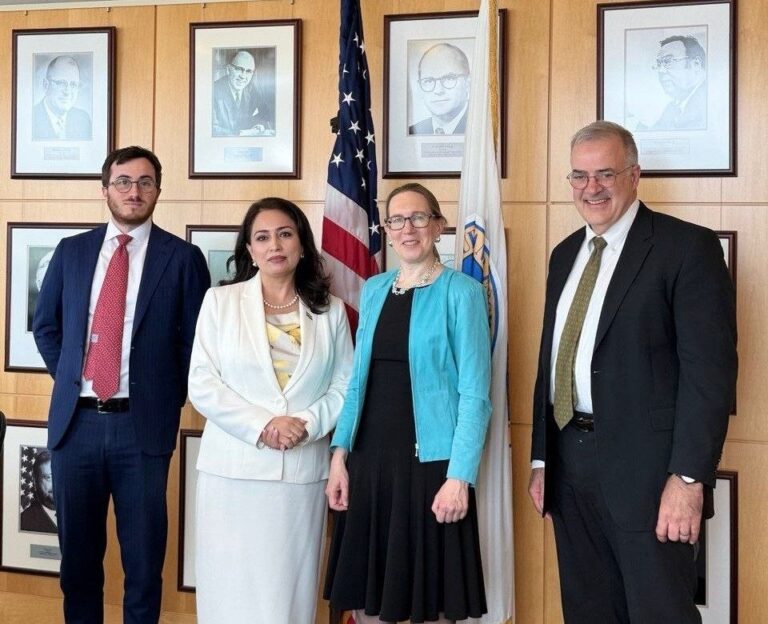
DUSHANBE, August 17, 2016, Asia-Plus – The Eurasian Development Bank (EDB), as the Resources Manager of the Eurasian Fund for Stabilization and Development (EFSD), and the Republic of Tajikistan signed a US $40 million loan agreement on August 15.
The EDB notes that the loan will be provided to support economic reforms in the country in 2016-2017 in two equal tranches.
The signatories on the part of EDB and Tajikistan were Dmitry Pankin, Chairman of the Management Board, and Abdusalom Qurboniyon, Minister of Finance, respectively.
Tajikistan has reportedly complied with all conditions precedent for the credit as set forth by the EFSD Council’s resolution dated December 8, 2015.
The first tranche amounting to US $20 million is planned to be extended before end-August. The worsened economic situation in the region in recent years has had a negative effect on national revenues and increased Tajikistan”s debt burden. The significant reduction in money remittances has affected the foreign exchange market and fiscal revenues. In this context, the abandonment of multiple exchange rates in mid-February 2016, resulting from the efforts to eliminate distortions in the market exchange rate formation and de-dollarize the economy, has helped to stabilize the foreign exchange market. The mid-term expectations are that the optimization of customs and tax preferences (by improving the transparency of information about respective rates and abandoning inefficient preferences) will help to support to the public budget significantly.
This optimization is reportedly the key condition for the provision of the second tranche of the credit, also totaling US $20 million. The date for checking compliance with the conditions of the second tranche will be determined during the Resources Manager”s visit to Tajikistan scheduled for early September 2016.
The Eurasian Development Bank (EDB) is an international financial organization founded by Russia and Kazakhstan in 2006. The members of the Bank are Russia, Kazakhstan, Armenia, Tajikistan and Belarus (2010). Other states or international organizations can become members by joining the Agreement Establishing the EDB. The Bank’s authorized capital was formed of contributions by its member states: Russia (US$1billion), Kazakhstan (US$500 million), Armenia (US$100,000), Tajikistan (US$500,000) and Belarus (US$15 million). The authorized capital may be increased by resolution of the Bank’s Council. The EDB’s current charter capital totals US$7 billion. The Bank has the status of an international organization, and is subject to international law.