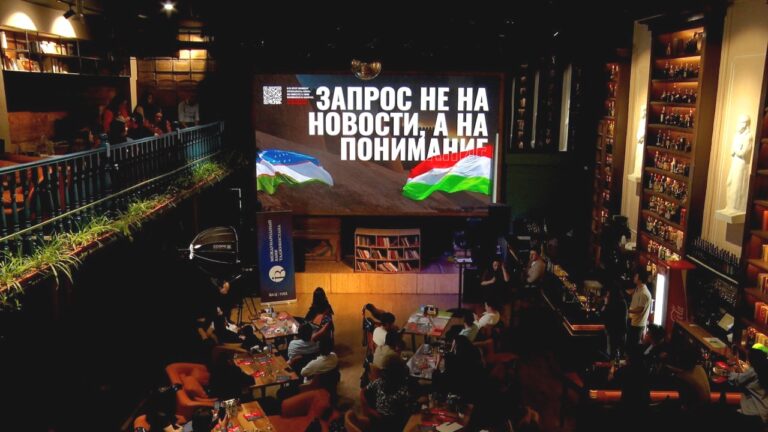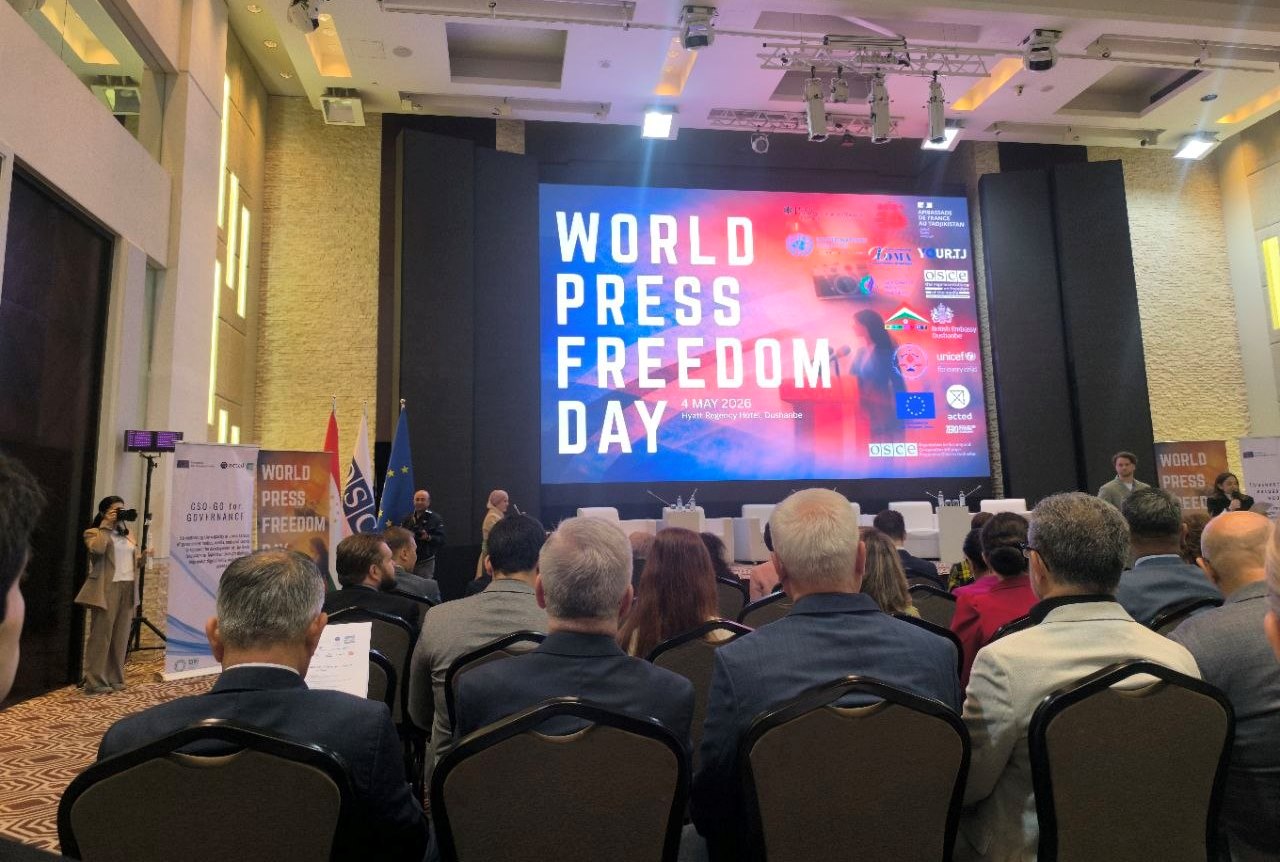
On May 4, a conference dedicated to World Press Freedom Day was held in Dushanbe. This event, organized under the title “Shaping a Peaceful Future: Promoting Press Freedom for Human Rights, Development, and Security,” was intended to reflect the real picture of freedom of expression in the country. However, as participants and observers noted, many fundamental problems of Tajik journalism remained unaddressed.
The conference began with speeches from diplomats and government representatives. This was followed by two group sessions: one on new technologies and artificial intelligence in journalism, and the other on current media issues in Tajikistan and the world.
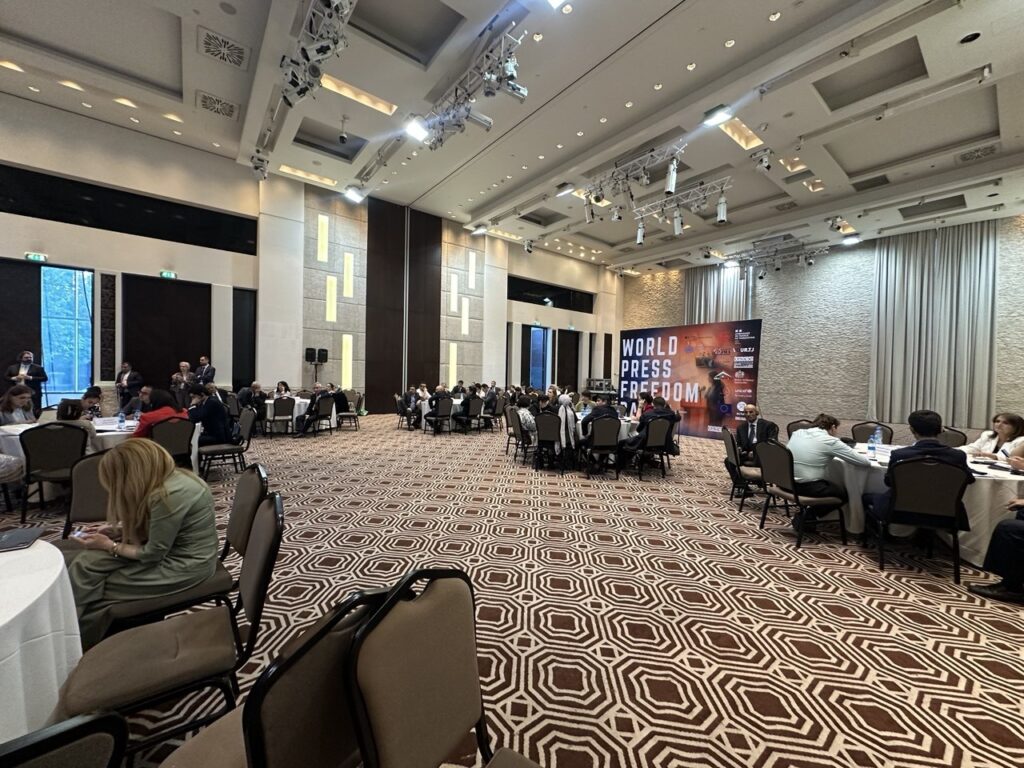
As part of the conference, seven roundtables were organized on topics such as journalistic ethics, legal safety of journalists, journalism education, digital literacy, the role of women in media, and access to official information. However, according to participants, all these discussions seemed more like attempts to avoid pressing issues.
The presence of independent media is a sign of a country’s strength
In his speech, Deputy Head of the Information and Press Department of the Ministry of Foreign Affairs of Tajikistan, Saidjon Shafizoda, noted that the press is a “powerful spiritual force and a reliable partner of the state.” He stated that hundreds of newspapers, magazines, television, and radio channels “freely operate” in the country, and the government pursues a policy of information transparency.
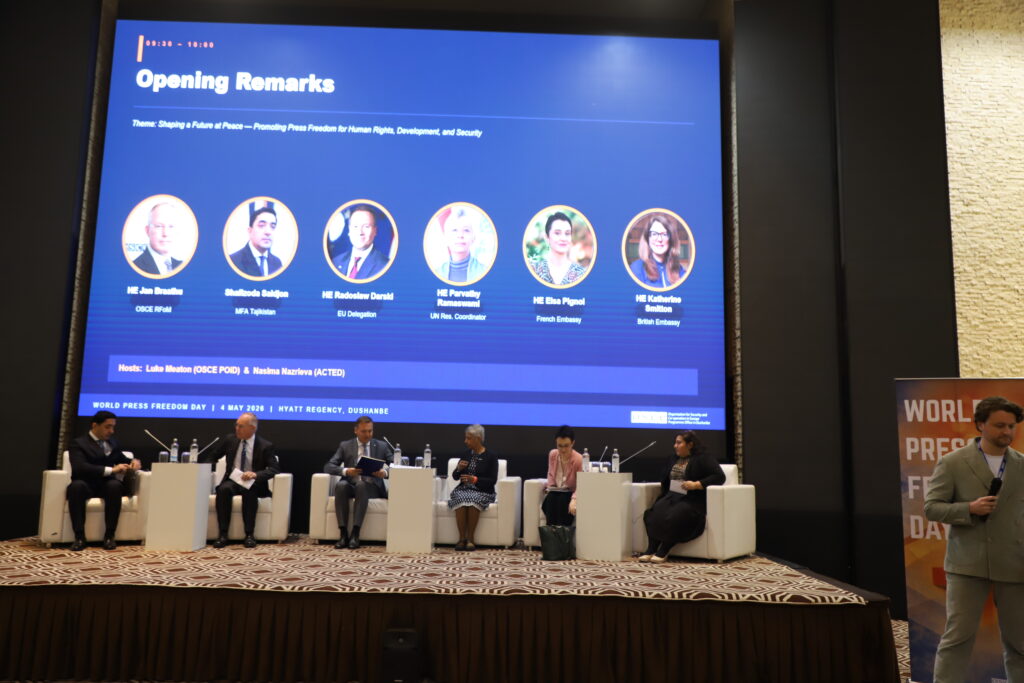
Radosław Darski, the Ambassador of the Delegation of the European Union to Tajikistan, noted in his speech that Tajikistan ranks 150th in the 2026 Press Freedom Index by Reporters Without Borders, reflecting the real problems journalists face daily.
Darski urged the government of Tajikistan to review the cases of imprisoned journalists and protect press freedom within existing laws.
He also announced that the European Union is allocating 15 million euros to support independent media, journalistic investigations, and urgent assistance to journalists.
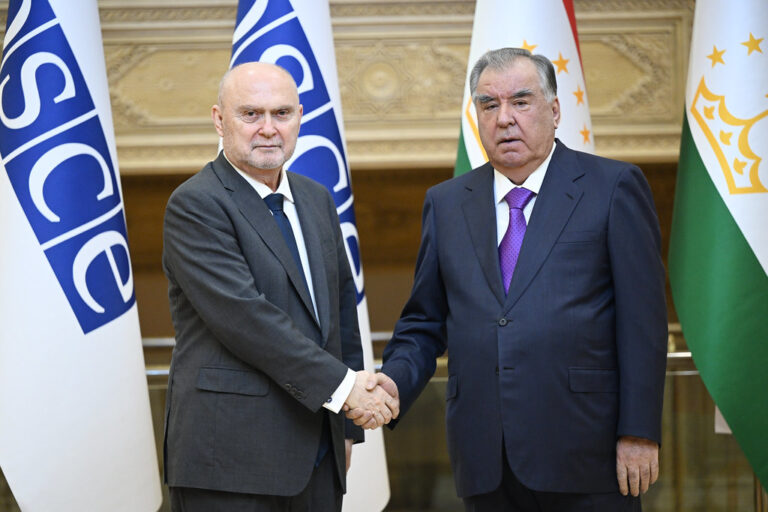
OSCE Representative on Freedom of the Media (RFoM) Jan Braathu stated that press freedom is the foundation of democracy, and the presence of independent media in a country is a sign of strength, not weakness. He emphasized that the gap between commitments and their implementation is widening but did not mention specific problems of Tajik journalists.

“Festive atmosphere was not felt”
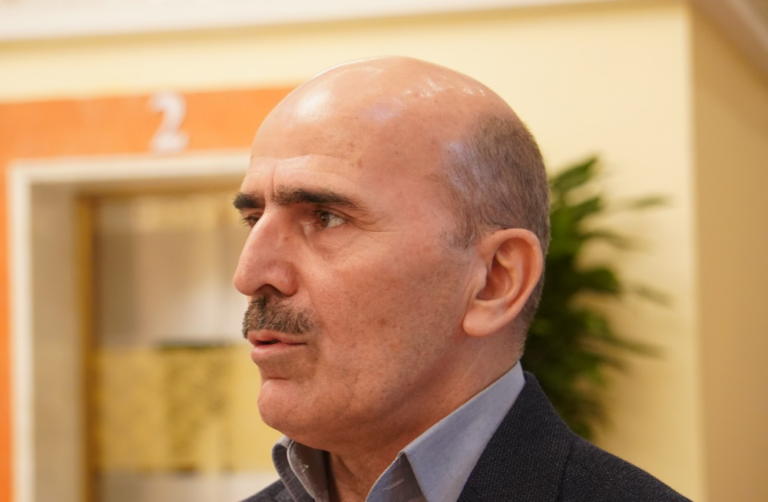
According to Bahmanyor Nodirov, head of the Editorial Office of the Asia-Plus Media Group, the conference covered important topics; however, the festive atmosphere was not felt.
Freedom in stagnation
Over the past 15 years, the media situation in Tajikistan has undergone significant changes. The exit of publications such as Millat, Nigoh, Ozodagon, and news agencies Tojnews and Ozodagon, as well as the near-total absence of socio-political media raising pressing questions demonstrate the weakness of independent media in the country.
During this period, not a single national private television company has been established in Tajikistan; all attempts in this direction have ended in failure.
According to statistics published by the Ministry of Culture of Tajikistan, over the past decade, the number of independent media in the country has significantly decreased. According to experts, today, most publications have become information platforms for ministries, departments, and other state organizations, and the number of truly active independent publications does not even reach 10 titles.
In international rankings, the main reason for this process is called the suppression of freedom of expression, pressure on journalists, and the closure of media in recent years, but official bodies in Tajikistan do not voice these factors.