In April 2026, there was a noticeable increase in food and fuel prices in Tajikistan, intensifying the financial burden on households. This is stated in the market review by the United Nations World Food Programme (WFP) in Tajikistan.
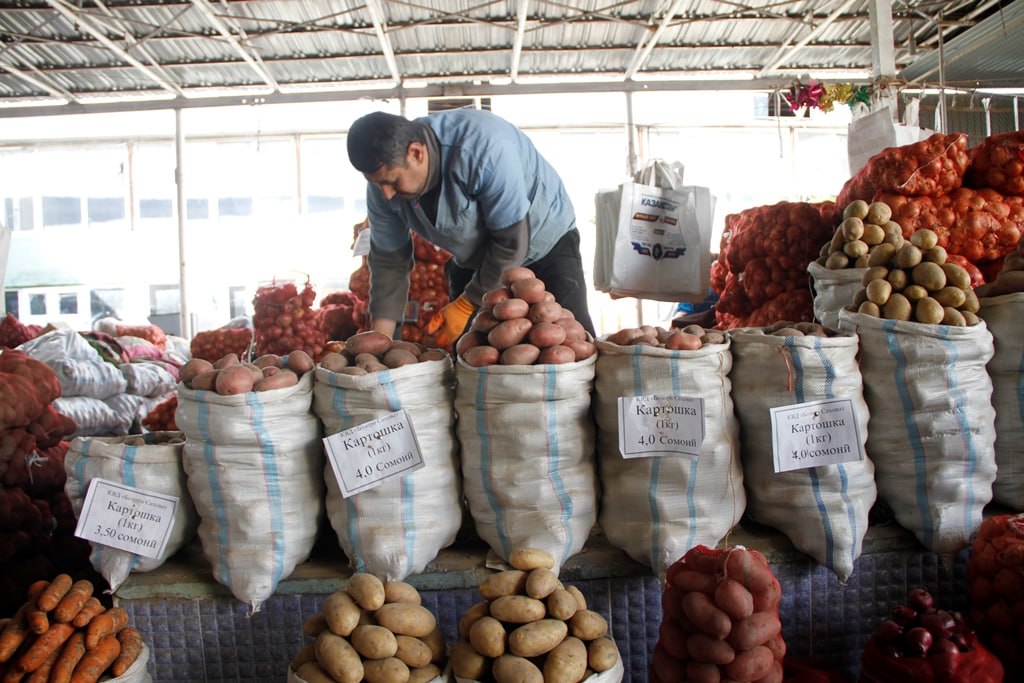
According to the WFP, potato prices in April were 23.4% higher than the five-year average. The main reason for the increase was the reduction in winter stocks before the arrival of the spring harvest on the markets.
The cost of the national food basket reached 1,872 somoni, which is 7.9% above the five-year average level. At the same time, fuel prices rose sharply: gasoline increased by 6.8%, and diesel fuel by 8.1% compared to the previous month.
The organization notes that regional price differences persist. In the Gorno-Badakhshan Autonomous Region (GBAO), expenses remain higher due to geographic isolation and transportation constraints, while the districts subordinate to the center recorded the most noticeable deviation from historical norms.
The somoni exchange rate strengthened to 9.56 somoni per US dollar, which helped contain import costs. However, supply-side pressure continues to affect prices.
According to the forecast, potato prices may start to decline from May as the new harvest arrives on the markets. The cost of the food basket may also stabilize if fuel prices do not continue to rise. Meanwhile, the purchasing power of the population remains a concern, as household incomes do not keep pace with rising expenses.
When it is said that the cost of the national food basket reached 1,872 somoni, it means that, on average, in the country, one needs to spend 1,872 somoni to purchase such a set of essential products.
The phrase “7.9% above the five-year average level” means that typically in April over the past five years, such a set of products cost less. Now it is almost 8% more expensive than the average in previous years.
Regarding fuel, it means the following: compared to the previous month, gasoline and diesel have become noticeably more expensive. Gasoline increased on average by 6.8%, diesel on average by 8.1%. This is important because fuel affects not only drivers. If gasoline and diesel become more expensive, transporting products also becomes more costly, which can further increase prices for goods in stores and markets.
Previously, in March, the cost of the food basket became 6.9% higher than the five-year average level.
Compared to February, in March, there was a slight increase: potatoes +0.7%, rice +0.6%, premium wheat flour +1.1%, first-grade wheat flour +1.5%, sugar +1.4%, vegetable oil +1.8%.
So the main goods that significantly pressured prices were potatoes and rice, and in April, there was a strong increase in fuel, which could further affect the cost of delivery and products.