China Nonferrous Gold Limited, the mineral exploration and mining company currently mining the Pakrut Gold Project in Tajikistan, intends to invest additional 70 million U.S. dollars in development of the deposit.
According to the State Committee on Investment and State-owned Property Management of Tajikistan (GosKomInvest), an agreement on development of the Pakrut Gold Project in the Vahdat district has been recently signed in Dushanbe.
“To-date, the Chinese company has invested more than 180 million in the project,” an official source at GosKomInvest told Asia-Plus in an interview.
According to him, the additional funds will go to financing construction works, improvement of road infrastructure and engineering facilities, and development of the ore mill operational efficiency.
Recall, the first gold ingots were poured at the Pakrut Gold Project on December 29, 2015.
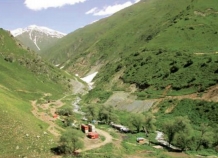
Pakrut gold mine, located approximately 120 kilometers north-east of Dushanbe, is owned by China Nonferrous Gold (formerly known as Kryso Resources). The mine development is being undertaken in two phases, which are expected to cost $250 million in total.
1,300 people now work for the Pakrut Gold Project and more than 60 percent of them are nationals of Tajikistan.
China Nonferrous Gold Limited (CNG) (formerly Kryso Resources Corporation Limited) is a London Stock Exchange AIM-listed mineral exploration and development company, focused on projects in Tajikistan.
The mining license for the Pakrut Gold Project was issued in January 2012 and is valid until November 2030. Construction of the mine began in September 2012 and operations are expected to commence in 2014. As of March 2014, the main decline was developed to a depth of 600m out of the planned 1,800m. The west ventilation access decline was developed to 285m out of the planned 520m.
According to the Mining Technology site, the mine is estimated to process 660,000t of ore per annum initially and 1.32 million tons per annum from 2017.
The JORC-compliant resources of Pakrut gold mine are estimated at 4.72 million ounces of gold at a cut-off grade of 0.5g/t.
The mine is expected to extract 2,000t of ore per day and approximately 9.8 million tons over its estimated 19-year life.
The reserves of the Pakrut project under the Russian classification system, which total 1,257,454oz Au at a cutoff grade of 0.5g/t, were approved by Tajikistan’s State Committee for Reserves on December 15, 2008.
China Nonferrous Gold Limited is the first foreign company to obtain 100% ownership of a mining and exploration project in Tajikistan.