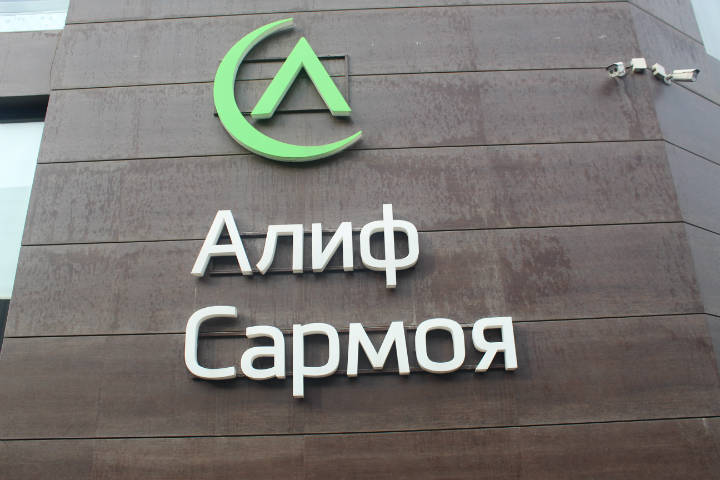
Tajikistan’s microfinance organization, Alif Sarmoya, has opened its financial technology company in Uzbekistan. It has reportedly done so in order to use the preferential tax treatment offered by the Mirzo Ulughbek Innovation Center.
The company currently operates in Tashkent but it plans to expand its operations to other regions of Uzbekistan in the future.
“The Microloan Deposit-taking Organization (MDO) Alif Sarmoya has established its financial technology company in Uzbekistan in order to use the preferential tax treatment of the Mirzo Ulughbek Innovation Center for IT-efforts of the company in the whole region,” an official source at Tashkent-based company of Alif Sarmoya told Asia-Plus in an interview.
“The Government of Uzbekistan realizes the significance of the IT sphere for the country’s economic development, and therefore, it has launched a number of initiatives aimed at development of IT-industry in the country,” the source said.
The Mirzo Ulughbek Innovation Center was established in 2017 for the purpose of promoting the development of the information technology industry in Uzbekistan. Resident companies can be located anywhere in Uzbekistan
Alif Sarmoya (Alif Capital) is the first micro-financing organization in Tajikistan, which uses the principles of Islamic Finance.
Established in August 2014 when the law regulating Islamic finance was finally enacted, the finance company is located in Dushanbe.
In 2014, Alif Sarmoya launched consumer credit which was dubbed as “Befoiz” (interest-free) by offering short-term consumer loans (4–6 months) to its customers.
In 2015, over the first nine months of its operation, Alif Sarmoya increased its financing portfolio by over three times and, as a result, it has become the fifth largest micro-credit organization among the members of the Association of Microfinance Organization of Tajikistan (AMFOT).
From the very first day, Alif Sarmoya reportedly began its work by offering Murabaha-style financing which is considered the most commonly used mode of financing in Islamic banking industry. In other words, when the customer requests a financing to purchase an asset, then Alif Sarmoya buys the asset and sells it to the customer on deferred payment basis for a mark-up (12%–15%) which is agreed by both parties before the transaction. Alif Sarmoya transfers the ownership of the asset to the client and receives the payment over a period of time.
Alif Sarmoya reportedly attracts funds using Musharaka-style contract, which is also an Islamic finance instrument. This Islamic financial contract is usually used to attract deposits. In other words, the customer places funds with Alif Sarmoya, which, in turn, invests these funds in various projects through Murabahah, Befoiz, Ijara, etc. Whatever is realized, as a result of investment, is shared between the customer and Alif Sarmoya in accordance to pre-agreed income-sharing ratios.