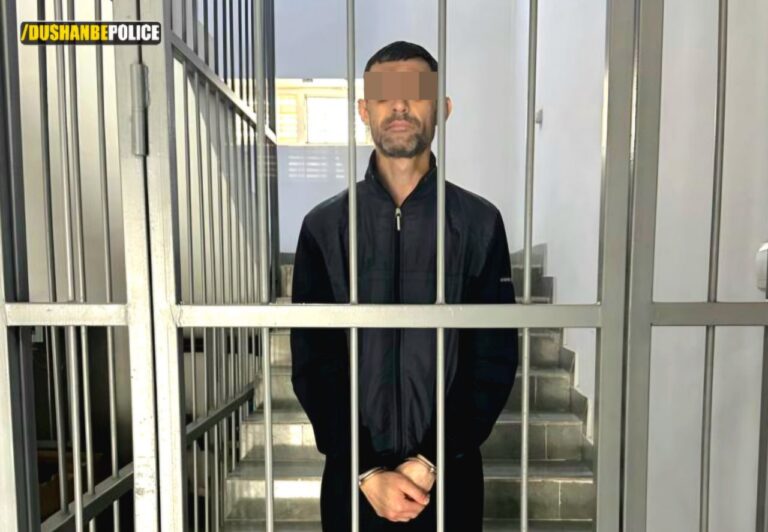
19 female members of Hizb ut-Tahrir released under amnesty

DUSHANBE, July 3, Asia-Plus — 325 women, including 19 members of the outlawed religious extremist Hizb ut-Tahrir organization, have been released under an amnesty law, adopted on occasion of the 10th anniversary of the National Peace Accord, by July 3, Asia-Plus has learned from Gulzora Tayghunshoyeva, a chief inspector with the penitentiary directorate of the […]

Nargis Hamroboyeva

DUSHANBE, July 3, Asia-Plus — 325 women, including 19 members of the outlawed religious extremist Hizb ut-Tahrir organization, have been released under an amnesty law, adopted on occasion of the 10th anniversary of the National Peace Accord, by July 3, Asia-Plus has learned from Gulzora Tayghunshoyeva, a chief inspector with the penitentiary directorate of the Ministry of Justice (MoJ).  

According to her, of those 19 female members of the Hizb ut-Tahrir party, 17 were serving their sentences in the women’s penal colony in Norak and two others were held in pretrial detention facility in Khujand.  

Ms. Tayghunshoyeva noted that under Article 1 of the RT Law “On Amnesty”, the amnesty applies on all female prison inmates irrespective of their jail terms, expect those convicted of killing.   

Last year, some 100 persons were arrested in Tajikistan on suspicion of being members of different religious extremist organizations.  The majority of them are alleged members of the Hizb ut-Tahrir party. 

According to the MoJ penitentiary directorate, some 9,000 prisoners are currently in 13 penal colonies in Tajikistan.  In all, 692 prisoners have been released under the National Peace Accord Amnesty by July 3.  “Another some 1,500 prisoners are supposed be amnestied this year,” Tayghunshoyeva said.      

We will recall that the implementation of an August 2006 amnesty law, adopted on occasion of the 15th anniversary of Tajikistan’s Independence, halved Tajikistan’s prison population.  A total of 6,731 inmates were released, while 4,508 others were granted partial amnesty (they had their sentences commuted) under the August 2006 amnesty.  According to the MoJ, before the adoption of the August 2006 amnesty law, 12,000 prisoners were in the jails in Tajikistan. 
Join us on social media!

Article translations:

Related Article

Оби зулол
Tenisi
Оби зулол

Most Read

Коммерсбонк Точикистон

Recent Articles

Software Updates: Your First Line of Defense Against Cyber ​​Threats

In today's digital age, the importance of timely software updates cannot be overstated, particularly when it comes to security. As cyber threats continue to...

The number of migrants from Central Asia, including Tajikistan, has increased in Poland — expert

Many migrants from Central Asian countries are increasingly reluctant to work in Russia and are exploring new destinations.

Tajikistan to transfer rural water utilities to a unified digital platform

The task is to integrate all 500 drinking water supply organizations in the country into one system.

Dushanbe authorities tighten price controls ahead of the Eid al-Adha holiday

Briefings and explanatory discussions are being conducted with vendors in the capital's markets, and violators face administrative protocols.

Major global investment companies show interest in Tajikistan’s economy

Among them are J.P. Morgan, Loomis Sayles & Company, Morgan Stanley Investment Management, and Global Evolution.

President Rahmon awarded UN University for Peace Certificate of Recognition

He is awarded for "significant contribution to establishing peace, developing regional cooperation, and strengthening mutual understanding between peoples."

Starlink satellite internet becomes available in Kyrgyzstan

And in Tajikistan, it was launched in February of this year.

In Dushanbe, 30 more new electric buses start operating

Each is designed to carry 100 passengers and can travel up to 300 kilometers without recharging.

Who is the man who “increased the Aryan race” and told the President of Tajikistan about it?

Kozie Koziyev, a folk craftsman, built dozens of houses, participated in the construction of a mosque and a kindergarten in Matcha, raised 11 children, and created a true dynasty of builders.