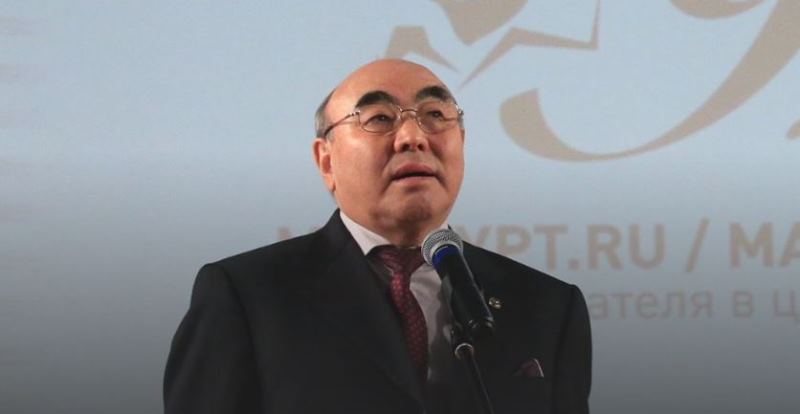
Experts estimate the cost of the 2005 "Tulip Revolution" to be between US$10 million and US$50 million, former Kyrgyz President Askar Akayev said in an interview with Rossiyskaya Gazeta.
“Experts cited amounts ranging from US$10 to US$50 million. Thus, the 'Tulip Revolution' was relatively inexpensive for the U.S., but it came at a very high cost to the people of Kyrgyzstan: nearly 15 years of instability, chaos, and economic stagnation. These years are rightly called the ‘lost decade’ by the people,” the ex-president stated.
Akayev pointed out that "color revolutions" are often used to overthrow undesirable leaders. In his view, he became a target of the U.S. State Department for two reasons: his initiative to establish a Russian airbase in Kyrgyzstan in 2003; and his refusal to allow a U.S. reconnaissance aircraft at the Manas airport in 2004.
Following these events, Akayev noted, a large-scale information campaign against him and his family began, supported by significant financial resources.
“The unyielding radical opposition from the U.S. received substantial financial aid to fight the legitimate government of the republic. Moreover, Steven Young, the U.S. Ambassador to Kyrgyzstan, personally and openly directed the preparation of opposition forces for what they called the 'Tulip Revolution,'” emphasized the first president of Kyrgyzstan.
According to Akayev, when the opposition realized they could not mobilize the public for a genuine revolution, they turned to criminal elements and drug mafias to carry out a coup. He claims the events of March 24, 2005, were not a people's revolution.
“Kyrgyzstan’s economy was on the rise in the 2000s, with average growth rates at 6%, reaching 7% in 2004. By March 2005, Kyrgyzstan was a stable and prosperous country, successfully reformed in political, economic, and spiritual terms. The international community even regarded Kyrgyzstan as an 'island of democracy in Central Asia,'” Akayev recalled.
He emphasized that on March 24, 2005, a group of conspirators led by Bakiyev, Otunbayeva, and Atambayev executed a coup d’état, relying on support from drug lords, as well as financial and informational backing from the U.S.
Akayev remembered his final presidential order that day: “Do not shoot under any circumstances!” He believed that using force against his own citizens would be unacceptable. He voluntarily stepped down from office to prevent a power crisis and give the people an opportunity to elect a new leader.
Akayev expressed regret that he could not complete his presidential term with dignity and transfer power in a lawful manner.