The reduction of American financial aid is already being felt in Tajikistan, and this has inevitably impacted the agrarian sector.
Fewer opportunities without projects
The closure or temporary suspension of USAID programs means that many projects aimed at supporting agriculture, small and medium-sized businesses, as well as social programs, may be rolled back.
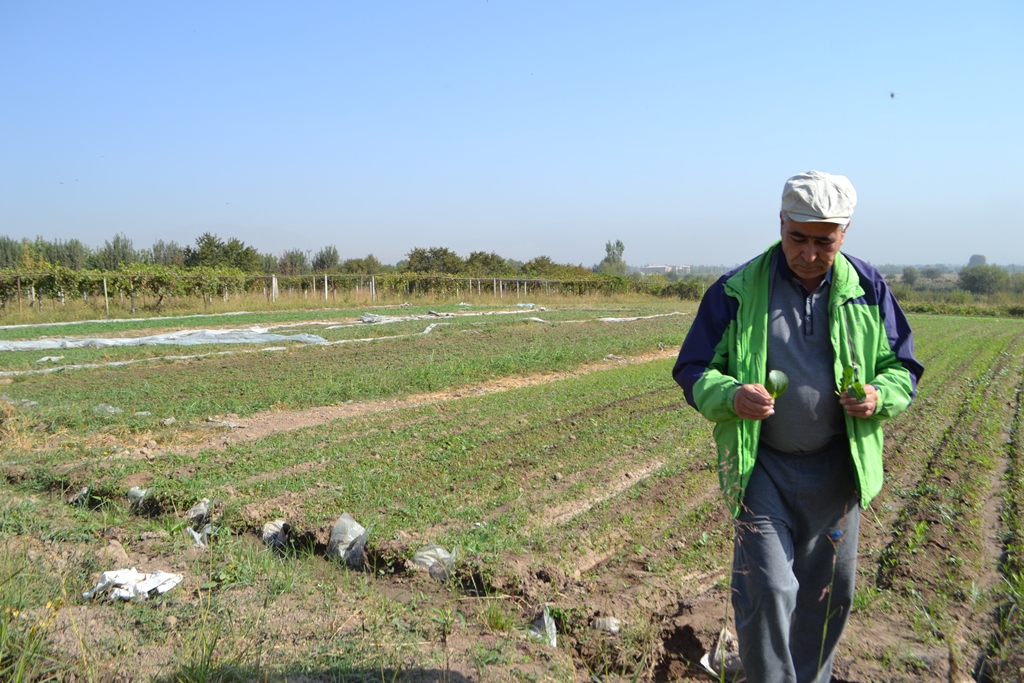
In particular, in the Khatlon province, where agriculture plays a crucial role, the provision of financial and technical assistance has been fundamental to the development of many agricultural enterprises.
The USAID-funded Agribusiness Competitiveness Activity in Tajikistan (ACAT), operating in twelve districts of Khatlon, was one of the most successful and significant projects for local farmers. As part of the program, modern agricultural technologies were introduced, training was provided, and financing for agricultural enterprises was ensured, which not only increased yields but also took rural businesses to a new level.
“Over five years of the project, the Khatlon province made a noticeable leap forward. We can see how small and medium-sized businesses are strengthening their positions, and women and youth are gaining more opportunities for development,” Ms. Liliya Tverdun, head of the ACAT project, said during one of the conferences dedicated to the project's results in Dushanbe.
Overcoming financial barriers
Many farmers in Tajikistan face one of the largest obstacles to growth—financial barriers.
High interest rates and complex lending conditions hinder business development, and entrepreneurs often cannot afford to take out loans. But it was in these conditions that the idea capable of changing the rules for small and medium-sized businesses in the region was born.
For farmers and entrepreneurs in agriculture, banks in Tajikistan mostly offer loans with interest rates ranging from 21% to 36% per year. In Kazakhstan and Turkmenistan, state programs operate with interest rates of 1.0%-6%. In Kyrgyzstan, loans are offered at 18%-23% in som, and 9.0%-15% in foreign currency. In Uzbekistan, interest rates are higher: from 26% to 40% in sums and from 10% in dollars.
The program implemented with the support of USAID ACAT opened new horizons for entrepreneurs in the region.
Partnerships with five microfinance institutions allowed the creation of specialized agricultural credit products with more accessible conditions.
As a result, more than 16 million somonis (about 1.5 million US dollars) were directed to support 755 agricultural enterprises, and many entrepreneurs were able to overcome financial barriers.
Loans as the key to success
For some entrepreneurs, participation in the project became a real turning point in their careers. Ms. Halima Abdulloyeva started her business with one cow bought on loan. She initially sold milk, then expanded her product range, started processing, and gradually grew her farm.
“I received financing, expanded my business, and paid off the loan. I wasn’t afraid I wouldn’t be able to pay back the money because I had calculated everything in advance,” she shares.
With the profits from her business, Halima was able to go on a pilgrimage and host her son's wedding. But that's not all—she is also actively engaged in charity work, having built a drainage system that provides water not only to her farm but also to her neighbors.
Another success story is that of Mahfuzullo Rahimov, who grew lemons in a greenhouse but without a roof.
In 2022, he received a loan from Arvand Bank, which allowed him to complete the construction of the greenhouse and purchase the necessary equipment.
Today, he produces 17 tons of lemons per year, 5 of which are exported to Kazakhstan.
Another example is Shamshiddin Eshbekov, who is developing greenhouse farming and drying fruits. His first loan was 50,000 somonis, and the second one was already 80,000 somonis. His next step is to build a cold storage facility for his products, which will allow him to increase sales volumes.
All these farmers were supported by the USAID programs that helped them get on their feet or develop their businesses. After the suspension of aid programs from this U.S. agency, many farmers and entrepreneurs may face difficulties if continuous support for further agricultural business development and investment attraction is not ensured…