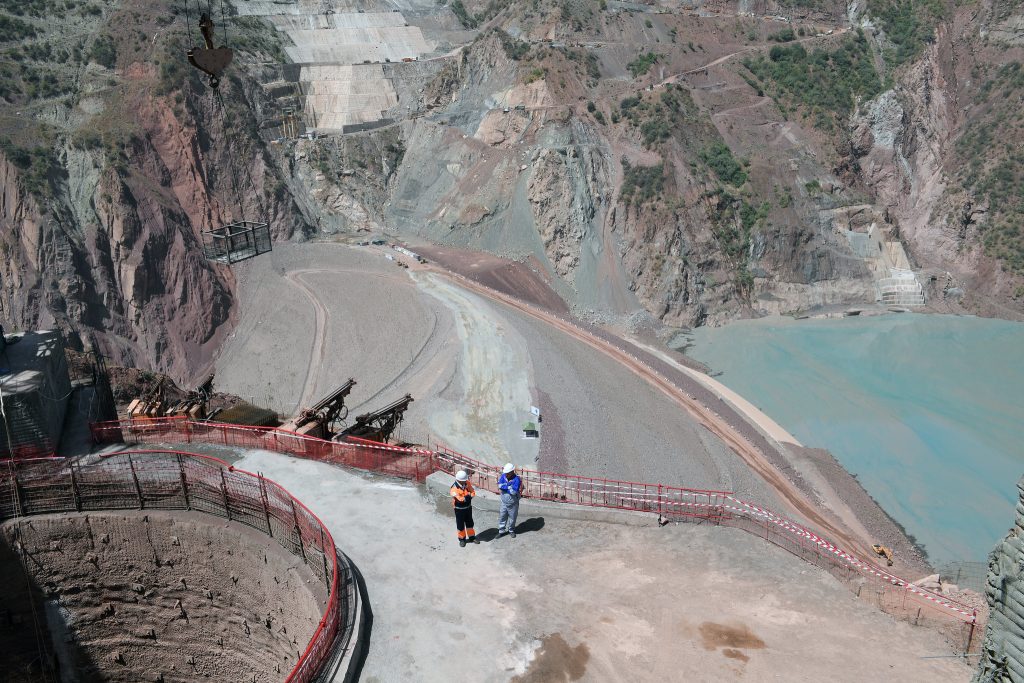
The installed capacity of the Roghun hydropower plant (HPP) is now expected to reach 3,780 megawatts (MW)—180 MW more than earlier projections, according to Open Joint-Stock Company (OJSC) NBO Roghun.
Each of the plant’s six hydro units will have an installed capacity of 630 MW, allowing the facility to generate an average of 14,400 gigawatt-hours (GWh) of electricity per year, the company’s statement notes.
For reference, in 2024, Tajikistan’s total electricity production reached 22,428 GWh.
Previously, it was expected that Roghun hydropower plant’s total installed capacity would be 3,600 MW, with six 600 MW hydro units equipped with radial-axial turbines.
Construction phases of Roghun HPP
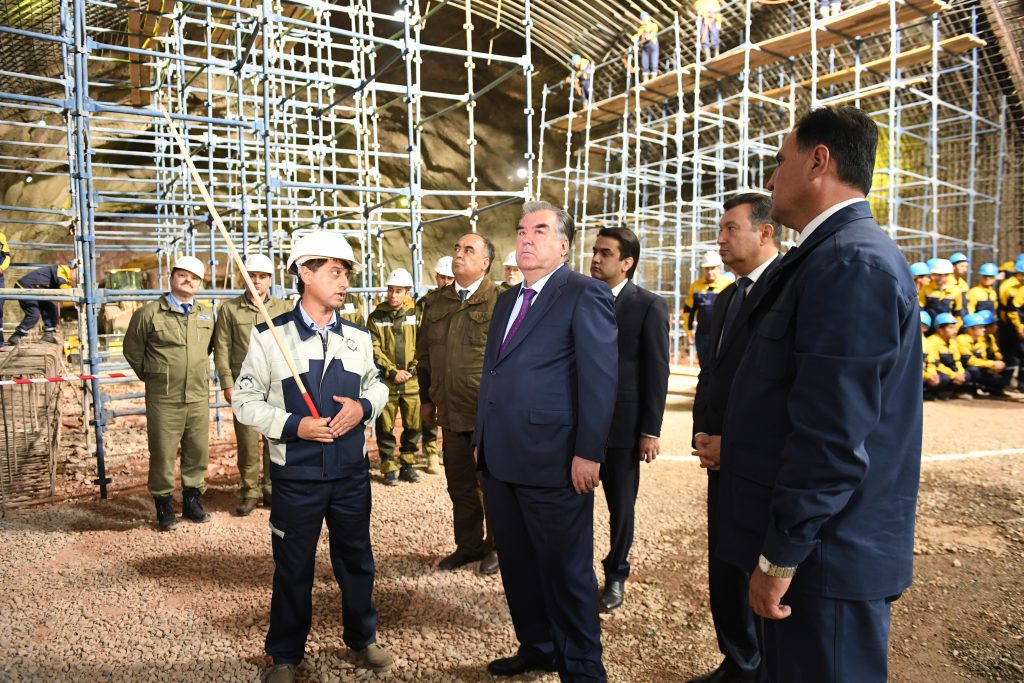
The further development of the Roghun HPP will take place in two phases:
- By 2028: Achieve a dam height of 1,185 meters above sea level and an installed capacity of 1,660 MW (400 MW from units 5/6 and 1,260 MW from units 3/4).
- By 2035: Reach a final dam height of 1,300 meters above sea level, with a full installed capacity of 3,780 MW (630 MW per unit across all six units).
Funding and progress
The first phase, with an estimated cost of US$3.39 billion, is being financed by several international organizations, including the Asian Development Bank (ADB), Asian Infrastructure Investment Bank (AIIB), European Investment Bank (EIB), Islamic Development Bank (IsDB), Kuwait Fund for Arab Economic Development, OPEC Fund for International Development, Saudi Fund for Development, and others.
The total cost for full completion of the plant is estimated at approximately US$6.3 billion.
Currently, the plant’s first two units are operating at low capacity. According to the Ministry of Energy and Water Resources of Tajikistan, in 2024, these two units produced over 1.2 billion kilowatt-hours (kWh) of electricity—about 5.5% of the country’s total power generation for the year.
So far, over 40 billion somonis (around US$4 billion) have been invested in the Roghun project. This includes funding from the sale of Roghun HPP shares (890 million somonis), Eurobonds (US$500 million), and the state budget.