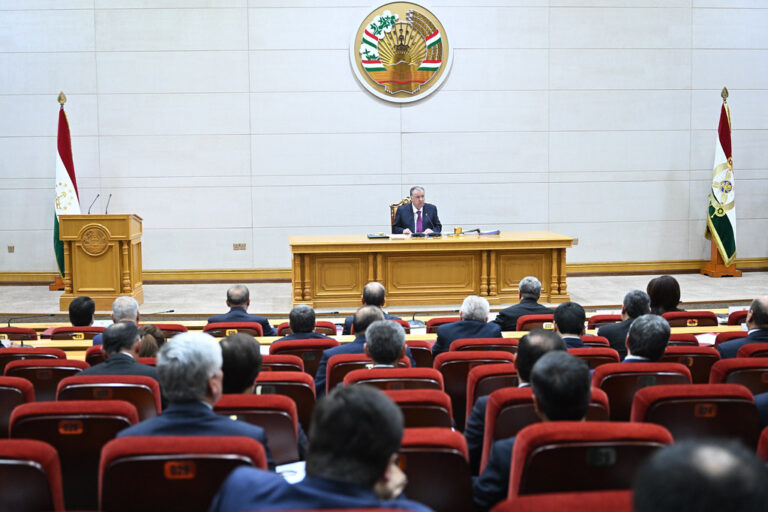
DUSHANBE, March 5, 2009, Asia-Plus — The lower house (Majlisi Namoyandagon) of Tajik parliament (Majlisi Oli) on March 5 considered and endorsed the draft law “On Donor Blood and Its Components.”
Representing the bill, MP Jumaboy Sanginov noted the law on blood donors and transfusions adopted in 1993 did not meet the present realities.
“Six blood transfusion centers currently operate in the country and according to data of the Ministry of Health (MoH), 119,000 cases of blood transfusion were registered in the country last year,” the parliamentarian said, noting that adoption of the law will promote effective operation of the blood transfusion centers.
Speaking at the meeting, MP Yusufjon Ahmadov noted that the law of 1993 had prohibited export and sale of donor blood and its components to other countries, while the draft law did not contain such an article.
Sanginov noted that no cases of export of donor blood and its components from the country had been reported since 1993, and therefore, there was no need in that article any more.
However, Ahmadov noted that now many people could use lack of an official ban for exporting donor blood. “I suggest that donor blood and its components should be recognized as a national patrimony and export of them should be officially banned,” the parliamentarian said.
Deputies of the Majlisi Namoyandagon supported this proposal.
We will recall that Radio Liberty’s Tajik Service reported on March 3 that the price of blood has risen dramatically in Tajikistan, as parliament discusses a new law on blood donors and transfusions. For example, prices for blood and frozen plasma have doubled in southern Tajikistan.
Jumaboy Sanginov was quoted as saying that the new law would impose stricter requirements for the health of blood donors, in an attempt to minimize tainted transfusions.
In a report in May 2008, the World Bank said the health systems in Central Asian countries have an “urgent need” to improve their blood-screening efforts. “After rescreening samples from 7,500 donors, the results showed a clear and present danger that blood contaminated with HIV, hepatitis B, hepatitis C, and syphilis may be entering into the countries” blood supply,” the report found.