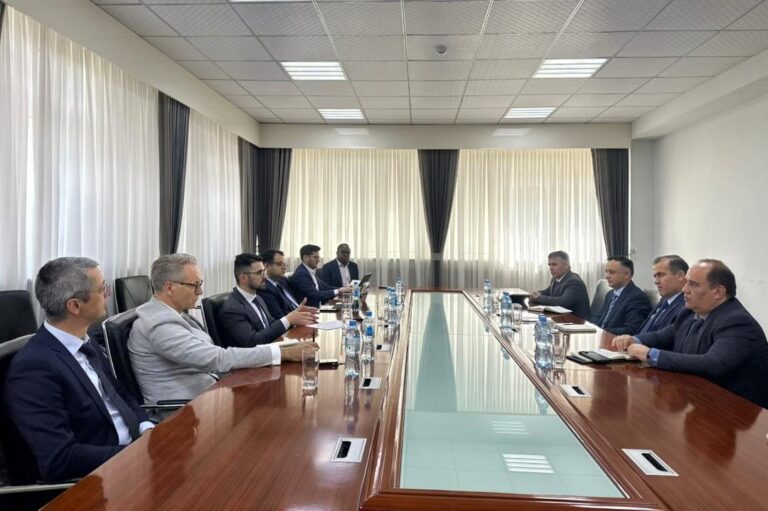
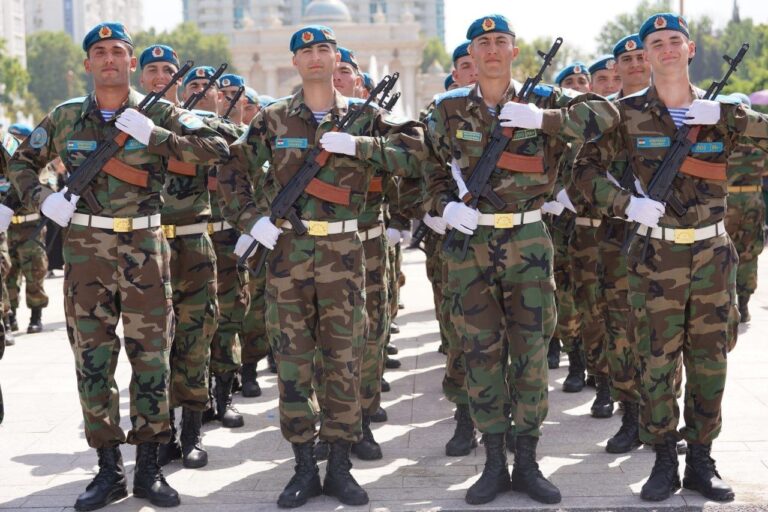
DUSHANBE, April 24, 2009, Asia-Plus — Issues related to format and frames of functioning of the Collective Rapid Reaction Force of the Collective Security Treaty Organization (CSTO) were a major topic of a meeting of President Emomali Rahmon and the CSTO Secretary General Nikolai Bordyuzha that was held in Dushanbe today.
Speaking to reporters following a meeting with President Rahmon, Bordyuzha said that they had discussed in details issues related to numerical strength of the collective rapid reaction force and working out legal foundation of use of the rapid reaction force in case of emergence of any conflict.
According to him, in contrast to the CSTO Collective Rapid Deployment Force (CRDF) that consists of battalions the CSTO Collective Rapid Reaction Force will consist of military units at the level of brigades and special mission divisions.
During the meeting, the sides also discussed preparations for the next session of the Collective Security Council that will be held in Moscow on June 14.
We will recall that the presidents of member nations of the CSTO (Armenia, Belarus, Kazakhstan, Kyrgyzstan, Russia, Tajikistan and Uzbekistan) gathered in Moscow on February 4 this year to sign an agreement to create a joint rapid reaction force. Uzbek President Islam Karimov signed the pact with reservations, agreeing to commit Uzbek forces not permanently but on a mission-to-mission basis.
The current system of CSTO collective security, which is based on the regional principle, includes three regional military groups: Russian-Belarus group (Eastern European group); Russian-Armenian group (Caucasian group); and Central Asian group.