
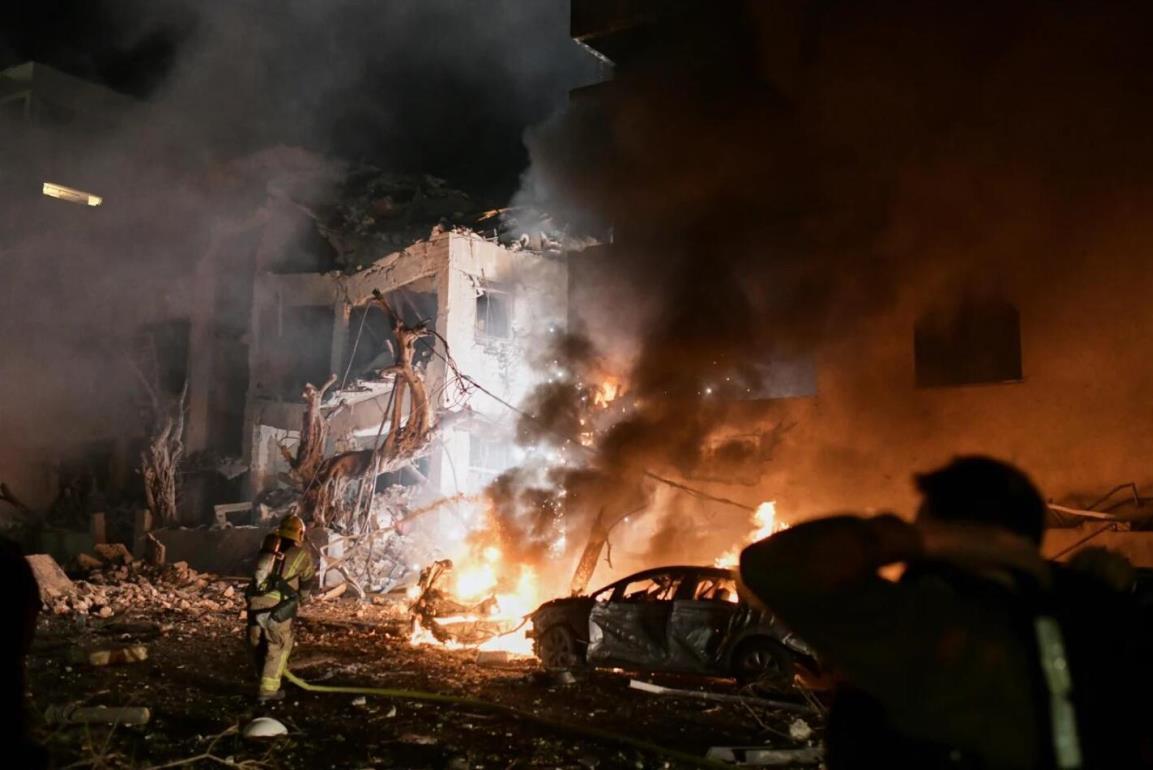
Central Asia is not directly involved in the ongoing military conflict in the Middle East, but it is bound to feel its consequences. The instability surrounding Iran could impact transport corridors and energy routes, and may also negatively affect security in the region—both at the borders and within the republics themselves.
Asia-Plus posed several questions to experts regarding the situation:
· How will the war in Iran affect security in Central Asia, particularly Tajikistan?
· What impact will a possible escalation have on border security?
· Are there risks of increased radicalization in the region?
· Is there a possibility of refugee flows into Central Asia, including through Afghanistan?
Arkady Dubnov, Political Analyst and Central Asia Expert:
· Security in Central Asia has long been shaped by the balance of power between global centers: China, Russia, the USA, and the EU. Today, Central Asia is trying to distance itself from the conflict between the US/Israel and Iran, though countries like Kazakhstan and Tajikistan may have different levels of involvement.
This approach seems wise. In this regard, removing US military bases from the region (in Uzbekistan and Kyrgyzstan) has proven to be a farsighted decision, as it reduces the threat to the countries that hosted these bases.
For now, the region faces minimal direct military or forceful actions from the conflict's participants. However, border security in Central Asia is more uncertain. The instability in the southern part of Eurasia can lead to migration increases, economic crises, and other challenges.
Radicalization risks also persist within the region. The younger, more impressionable Muslim population in Kyrgyzstan, Kazakhstan, and Tajikistan remains susceptible to calls for "justice" in defense of Islam, especially when they perceive threats from "infidels." This sentiment can easily align with emerging narratives about decolonization in Central Asia, particularly with the increasing US interest in exploiting the region's mineral resources.
As for refugees, an influx is possible but unlikely to be significant. If migration from Iran occurs, it will likely be contained within South Asia and the Middle East, possibly extending to Europe and Azerbaijan, especially for ethnic Azeri Iranians.
Anonymous expert on Afghanistan and Central Asia:
· The situation around Iran is part of a broader plan that may eventually spread to Central Asia. It seems that the destabilization of Iran involves a broad spectrum of tools, including the international terrorist network previously active in Syria and Iraq, with recruits from Central Asia.
Central Asian states, which may face similar scenarios, should study these tactics in advance to prepare and implement preventive security measures.
Currently, discussions in the US, Israel, and among their allies involve the possibility of a ground operation against Iran, potentially using proxy forces. Armed groups from neighboring countries, including Central Asia, could play a role in this.
Another area of concern is the territorial fragmentation of Iran, with possible new formations such as Southern Azerbaijan and Baluchistan emerging, especially given the deteriorating relations between Pakistan and Afghanistan. In this context, speculation about the breakup of Pakistan into a Greater Pashtunistan and a separate Baluchistan is becoming more common.
Any state in Central Asia could face similar challenges if separatist movements gain traction in the region.
Andrei Serenko, Director of the Analytical Center of the Russian Society of Political Scientists, Head of the Russian Center for Afghan Policy Studies:
· The US and Israel's war against Iran will inevitably weaken the Islamic Republic and its position in the region. It is extremely difficult for any country—even one as battle-hardened as Iran—to withstand the military might of the United States and its allies.

It’s difficult to say how significant this weakening will be—much depends on the resilience of Iran’s political system and its ability to regenerate after the blows it is likely to endure. The opponents of Tehran aim to destroy the Islamic Republic. Even if they don’t succeed in this, Iran will take a long time to recover, focusing primarily on its internal issues.
Iran's influence in the external region will diminish, which will negatively affect the balance of power and regional security. Iran has long been a key player in fighting jihadist projects like ISIS, and the loss of this influence will make it harder to combat such threats.
The revival of ISIS and its affiliates in the region is a serious concern. This is particularly worrying for the Central Asian republics, especially since the ISIS faction in neighboring Afghanistan—Wilayat Khorasan—has been vocal about its expansionist plans.
With Iran weakening, the jihadist threat will grow, and Central Asia's borders will be more vulnerable than before. The radicalization of marginalized groups within Central Asian societies is likely to increase, especially as ISIS and similar groups gain inspiration from the weakening of Iran.
If there is little resistance to the possible rise of jihadist activity, it will lead to new conflicts, humanitarian crises, refugee problems, and the destruction of social and economic ties.
The effects of the Iranian crisis will be long-lasting and will almost certainly be detrimental to the Middle East, South Asia, and Central Asia.
