In Kazakhstan, there is a word “asar.” It refers to a simple concept: if someone needs help, people gather and assist. Without formalities and contracts – they just come and get it done.
The time we live in increasingly requires this – to respond, act, and help. Therefore, today this kind tradition resonates in a new way.
In the 21st century, the spirit of asar hasn’t disappeared. Rather, it has become different – broader and more noticeable.
In recent years, in the country and, overall, in Central Asia, volunteering has seen a targeted development. First, there was the Year of Volunteers in Kazakhstan in 2020, then the Year of Volunteer Movement in the CIS in 2024. Now, largely thanks to Kazakhstan’s initiative, the momentum for the year 2026 as the International Year of Volunteers under the UN’s aegis is growing.
The perspective on volunteering is changing
But it’s not just about international initiatives and information campaigns. We see how in Kazakhstan and the region, the perception of volunteering is gradually changing.
It is no longer perceived as a hobby and is considered an important contribution to solving specific tasks – in education, ecology, healthcare, and search and rescue operations. Government structures, local authorities, and volunteers increasingly work together, not separately.
Against this background, the rules are changing: in the new Constitution of Kazakhstan, there is a direct mention of supporting volunteering. As a result, the understanding itself is changing: volunteer activity is not an addition, but a condition; not a seasoning, but one of the key ingredients.
And Kazakhstan is not alone in this. In many countries, volunteering is being rediscovered today as a practical way to tackle sustainable development challenges that are becoming more complex and changing faster than before.
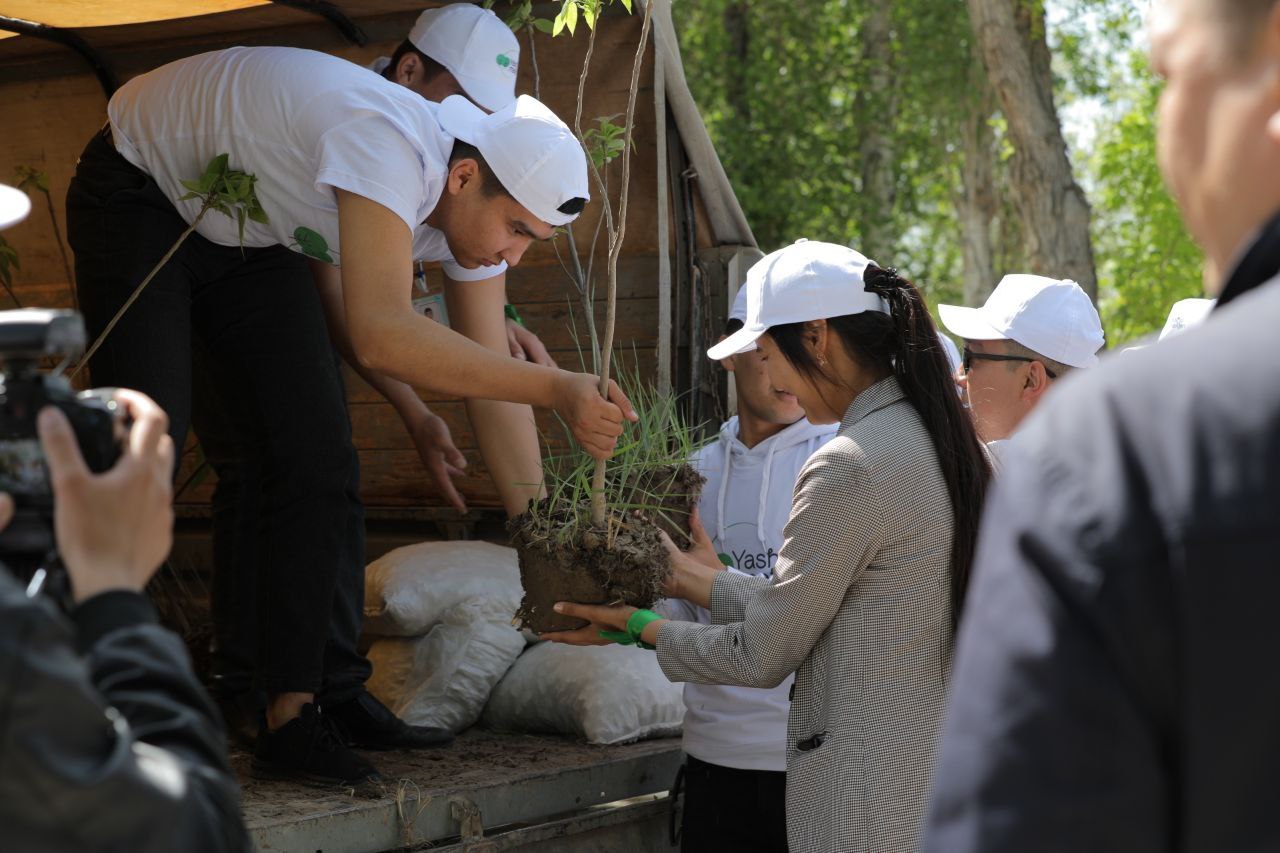
Meanwhile, traditional forms of participation do not disappear: people still go out to clean areas, plant trees. This remains the foundation. But new opportunities are emerging alongside. Online volunteering, for example, allows people to help, share experiences, and work together even when they are on different continents.
Volunteering evolves while preserving the tradition of mutual assistance
This is especially noticeable in Central Asia. A review prepared by the UN Volunteers Programme (UNV) in 2024 shows that volunteering in the region is developing while preserving its foundation – the tradition of mutual assistance. The state, business, and civil society are gradually learning to act more cohesively, and the contribution of volunteers is becoming more noticeable – in ecology, the social sphere, and work in emergencies.
Of course, the role of the UN is also changing. Through UNV, we attract volunteers with diverse experiences, skills, and increasingly with digital competencies, and we strive to make their participation more accessible and effective. And through UNDP, we work with governments to integrate volunteering into development, climate, and ecology strategies – not as a one-time help, but systematically.
And yet, something is missing
Volunteers do a lot. They reduce risks, help people, protect the environment. This is evident in life – around us. But it’s not always visible in systems, in accounting, in budgets. Volunteers are appreciated, but not always supported.
This is precisely what the UNV report “The State of the World’s Volunteerism 2026” addresses. It’s important not only to know how much time and resources have been invested in volunteer activities but also to understand how it impacts society: making it more resilient, strengthening connections among people, helping to tackle challenges.
For Central Asia, this is especially important. Here, traditions of solidarity are strong. But for them to resonate fully in the 21st century, they need support – recognition, data, and investment. Volunteers need not only motivation but also conditions, preparation. Systems need coordination. And the contribution of volunteers to sustainable development should be considered in decision-making.
This concerns not only national but also regional tasks – for example, in the area of the Aral Sea. Environmental issues know no borders, and solutions cannot be limited by them. If regional environmental volunteering receives support from Central Asian countries, it can work for the long term.
Then volunteering stops being just goodwill. It becomes part of how countries cope with the future.
Therefore, 2026 is not just a date. It’s an opportunity to take the next step.
To make helping not the exception, but the norm.
To make people’s participation the rule.
To make volunteering what it essentially already is – a resource for development.
It’s time to help. And it’s important not to miss it.