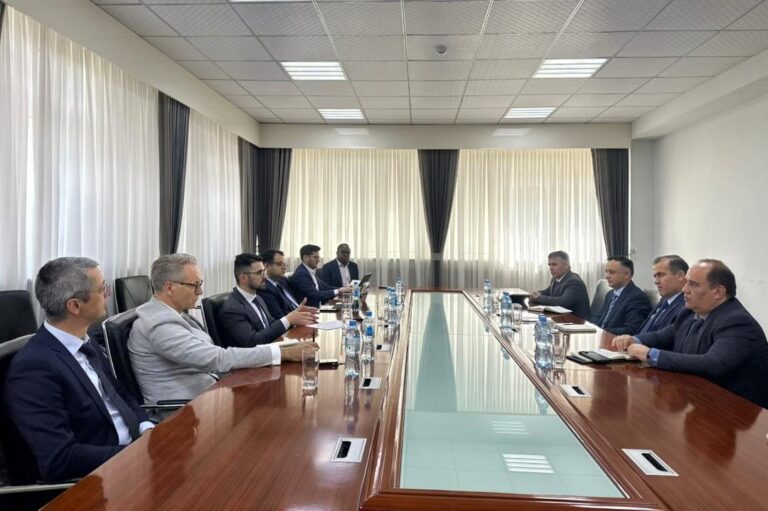
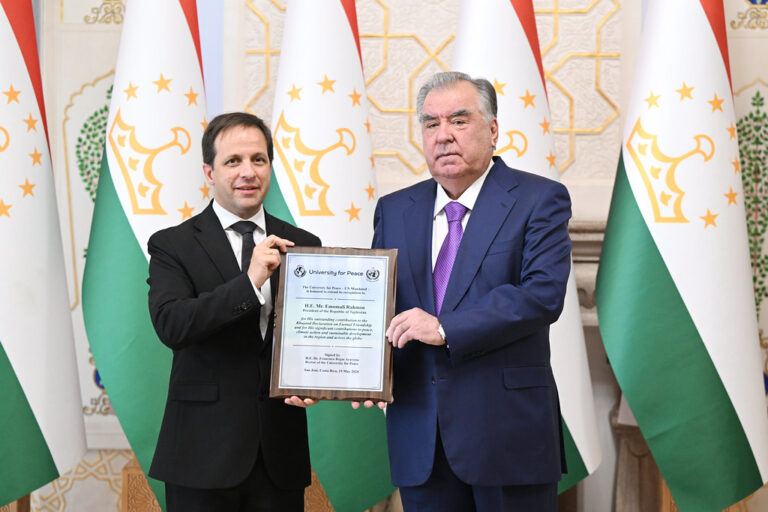
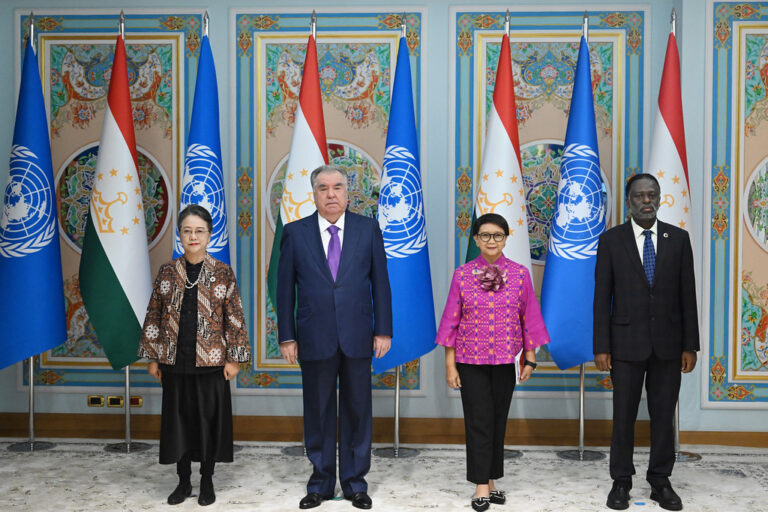
DUSHANBE, December 22, 2009, Asia-Plus — On Tuesday December 22, Foreign Minister Hamrokhon Zarifi met with Mr. Munir Merali, Resident Representative of the Aga Khan Development Network (AKDN) in Tajikistan, according to the MFA information department.
The two discussed a broad range of issues related to cooperation between the Government of Tajikistan and AKDN, including this year’s cooperation and results and plans for cooperation for 2010.
It was noted that 2009 has been a successful year in terms of expansion cooperation between the Tajik Government and AKDN in different fields, the MFA information department said, noting that the sides also considered bilateral cooperation on implementation of specific project in sectors like energy, communications, education and culture.
The Aga Khan Development Network (AKDN) was founded by His Highness the Aga Khan, 49th Hereditary Imam (spiritual leader) of the Ismaili Muslims. It is a group of private, non-denominational development agencies working to empower communities and individuals to improve living conditions and opportunities, especially in sub-Saharan Africa, Central and South Asia, and the Middle East. The Network’s nine development agencies focus on social, cultural and economic development for all citizens, regardless of gender, origin or religion. The AKDN’s underlying ethic is compassion for the vulnerable in society. Its annual budget for philanthropic activity is in excess of US$450 million.
In Tajikistan, the AKDN activities include the Mountain Societies Development Program (MSDSP), which currently implements rural development projects in 17 districts in three regions of Tajikistan – GBAO, Rasht valley, and Khatlon, reaching more than 730,000 people. Since 1997, it has mobilized over 1000 village organizations and overseen the construction or rehabilitation of more than 400 water and sanitation projects, 850 irrigation projects, 270 road and bridge projects, 280 health facilities, 150 schools and 25 mini-hydels. It is largely responsible for raising food security in the region from 15 percent in 1993 to over 70 percent today. Economic development projects include a hydroelectric plant (Pamir 1) that supplies Gorno Badakhshan with electricity; a mobile phone provider that cover 90 percent of the country; and a hotel being built in Dushanbe. The largest project underway is the creation of a campus of the University of Central Asia, in Khorog, which will have a broad socioeconomic impact on the entire region and beyond.