
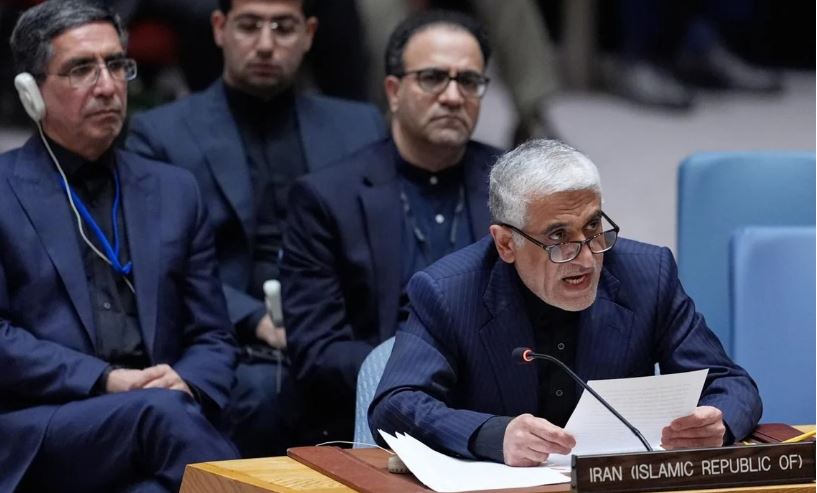
Iran has submitted a demand to the UN for compensation from Bahrain, Saudi Arabia, Qatar, the United Arab Emirates, and Jordan “for their participation in the US-Israeli war against Iran.” This statement was made by the permanent representative of the Islamic Republic to the UN, Amir Saeid Iravani, reports IRNA.
“These five countries have violated their international obligations to the Islamic Republic of Iran, and in accordance with international law, they must fully compensate for the damage caused to the Islamic Republic of Iran, including compensation for all material and moral damage resulting from their international violations,” the diplomat said.
He did not disclose the amount of compensation.
In March, Iran’s permanent representative sent a letter to UN Secretary-General António Guterres, accusing several Middle Eastern countries of allowing their territories to be used for American attacks on Iran.
archive photo Reuters
According to preliminary estimates, the damage to Iran from US and Israeli strikes amounts to about $270 billion, stated the official representative of the government of the Islamic Republic of Iran Fatemeh Mohajerani in an interview with RIA Novosti.
She clarified that these are “initial and very approximate calculations” at the moment: more accurate data will be presented later after a multi-stage assessment. The first stage involves determining the damage directly caused to infrastructure and buildings, followed by assessing the loss of budget revenues and the consequences of halting industrial enterprises.
The government representative also noted that the Iranian negotiation team is discussing the issue of possible military reparations from the US. This topic, in particular, was raised during the negotiations in Islamabad last week.
On April 10, the newspaper The Jerusalem Post (JP), citing intelligence community assessments, reported that Iran suffered economic damage of $140–145 billion over six weeks of war with the US and Israel.
Recall that on February 28, the US and Israel launched military operations against Iran and carried out airstrikes on several cities. On the same day, Iran’s Supreme Leader Ali Khamenei was killed as a result of the strikes.
In response, Iran launched missile strikes on Israeli territory and attacked American military bases in the Persian Gulf countries.
On the night of April 8, the parties agreed to a two-week ceasefire and the opening of the Strait of Hormuz.
On April 11-12, negotiations between Iran and the US were held in Islamabad with Pakistani mediation.
The lengthy discussions ended without reaching an agreement.
Read more in our article Negotiations between the US and Iran: Tehran refused to fulfill Washington’s demands on uranium and the Strait of Hormuz.
