
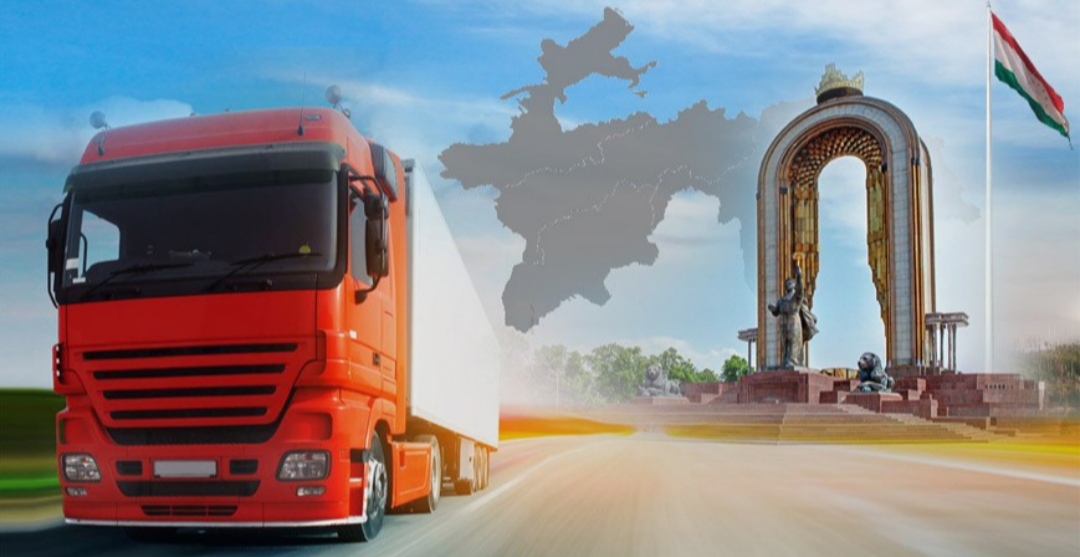
The share of domestic carriers in international transportation in the first quarter of this year was 41% and decreased by 12.8%, reports the Ministry of Transport of Tajikistan.
“The reason for this was the decline in export cargo volumes, the high cost of transportation by domestic transport due to the high prices of fuel and spare parts for vehicles,” the statement said following the expanded meeting of the Ministry of Transport’s board, which took place last Friday.
The meeting was chaired by the Minister of Transport Azim Ibrohim, with the participation of government representatives, relevant agencies, and subordinate organizations.
At the meeting, it was noted that there are 2,884 transport sector enterprises in the country, which is 51 more compared to the first quarter of 2025.

photo by the Ministry of Transport
In the first three months of this year, 33.5 million tons of cargo and 279.6 million passengers were transported, with an increase of 14% and 10.9% respectively.
Meanwhile, the majority of transportation falls on road transport—92.5% of cargo and 99.8% of passengers. Transit transportation increased 1.7 times and reached 15.1 thousand tons.
In international transportation, railways play a significant role: they accounted for 75.1% of cargo (over 2 million tons). To support carriers, the State Unitary Enterprise “Tajik Railways” offered discounts up to 80% and agreed on preferences with foreign partners.
One of the key areas for the development of the industry is digitalization. It is reported that a Unified Digital Information Platform for the transport sector has been developed, which will become a national resource for registering market participants and interacting with government agencies based on the “single window” principle. In the first half of 2026, all industry enterprises must connect to the system.
It was also noted that currently 11 investment projects worth over $1.19 billion are being implemented, and in 2026, it is planned to start another 8 projects for the construction and reconstruction of roads and bridges with a total length of about 300 km.
Despite the positive dynamics in a number of indicators, the industry still faces problems, including the wear and tear of rolling stock and the need to improve carrier efficiency. Following the meeting, the Ministry of Transport issued several directives to address shortcomings and further develop the country’s transport system.
