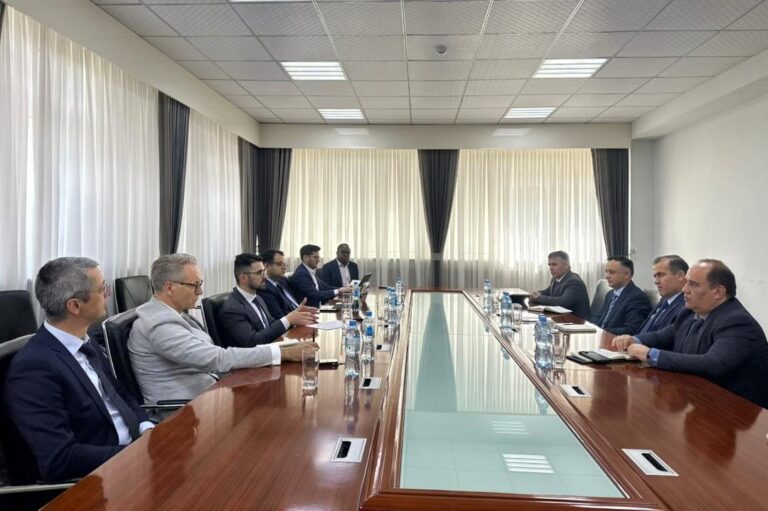
KHOROG, September 30, 2009, Asia-Plus — Languages of four small ethnic groups of Tajikistan are on the verge of disappearance — that is conclusion of an international conference that was held in Khorog on September 28.
The conference entitled “Endangered Languages and History” was organized by the Academy of Sciences of Tajikistan and the International Foundation for Endangered Languages and researchers from a number of countries of Europe and Asia attended it.
Speaking at the conference, the Chairman of the Foundation for Endangered Languages, Mr. Nicholas Ostler, noted that more than 6,000 small languages that are on the verge of disappearance have been registered around the world.
“In Tajikistan, the Yaghnobi (upper valley of the Yaghnob River in northern Tajikistan), Rini (in GBAO’s Ishkashim district), Yazgulyami (in GBAO’s Vanj district) and Roshorvi (in GBAO’s Rushan district) may share their fate,” said Mr. Ostler, “The problem of the Yaghnobi language is that in Yaghnob, northern Tajikistan little more than 500 people speak this language while the remaining 8,000 Yaghnobis now live in other regions of the Tajikistan or outside it and now do not speak their native language. As far as other mentioned languages are concerned, they are now spoken by less than 1,500 people.”
The conference participants noted that at present one of the main reasons for disappearance of small languages is increasing process of globalization.
During the conference it was noted that preservation and development of small languages not only promotes preservation of ancient culture, it also promotes further prosperity of each country, and therefore, countries having ethnic groups speaking small languages should adopt appropriate laws for preservation of them.
The Pamir languages are a subgroup of the Eastern Iranian languages, spoken by Pamiri people in the Pamir Mountains, primarily along the Panj River and its tributaries. This includes the Badakhshan Province of northeastern Afghanistan and the Gorno Badakhshan Autonomous Region in Tajikistan. Smaller communities can be found in the adjacent areas of Pakistan where many have settled in recent decades. Sarikoli, one of the languages of the Pamir group, is spoken beyond the Sarikoli ridge on the Afghanistan-China border, and thus qualifies as the eastern-most of the extant Iranian languages.
Members of the Pamir language group include Shughni, Sarikoli, Yazgulyami, Munji, Sanglechi-Ishkashimi, Wakhi, and Yidha. These are Southeastern Iranian languages.
The Yaghnobi language is also a living East Iranian language. Yaghnobi is spoken in the upper valley of the Yaghnob River in the Zarafshon area of Tajikistan by the Yaghnobi people. It is considered to be a direct descendant of Sogdian and has often been called Neo-Sogdian in academic literature.