DUSHANBE, November 8, 2012, Asia-Plus — As part of an ongoing assessment of the proposed Roghun Hydropower Project (Roghun HPP) in Tajikistan, the second information-sharing meetings took place on November 6-7 in Almaty, Kazakhstan.
Press release issued by the World Bank notes that the purpose of the meetings was to discuss the draft Screening Report of the Environmental and Social Impact Assessment (ESIA), which is a precursor to the ESIA, and the draft Design Criteria of the Techno-Economic Assessment Study (TEAS). These documents do not provide final results but will guide the future work on both studies.
The meetings provided an opportunity for riparian governments and civil society representatives to review the building blocks of the Assessment Studies being conducted by two international firms. Members of two independent Panels of Experts that are providing additional oversight to the studies were also present to discuss their technical reviews and take questions on both draft reports. After presentations on the draft Screening Report and draft Design Criteria, participants interacted directly with the consultants, experts, and World Bank staff to provide feedback and share their concerns.
On November 6, riparian government representatives from Afghanistan, Kazakhstan, Kyrgyzstan, Tajikistan, and Turkmenistan welcomed the opportunity to have an open and productive discussion at the regional level. Questions focused on potential environmental and downstream impacts, dam safety and the allocation of water resources. The Government of Tajikistan confirmed that they intend to abide by the inter-governmental agreement on the Amu Darya river basin (Protocol 566 under the Nukus Declaration). During the meeting, the issues of climate change, sediment management, evaporation, and data-sharing were also discussed.
On November 7, more than 45 civil society organizations were connected by a video-conference between Almaty, Astana, Bishkek, Dushanbe, Kabul, and Tashkent and by audio connection with Ashgabat. The participants’ comments and questions focused on the seismic risks of the proposed Roghun project site, the potential effects of climate change on hydrology, the Government of Tajikistan’s plans for future resettlement and related grievance mechanisms, as well as cultural heritage sites. The meeting confirmed that key issues for future discussion will be the potential impacts of any changes in water flows on downstream countries and an in-depth economic analysis of the proposed project.
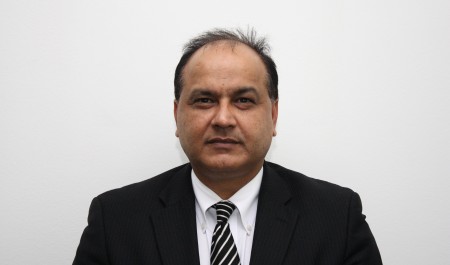
“These information-sharing meetings allow us to hear the concerns of government and civil society stakeholders who are eager to see that the structure, scope, and content of the Roghun Assessment Studies address all potential impacts,” said Saroj Jha, World Bank Regional Director for Central Asia. He added, “The World Bank is committed to ensuring that these views are heard. We see this as critical input to a transparent, internationally acceptable study process – and central to the sustainable management of water and energy resources in Central Asia.”
In response to a request from the Government of Tajikistan, the World Bank is supporting two Assessment Studies of the proposed Roghun HPP: the Techno-Economic Assessment Study (TEAS) and Environmental and Social Impact Assessment (ESIA). To ensure that the Studies address the concerns of government and civil society stakeholders and meet international quality standards, including expectations of transparency, the Bank is facilitating a process of information-sharing and discussion. The Bank has made no financial commitment to support construction of the Roghun HPP.
The World Bank held initial consultations with the governments of Kazakhstan, Kyrgyzstan, Tajikistan, Turkmenistan, Uzbekistan, and Afghanistan (Riparians) on the Terms of Reference for the Assessment Studies in 2008-2009. The Government of Tajikistan, with support from an International Development Association (IDA) loan, then contracted two consulting firms on an international competitive basis: Coyne & Bellier (TEAS) and Poyry (ESIA). The Bank also established two independent Panels of Experts (PoEs) to perform due diligence and ensure that the Studies conform to international quality standards.
Tajikistan’s plans to build the Roghun HPP have raised serious concerns across the border in Uzbekistan. Uzbek officials argue that because it could take up to 18 years to fill, the Roghun project will severely reduce the amount of water flowing into Uzbekistan.