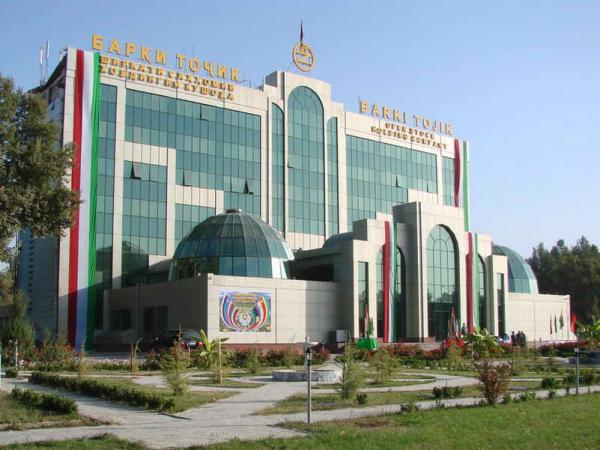
DUSHANBE, December 5, 2012, Asia-Plus — The Government of Tajikistan does not plan to raise electricity prices in the near future, Abdullo Yorov, the head of Barqi Tojik (state-owned utility responsible for generation, transmission, and distribution of electricity in Tajikistan), was quoted as saying by the Russian news agency, Itar-Tass.
“I want to reassure residential customers and all electricity consumers irrespective of forms of property that we do not plan to review the electricity prices in the near future because we consider that current electricity prices are real, based on the economic situation in the country,” the power holding top managers was quoted as saying.
According to him, the holding will seek other ways of rationally using and saving electricity generated by the country’s power plants.
Meanwhile, the Barqi Tojik press center says the electricity pricing issue is outside the power holding’s competence. “Our company is engaged only in generation, transmission and distribution of electrical power while electricity pricing is the competence of the government, which owns the full package of shares in the company,” the source noted.
For the last time, the electricity prices were raised in Tajikistan in March this year. The government approved 25 percent increase in electricity prices beginning on April 1, 2012. Before that, the Tajik authorities raised electricity in January 2010 while usually, Tajikistan raised electricity prices by 20 percent twice a year in order to make the energy sector profitable.
Current prices of one kWh of electricity are 11 dirams for residential customers, 26.63 dirams for industrial and non-industrial enterprises, 10.63 dirams for federally funded institutions and public utilities, and 1.88 dirams for pump stations and electrical transportation. Tajikistan Aluminum Company (TALCO) pays 8.2 dirams for usage of one kWh of electricity.
Electricity pricing (sometimes referred to as electricity tariff or the price of electricity) varies widely from country to country, and may vary significantly from locality to locality within a particular country. There are many reasons that account for these differences in price. The price of power generation depends largely on the type and market price of the fuel used, government subsidies, government and industry regulation, and even local weather patterns.