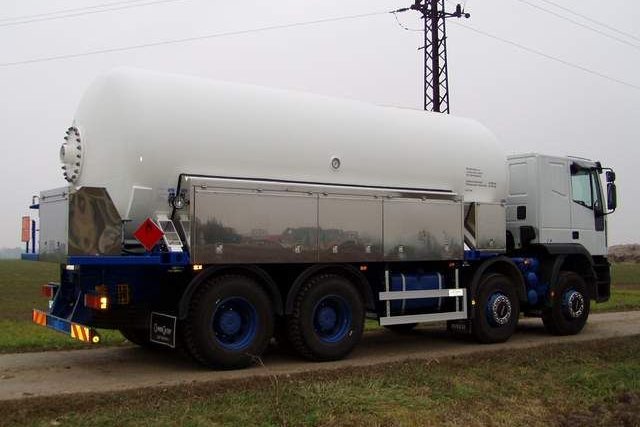
Uzbekistan introduces ban on transit truck transport of LNG via its territory

DUSHANBE, January 3, 2013, Asia-Plus  — Uzbekistan has reportedly introduced ban on transit truck transport of liquefied natural gas (LNG) via its territory. According to Uzbek government’s decree, the ban on transit truck transport of LNG took effect on January 1, 2013. This decision has reportedly been made in order to ensure national security, maintain […]

Payrav Chorshanbiyev

DUSHANBE, January 3, 2013, Asia-Plus  — Uzbekistan has reportedly introduced ban on transit truck transport of liquefied natural gas (LNG) via its territory.

According to Uzbek government’s decree, the ban on transit truck transport of LNG took effect on January 1, 2013.

This decision has reportedly been made in order to ensure national security, maintain public order and protect the environment and public health.

The Ministry of Foreign Affairs of Uzbekistan and the Uzbek Agency for Automobile and River Transport are to inform consigners of the ban.

In case of illegal transportation of LNG via Uzbekistan’s customs territory, Uzbekistan’s State Customs Committee and Ministry of Interior will take measures to confiscate the product, the decree says.

Meanwhile, some 40 percent of vehicles in Tajikistan, primarily in the northern Sughd province, run on liquefied natural gas.  Kazakhstan now provides the bulk of Tajikistan’s liquefied natural gas imports.

Over the last year, the number of liquefied natural gas (LNG) refueling stations in the country has reportedly been increased from 510 to 526.  Sughd province alone now has 230 LNG refueling stations.

The main suppliers of liquefied gas to Tajikistan are Zet Gaz, Muhammad Poulod (Sughd province), Gazpormneft-Tajikistan, Faroz, and Tojiron.  

Article translations:

Related Articles

Оби зулол
Сохтмон

Most Read

Join us on social media!

Recent Articles

Which Teachers in Tajikistan Are Exempt from Military Service, and Which Are Not

A lawyer says there is a contradiction between the laws "On the Status of a Teacher" and "On Military Duty and Military Service" regarding the deferral of teachers' conscription.

Talks in Islamabad at Risk: Parties Escalate Rhetoric and Continue Exchanging Blows

A two-week ceasefire agreement proved fragile after Iran once again closed the Strait of Hormuz in response to Israeli attacks in Lebanon.

Study: US Caused $10 Trillion in Climate Damage

Scientists claim that the United States, as the largest carbon emitter in history, bears a "tremendous responsibility" for causing "significant" harm on a global scale.

Tajikistan’s Defense Minister Held a Phone Conversation with Iran’s Acting Defense Minister

Sobirzoda emphasized the importance of "establishing true peace and stability" in the IRI.