
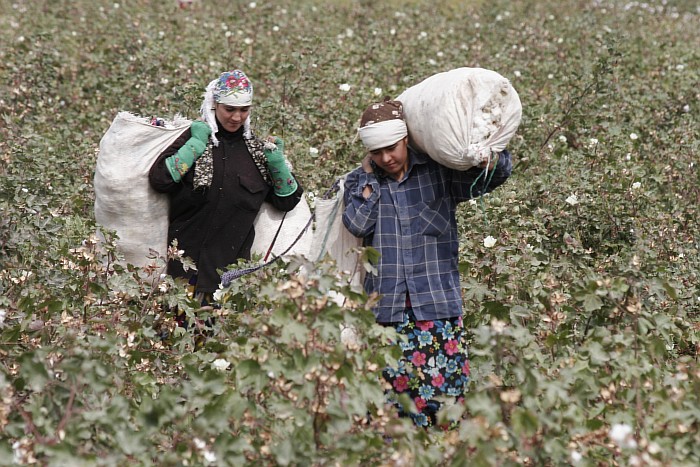
DUSHANBE, January 4, 2014, Asia-Plus — In 2013, Tajikistan reportedly produced 392,000 tons of cotton, which was 3.6 percent fewer that it was originally planned.
According to the Ministry of Agriculture (MoA), 191,333 hectares were allotted for cultivation cotton last year, which was 8,133 hectares or 4.0 percent fewer than in 2012.
An official source at a MoA says areas under cotton were reduced mainly in districts subordinate to the center – by 15 percent.
Areas under cotton were reportedly reduced following the government’s instruction to increase areas under vegetables, fruits and fodder crops.
“Reduction in areas under cotton also resulted from the fall in the international cotton prices, insufficient access to preferential loans for farming units, rise in fuel prices during harvest season, high prices of spare parts and shortage of water during harvest season,” the source noted.
Besides, the budget has not earmarked funds for development of the cotton subsector.
In 2014, farmers are expected to plant cotton on 200,000 hectares, but the government will not set any national target as it had been before.
“Farmers will have the choice what crops to plant, because this sector is not subsidized by the government. Everything will depend on the international prices for cotton, fuels, etc,” the source added.
Cotton makes an important contribution to both the agricultural sector and the national economy. Cotton accounts for 60 percent of agricultural output, supports 75 percent of the rural population, and uses 45 percent of irrigated arable land. At the national level, it is an important source of both export earnings and tax revenue. There is strong demand on international markets for Tajikistan’s cotton.
