Tajik authorities name factors that affect cotton growing

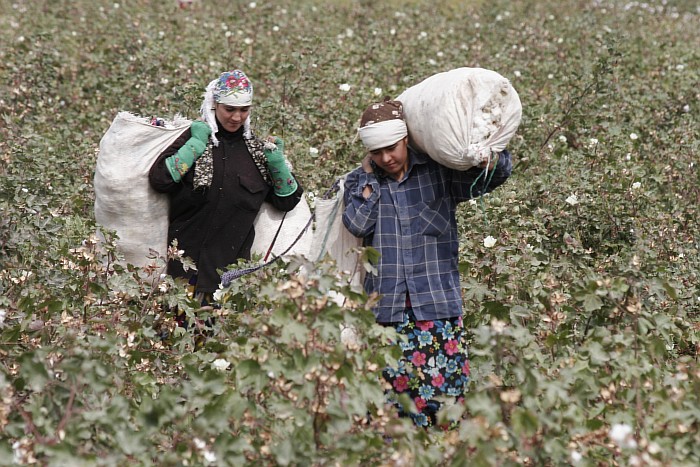
DUSHANBE, January 4, 2014, Asia-Plus — In 2013, Tajikistan reportedly produced 392,000 tons of cotton, which was 3.6 percent fewer that it was originally planned. According to the Ministry of Agriculture (MoA), 191,333 hectares were allotted for cultivation cotton last year, which was 8,133 hectares or 4.0 percent fewer than in 2012. An official source […]

Zarina Ergasheva

DUSHANBE, January 4, 2014, Asia-Plus — In 2013, Tajikistan reportedly produced 392,000 tons of cotton, which was 3.6 percent fewer that it was originally planned.

According to the Ministry of Agriculture (MoA), 191,333 hectares were allotted for cultivation cotton last year, which was 8,133 hectares or 4.0 percent fewer than in 2012.

An official source at a MoA says areas under cotton were reduced mainly in districts subordinate to the center – by 15 percent.

Areas under cotton were reportedly reduced following the government’s instruction to increase areas under vegetables, fruits and fodder crops.

“Reduction in areas under cotton also resulted from the fall in the international cotton prices, insufficient access to preferential loans for farming units, rise in fuel prices during harvest season, high prices of spare parts and shortage of water during harvest season,” the source noted.

Besides, the budget has not earmarked funds for development of the cotton subsector.

In 2014, farmers are expected to plant cotton on 200,000 hectares, but the government will not set any national target as it had been before.

“Farmers will have the choice what crops to plant, because this sector is not subsidized by the government.  Everything will depend on the international prices for cotton, fuels, etc,” the source added.

Cotton makes an important contribution to both the agricultural sector and the national economy. Cotton accounts for 60 percent of agricultural output, supports 75 percent of the rural population, and uses 45 percent of irrigated arable land. At the national level, it is an important source of both export earnings and tax revenue. There is strong demand on international markets for Tajikistan’s cotton.

Join us on social media!

Article translations:

Related Article

Оби зулол
Оби зулол

Most Read

Акика Алиф

Recent Articles

Climate risks threaten food security in Central Asia – FAO

Land degradation reduces agricultural productivity. The loss of biodiversity weakens the ecosystems that farmers, livestock breeders, and rural communities depend on.

Potential or illusion? Why the world overlooks Tajikistan’s mineral wealth

The republic may indeed possess significant reserves of rare metals, but there is a catch...

The case of ousted Kyrgyz security boss classified and moves to court

The former head of the GKNB is charged with violent seizure of power and abuse of official position.

Trump states that Iran’s nuclear program is a higher priority than U.S. citizens’ economic issues

Fluctuations in energy prices led to record inflation in the United States in April, the highest in the past three years.

Foot-and-mouth disease, plague, and flu: Central Asia threatened by transboundary animal diseases

FAO urges Central Asian countries to strengthen coordination and epidemiological surveillance.

Tajikistan approves the second phase of the Electric Transport Development Program; $95 million will be allocated for its implementation.

At this stage, the authorities are focusing on charging infrastructure, services for electric vehicles, and the expansion of the electric bus fleet.

Tajikistan and Kazakhstan to sign roadmap for cooperation in the agrarian sector

The parties are interested in expanding investment cooperation and establishing joint ventures.

Emomali Rahmon awarded honorary professorship by Peking University

Tajik President Emomali Rahmon has been awarded an honorary...

Belgian authorities review the results of tax reforms in Tajikistan

Negotiations took place in Brussels between the head of the Tax Committee of the Republic of Tatarstan and the leadership of the Federal Public Service Finance of Belgium.