
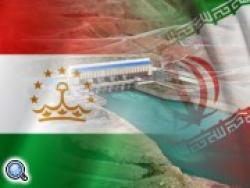
DUSHANBE, January 16, 2014, Asia-Plus — The Ministry of Energy and Water Resources of Tajikistan (MoEWR) and Barqi Tojik (the state-owned utility responsible for generation, transmission, and distribution of electricity in Tajikistan) say they do not know when the Sangtuda-2 hydroelectric power plant HPP will be reintroduced into operation.
The Sangtuda-2 HP has not been in operation since mid-December 2013 and the issue of suspension of the Sangtuda-2 HPP operations has reportedly been cleared with a MoEWR and it has nothing to do with Barqi Tojik’s debt.
The power plant has suspended operations for “maintenance operations and it is still unknown when they will finish the maintenance operations,” the Barqi Tojik source added.
As it had been reported earlier, Barqi Tojik now owes 133 million somoni (equivalent to 27.8 million USD) to the Sangtuda-2 HPP. As of January 1, 2013, Tajik power holding reportedly owed only 12 million U.S. dollars to the power plant, built with the help of Iranian specialists.
The Sangtuda-2 HPP has reportedly demanded that Barqi Tojik gradually repay its debt, otherwise the power plant station will stop power generation.
We will recall that the first unit of the plant was introduced into operation on September 5, 2011. Tajik and Iranian presidents attended a joint ceremony to unveil the Sangtuda-2 dam and power plant. This 110 MW unit did not operate in full capacity.
Installation of the second 110 MW unit at the Sangtuda2 HPP was completed in May 2013 but the launch of this generation has been postponed for unknown reasons.
Construction of Sangtuda-2, a 220-megawatt plant on the Vakhsh River, officially commenced in February 2006. It is located some 120 kilometers southeast of Dushanbe.
Iran, which has put some 180 million U.S. dollars into the construction of the hydropower station, will operate it for the next 12 years and then transfer control to Tajikistan, whose contribution to the construction costs amounted to around 40 million U.S. dollars.
The power plant is expected to help alleviate power shortages in Tajikistan during autumn-winter period.
