
DUSHANBE, May 28, 2014, Asia-Plus — The board (Shuro) of Tajikistan’s lower house (Majlisi Namoyandagon) of parliament discussed a draft law proposing amendments to the country’s law on meetings, demonstrations and street processions at a May 28 meeting, presided over by the Majlisi Namoyandagon speaker, Shukurjon Zuhurov.
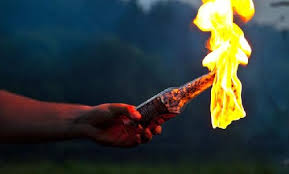
The draft law, in particular notes that persons using a Molotov cocktail in demonstration and public gathering places will be put on the same footing as persons illegally using firearms.
Under the country’s legislation, law enforcement officers have the right to use weapons against such category of persons.
Muhammadato Sultonov, a spokesman for the Majlisi Namoyandagon, says the board also discussed draft laws proposing amendments to the country’s laws on holidays, audit activity, and public service.
A Molotov cocktail, also known as a petrol bomb, poor man”s grenade, fire bomb (not to be confused with an actual fire bomb) or just Molotov, is a generic name used for a variety of bottle-based improvised incendiary weapons. Due to the relative ease of production, they are frequently used by protesters and non-professionally equipped fighters in urban guerrilla warfare. They are primarily intended to set targets ablaze rather than instantly destroy them.
The name “Molotov cocktail” was coined by the Finns during the Winter War. The name is an insulting reference to Soviet Foreign Minister Vyacheslav Molotov, who was responsible for the setting of “spheres of interest” in Eastern Europe under the Molotov–Ribbentrop Pact in August 1939.
We will recall that some protesters used so-called Molotov cocktails during deadly clashes that occurred in Khorog, the capital of the Gorno Badakhshan Autonomous Region (GBAO) on May 21. The clashes left at least three people dead and several people injured. The fatalities occurred during a police offensive against suspected criminals and ensuing clashes between security forces and local residents upset with the police action.
