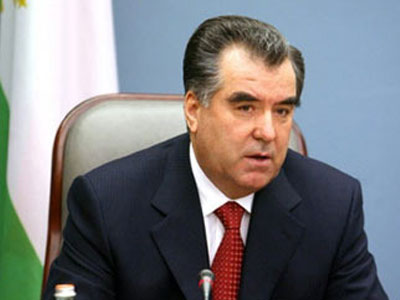
DUSHANBE, October 16, 2014, Asia-Plus — Tajikistan, as country that had gone through the civil war, maintains principled attitude to the peaceful settlement of the Armenian-Azerbaijani conflict over Nagorno-Karabakh, Tajik President Emomali Rahmon told journalists in Dushanbe on October 16 after talks with his Azerbaijani counterpart Ilham Aliyev.
According to him, the Nagorno-Karabakh conflict was among major topics of the negotiations and he expressed Tajikistan’s point of view on that problem.
“Tajikistan, as country that had gone through all horrors of civil war, considers that the Armenian-Azerbaijani conflict over Nagorno-Karabakh should settled peacefully on the basis of appropriate resolutions of the UN Security Council,” Rahmon said.
For his part, Azerbaijani President Ilham Aliyev expressed gratitude to Tajik President Emomali Rahmon for principled position on the Nagorno-Karabakh problem.
“Unfortunately, Armenia does not implement resolutions of international organizations, including four resolutions adopted by the UN Security Council,” Azerbaijani leader said.
The Nagorno-Karabakh conflict refers to the ongoing military confrontations between ethnic Azeris and Armenians within the area of Nagorno-Karabakh in the Caucasus. The conflict evolved from the Nagorno-Karabakh War of 1988-1994, but tensions and skirmishes have continued in the region despite an official cease-fire.
Four UN Security Council Resolutions have been passed during the Nagorno-Karabakh war: 1)
UN
Resolution 822
that was passed on April 30, 1993 calls for the cessation of hostilities and withdrawal of local occupying forces troops from Klebajar district following its occupation on April 3, 1993; 2)
UN Resolution 853
that was passed on July 29, 1993 demands the immediate cessation of all hostilities and calls on withdrawal of local Armenian troops from Agdam district of Azerbaijan occupied on June 23, 1993 and reaffirms UN Resolution 822; 3)
UN Resolution 874
that was passed on October 14, 1993 welcomes and commends to the parties the “Adjusted timetable of urgent steps to implement Security Council resolutions 822 (1993) and 853 (1993)” set out on 28 September 1993 at the meeting of the OSCE Minsk Group and submitted to the parties concerned by the Chairman of the Group with the full support of nine other members of the Group, and calls on the parties to accept it; and 3)
UN Resolution 884
that was passed on November 13, 1993 condemns the recent violations of the cease-fire established between the parties, which resulted in a resumption of hostilities, calls upon the Government of Armenia to use its influence to achieve compliance by the Armenians of Nagorno Karabakh with UN Resolutions 822, 853 and 874, demands from the parties concerned the immediate cessation of armed hostilities, calls for the withdrawal of local Armenian troops from district of Zangilan and reaffirms UN Resolutions 822, 853, 874.