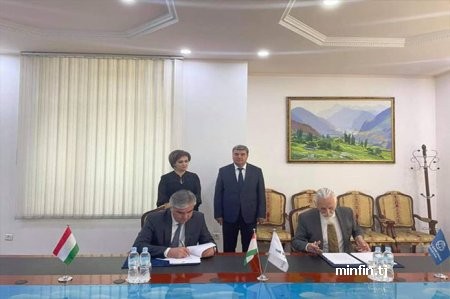
On Monday June 21, Mr. Faiziddin Qahhorzoda, the Minister of Finance of Tajikistan, and Jan-Peter Olters, World Bank Country Manager for Tajikistan, signed an agreement on financing the Strengthening Resilience of the Agriculture Sector Project in Tajikistan.
A US$58 million grant to finance the project will be provided by International Development Association (IDA).
According to the World Bank, the project aims to strengthen the resilience of the agriculture sector and contribute to post-COVID-19 recovery.
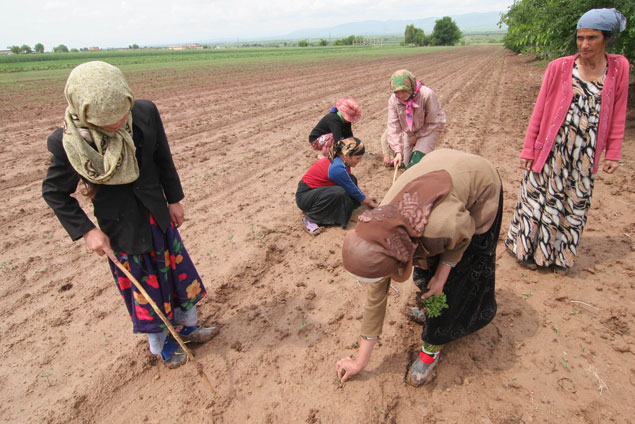
The project, which will be implemented by the Ministry of Agriculture of the Republic of Tajikistan over the next five years, seeks to strengthen the foundation for a more resilient agriculture sector, which will in turn help to accelerate agricultural diversification, contribute to the development of a viable sector of private micro, small, and medium-sized enterprises in rural areas, and generate additional employment opportunities.
The project will support the development of viable seed, seedling, and planting material systems to ensure the availability, in sufficient quantity and quality, of locally adapted and climate resilient varieties of these inputs for priority crops. Investments in inputs technology are important for improving production and productivity, contributing to food security and nutrition and enhancing efficient use of other inputs, including water, fertilizers, pesticides, and insecticides.
The project will further engage with research institutions associated with the Tajikistan Academy of Agricultural Sciences and the Tajik Agrarian University to strengthen longer-term capacities in research and development of technologies, with solutions for climate adaptation and sector development.
In addition, interventions are foreseen to support investments in agri-logistical centers for horticulture value chains to improve sectoral competitiveness and farmers’ access to markets, promote agricultural diversification, quality, and food safety standards and reduce food loss and waste. Availability of such centers is expected to attract more private investments in horticulture, including fruit orchards, which can contribute to climate mitigation and job creation.
In parallel, the project will provide support to efforts to strengthen the capacity of select public institutions for crisis prevention and management. The priority areas for capacity-building include real-time monitoring of agricultural production and agrometeorology, soil testing for improved soil fertility management, and crop protection and locust control.
Currently, the World Bank is financing 21 projects in Tajikistan totaling $1.1 billion. Since 1996, the World Bank has provided over $2 billion in IDA grants, highly concessional credits, and trust funds for Tajikistan. The World Bank Group is committed to continuing its support for Tajikistan as it strives to improve the lives and meet the aspirations of its young and growing population.