
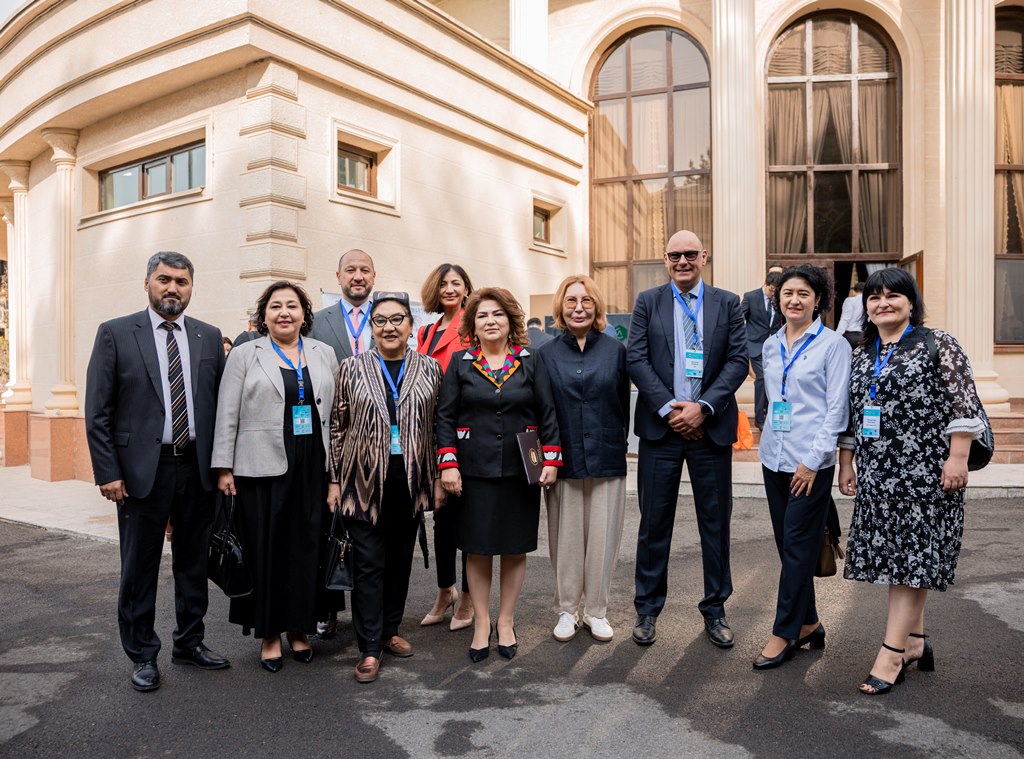
The Association of Financial Organizations of Tajikistan (AFOT), established in 2004, brings together commercial banks, microfinance institutions, and related financial entities in the country. AFOT serves as a platform for professional dialogue among market participants, government agencies, and regulators. Its activities align with Tajikistan’s National Development Strategy through 2030, focusing on sustainable economic growth and improved living standards.
Zebunniso Fattidinova, Executive Director of AFOT, outlines the key directions of the Association’s work.
AFOT’s role in the financial sector
“Our primary mission is to support AFOT members in efforts to make financial services more accessible, high‑quality, and convenient for both citizens and businesses. We champion digitalization, modern financial technologies, and stronger cooperation between financial institutions and the government,” says Fattidinova.
AFOT prepares analytical reports, organizes industry events, and helps attract donors and investors to the sector. Between 2023 and 2025, the Association expanded its international cooperation by signing memoranda with partners such as the World Bank, the Central Asian Alliance of Microfinance Associations, the Fintech Association of Uzbekistan, the Central Asian Fintech Association, and global firm Plass‑Forum.
In 2025, AFOT celebrated its 21st anniversary. Initially founded as the Association of Microfinance Organizations of Tajikistan, it reflected the early niche of the sector, which was heavily supported by international projects focused on remote regions.
“In the early years, up to 120 small microfinance organizations were members, operating in remote areas and issuing microloans,” recalls Fattidinova. As the economy and banking sector developed, many of these organizations evolved into major microfinance and banking institutions.
Institutional structure and AFOT membership
Today, Tajikistan has a tiered financial system, from non‑profit microloan funds and microcredit organizations to microdeposit institutions and banks. Several institutions that started at lower levels now operate as full banks, including Spitamen Bank, International Bank, Kommerzbank, Alif, Arvand, Humo, Dushanbe‑City, Vasl, and Iman International.
Of the 19 banks in the country, 15 are AFOT members. The Association now covers nearly 90% of the financial market, including 15 banks, 16 microdeposit organizations, 2 microcredit organizations, and 17 microloan funds
In addition to core members, AFOT includes fintech firms, consulting businesses, the Tajikistan Credit Information Bureau, the Deposit Insurance Fund, and the Zamonat Guarantee Fund — all participating in regulatory discussions and industry initiatives.
AFOT Training Center: building human capital
A cornerstone of AFOT’s work is its training center — the only one of its kind in Central Asia within a financial association. Serving the sector for nearly 20 years, the center trains around 1,500 banking professionals annually, offering programs from one‑day seminars to multi‑day certified workshops nationwide.
Training topics are designed in response to industry needs. Recent focus areas include cybersecurity and compliance.
Research and analytics
AFOT conducts extensive analytical activities, including the “Mystery Shopper” study — now in its eighth year — assessing customer service quality, branch infrastructure, navigation, signage, security, and service points. Each institution receives an individual report, alongside a consolidated sector overview.
Quarterly financial sector reviews examine liquidity, credit growth, payment infrastructure, and funding costs. One study highlighted persistently high resource costs and the need for long‑term financing, with international partners such as the EBRD providing targeted resources for SME, green, climate, and women’s entrepreneurship financing.
AFOT also assesses financial access in remote and mountainous regions. In partnership with GIZ, reports on the Gorno‑Badakhshan Autonomous Region, the Garm area, and Sughd region were shared with financial institutions for future planning.
The COVID‑19 pandemic accelerated digital adoption, with banks expanding remote services, online payments, and e‑wallets — now widely used across the country.
Industry events and professional community
AFOT regularly organizes major industry events. The Central Asian Financial Summit 2025, held on September 22–23, brought together regional representatives, international organizations, and national development institutions. Over the past five years, more than 60 global experts have participated in AFOT events.
The Association presents annual professional awards. Beginning in 2026, the “Excellence in Microfinance” award will be expanded to “Excellence in Financial Services.”
AFOT places strong emphasis on promoting women in finance and female entrepreneurship, hosting competitions with clear selection criteria for women bankers and entrepreneurs.
Strategy and forward look
In 2025, AFOT approved a new development strategy to enhance the financial sector, broaden access through digitalization, strengthen cybersecurity, promote financial literacy, and protect market participants’ interests.
“Our focus is on practical advocacy and problem‑solving at the level of regulators and government bodies,” says Fattidinova. Coordination involves the National Bank of Tajikistan, Ministry of Economy and Trade, State Committee on Investment, Ministry of Justice, and international partners.
Priority strategic areas include digital banking, youth banking, and open banking solutions with support from the National Bank of Tajikistan and global partners.
“Our Association is committed to achieving the objectives outlined by President Emomali Rahmon: sustainable economic growth, improved quality of life, and expanded access to financial resources. With GDP reaching 173 billion somoni and economic growth of 8.4% in 2025, the foundation is set to sustain growth above 8% in 2026,” Fattidinova emphasizes.
AFOT continues to establish itself as a platform for systemic dialogue, expertise, and innovation shaping the future of Tajikistan’s financial sector.
“2026 marks 35 years of Tajikistan’s independence. In this context, AFOT will focus on consolidating the efforts of the financial sector, government, and international partners to strengthen economic sovereignty and the resilience of the national financial system,” Fattidinova concludes.
