
The United States’ bold move to detain Venezuelan leader Nicolás Maduro and signal a takeover of the country’s oil sector has triggered sharp condemnation from Russia and China — but drawn a muted response from Central Asia. As the geopolitical fallout unfolds, oil markets and energy exporters in the region are bracing for what could become a major shake-up. As of January 5, none of the Central Asian republics had issued an official statement regarding Maduro’s capture or Washington’s apparent intent to restore and dominate Venezuela’s oil industry.
Eurasianet says regional governments appear to be treading carefully, especially in light of increased U.S. diplomatic outreach. President Donald Trump has extended invitations to Kazakh President Kassym-Jomart Tokayev and Uzbek President Shavkat Mirziyoyev to attend the 2026 G20 summit — making open criticism of U.S. actions politically unwise.
"The priority is to maintain stability and caution, observing events from the sidelines," said regional analyst Marat Shibutov, quoted by Kazakh outlet Arasha.kz. While speaking specifically about Kazakhstan, his remarks reflect a broader sentiment across the region.
In contrast, Russia and China reacted vociferously. The Russian Foreign Ministry blasted Washington’s “aggressive actions” and accused the U.S. of violating Venezuelan sovereignty. China’s Foreign Ministry labeled the U.S. operation a “hegemonic act” and a “serious breach of international law.” Foreign Minister Wang Yi later accused the U.S. of playing “global judge.”
While diplomacy plays out on the surface, concerns are mounting over the broader implications for global energy markets — especially for Russia and oil-exporting states in Central Asia.
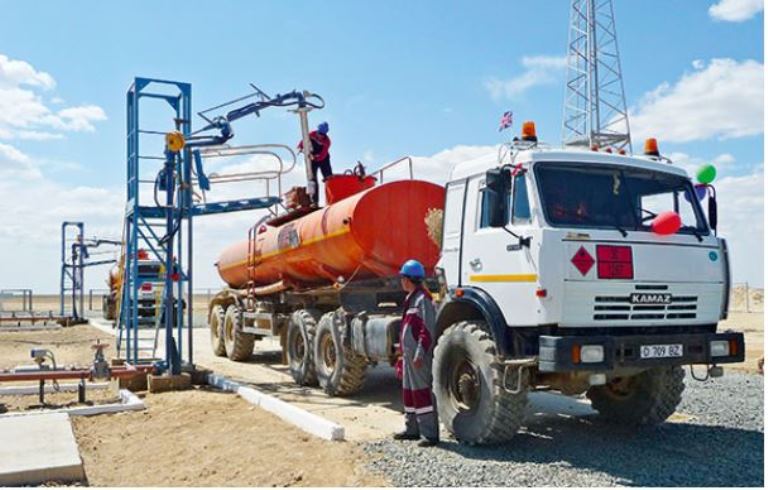
Kazakhstan, the region’s top oil producer, is reportedly watching developments closely. Analysts say the short-term impact on Kazakh oil exports and revenues will likely be minimal, but the long-term risks are real.
Venezuela holds up to 20% of the world’s proven oil reserves. While production once peaked at 3.5 million barrels per day in the late 1990s, output has since collapsed to under 1 million bpd due to years of neglect and infrastructure decay. President Trump has pledged to revitalize Venezuela’s oil sector through U.S. energy firms, though no concrete plan has been unveiled.
Kazakh analysts remain skeptical about any rapid resurgence. “The main issue with Venezuelan oil is its quality — it’s thick, difficult to extract, and costly,” said Askar Ismailov of the Global Gas Centre in Geneva, speaking to Forbes.kz. “A fast ramp-up is almost physically impossible.”
Ismailov added that while the U.S. may seek to expand market share, it is unlikely to flood markets at a loss, meaning oil prices could remain relatively stable in the short term.
Others, like Kazakh economist Baurzhan Shurmanov, reportedly warn of political uncertainty affecting supply dynamics. If Venezuela eventually returns to producing 3–3.5 million bpd, “it could shift the balance of power in global energy markets,” he told Arbat.Media.
China and Cuba, currently major recipients of Venezuelan oil, could face immediate disruptions. China imported around 470,000 bpd of Venezuelan oil in 2025, while Cuba relies on Caracas for 40% of its energy imports. A potential cutoff would be especially devastating for Cuba, echoing the “special period” economic crisis of the 1990s.
Kazakh outlet Zakon.kz called the U.S. operation “the most significant geopolitical upheaval of the decade,” adding that if Venezuelan production increases by 1.5 million bpd, it could act as a “powerful brake on global oil prices,” potentially pushing them down to $50–$55 per barrel.
According to Eurasianet, that scenario would spell trouble for Russia — and to a lesser extent, Kazakhstan. Shurmanov noted that sustained low prices could reduce Kazakhstan’s standing as a key supplier and erode state revenue.
For Russia, the stakes are existential. Sanctioned oligarch Oleg Deripaska reportedly warned that U.S. control over Venezuela’s oil sector could be a “calamitous development” for President Vladimir Putin, whose regime depends on energy revenues to fund both domestic governance and the war in Ukraine.
“A $50-per-barrel price could seriously undermine the Russian budget and shake the Putinist system,” Deripaska wrote on Telegram. He warned that the Kremlin’s model of state capitalism — reliant on grand projects and limited private sector involvement — is unsustainable in the face of reduced income.
Deripaska also noted that private businesses in Russia are being squeezed to cover budget gaps, and will likely bear the brunt of taxation in the coming year, further suppressing economic growth and potentially sparking unrest among the financial elite.
