
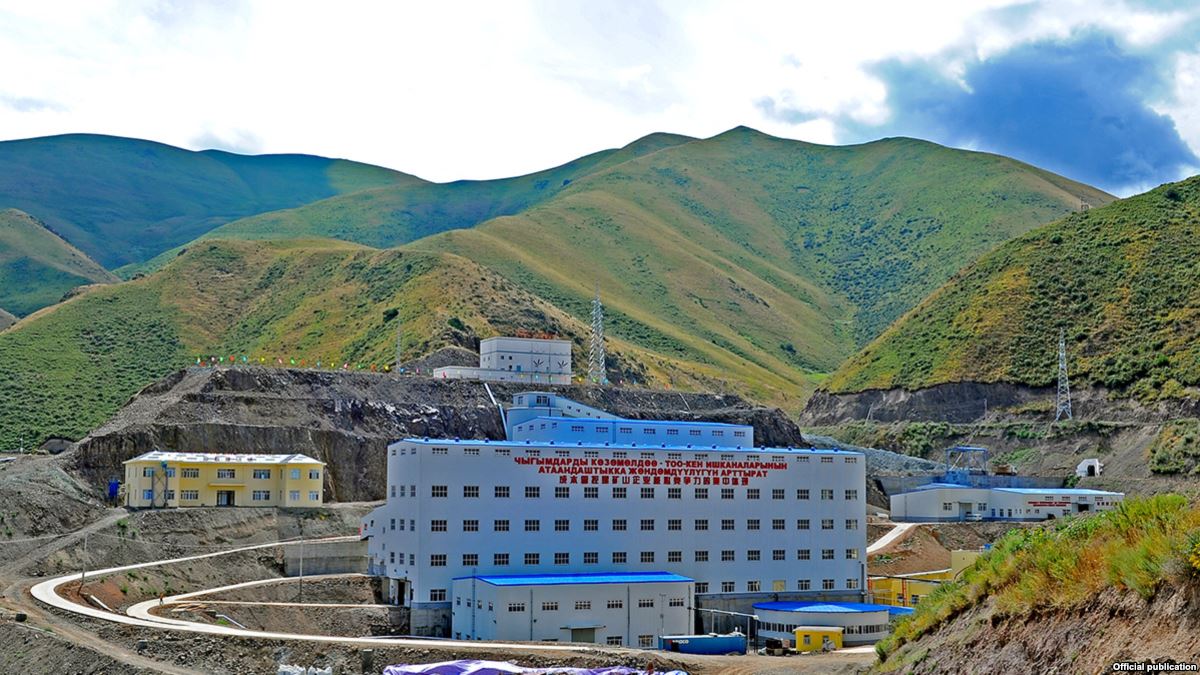
An article by Radio Liberty’s Tajik Service says Chinese companies in Tajikistan are facing increasing challenges from local communities, particularly in the mining sector. One of the latest flashpoints occurred in November at the Zarafshon gold mine near Panjakent, one of the country’s largest Chinese-run ventures.
Tajik workers at Zarafshon, frustrated by stagnant wages and alleged salary disparities with Chinese colleagues, petitioned management for a raise. They argued that their current wages, ranging from 2,000 to 4,000 somonis ($215 to $430), do not reflect the rising cost of living. For many miners in this demanding and hazardous field, this petition marked a rare act of collective protest.
Two anonymous workers told RFE/RL that their wages have remained unchanged despite rising consumer prices. "The work is physically demanding and risky," one miner explained. "We expect salaries to reflect that." They also called for equal pay with Chinese workers, whose conditions have sparked growing resentment.
However, the company rejected the wage increase request, offering instead a modest bonus system to begin in 2026. Bonuses would include 200 somonis ($21) for birthdays and 500 somonis ($53) for Navrouz, the Persian New Year. Workers expressed frustration, saying the bonuses wouldn’t address their core concerns. "Bonuses are nice, but they are not enough to change our lives month-to-month," one miner said.
Company response (UPDATE)
In a statement provided to RFE/RL after publication, the Zarafshon mining company said it operates in full compliance with Tajikistan’s labor legislation and remains committed to responsible employment practices and the long-term social and economic development of local communities.
The company stated that it employs around 3,000 people in Tajikistan, 97 percent of whom are Tajik citizens, and that the majority of management positions are held by locally hired staff.
Zarafshon also said that employee salaries are on average 3.2 times higher than the national average wage, adding that, according to aggregated payroll data, the wages of Tajik employees increased by 16 percent year-on-year between 2024 and 2025, reaching an average of approximately 7,927 somonis ($850) per month.
Tajikistan’s Ministry of Labor, Migration, and Employment told RFE/RL that it imposed fines on Zarafshon in 2024 following inspections related to labor protection and workplace safety. However, the ministry said it did not find evidence of wage differences between local and foreign workers during its review.
This dispute at Zarafshon reflects broader tensions between Chinese enterprises and local communities in Tajikistan, where China is the largest foreign investor. Since 2007, Chinese companies have invested over $5.1 billion in various sectors, including mining and infrastructure.
While these investments have contributed to economic growth, they have also led to dissatisfaction among local workers. At Zarafshon, some Tajik employees claim significant pay disparities between local and Chinese staff. One former employee anonymously claimed that while Tajik engineers earn between 5,000 and 7,000 somonis, Chinese engineers make up to 30,000–40,000 somonis. Some Tajik workers reportedly labor up to 11 hours a day to earn more, despite the standard eight-hour workday.
The Tajik government, which has publicly praised Chinese investments, denies these allegations. In response to RFE/RL, the Ministry of Labor, Migration, and Employment stated that it imposed fines on Zarafshon for labor violations in 2024 but found no evidence of wage disparities. Despite this, local suspicions persist that Chinese workers receive preferential treatment.
Wider discontent and environmental concerns
The Zarafshon mine, which accounts for 70% of Tajikistan’s gold production, has become a symbol of both opportunity and inequality. President Emomali Rahmon praised the mine during his visit in July 2023, emphasizing its importance to the economy. However, local workers have raised concerns about environmental damage linked to mining activities. A 2024 RFE/RL investigation found that nearby communities reported health issues, including premature births and respiratory illnesses, which they attribute to mining. These claims have been denied by Tajik officials, but they highlight growing mistrust of Chinese-backed projects.
Compounding the issue, security risks surrounding Chinese ventures are increasing. In December 2025, construction on a key section of the Dushanbe–China highway was halted after two deadly attacks near the Afghan border. On November 30, gunmen killed two Chinese workers and injured two others at a construction site in the Darvoz district. The attacks, attributed to an "armed terrorist group," have raised concerns about the safety of Chinese nationals in Tajikistan.
The bigger picture
Tajikistan's dependence on Chinese investments continues to grow, with Chinese companies now accounting for 84% of the country’s gold production. Major Chinese-backed projects include the Pokroud gold deposit and the $136 million TALCO Gold mine in the northern Ayni district.
However, with rising living costs, stagnant wages, and increasing safety concerns, the long-term stability of Chinese projects in Tajikistan may be at risk. Workers at Zarafshon and other ventures remain dissatisfied, and local authorities are caught in a complex dispute between foreign investors and their communities.
For now, the frustrations of Tajik workers signal a widening gap between the promises of foreign investment and the realities faced by local populations. It remains uncertain whether Chinese-backed projects will address these concerns or if further unrest will follow.
