
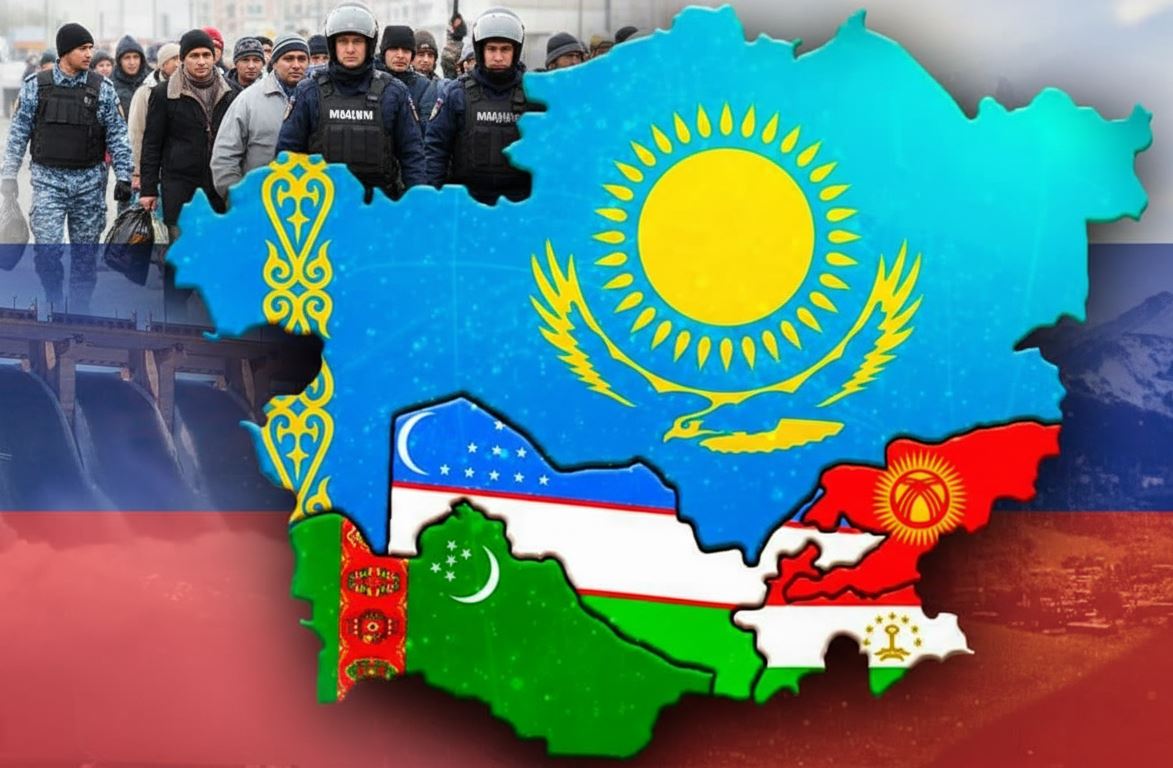
The recent threats made by Russian propagandist journalist Vladimir Solovyov and ideologue Alexander Dugin regarding a "special military operation" in Central Asia and the denial of the sovereignty of its countries have sparked a wave of outrage and concern in the societies of the region. While the official authorities of these countries have refrained from commenting on the matter, civil society and some public figures have condemned these statements.
Experts in Tajikistan interpreted these remarks as an attempt to demonstrate power in a time of strategic weakness, potentially laying the groundwork for future intervention. They argued that such comments would never have been made on state-controlled television without the approval of the Kremlin.
What did Solovyov and Dugin say?
On January 10, Kremlin mouthpiece Vladimir Solovyov stated on his show Solovyov Live that Armenia and the countries of Central Asia are Russia's "sphere of influence," and that losing these countries would pose an "extremely serious problem" for Moscow. He questioned, "If Russia has launched a 'special military operation' in Ukraine to ensure its national security, why can't it do the same in other areas of its influence?" Solovyov emphasized that international law and sovereignty should not be respected.
Following this, the Russian far-right political philosopher Alexander Dugin, who is an ideologue and influential propagandist closely associated with the Kremlin, declared that the era of nation-states had ended and openly opposed the sovereignty of Central Asian countries, including Tajikistan. He argued, "We cannot accept the existence of independent Armenia, Georgia, Azerbaijan, Kazakhstan, Uzbekistan, Tajikistan, and Kyrgyzstan. In the new world model, nothing can be independent. Sovereignty is over, and nation-states belong to the past." Dugin went further, stating that territories not under Russia’s control must either become part of the Russian Union or be turned into military bases for the West, NATO, or China, asserting, "There is no middle ground."
Reactions from Central Asia
The Armenian Ministry of Foreign Affairs quickly summoned the Russian ambassador to deliver an official protest, stating that such remarks were "not in line with the spirit of strategic partnership."
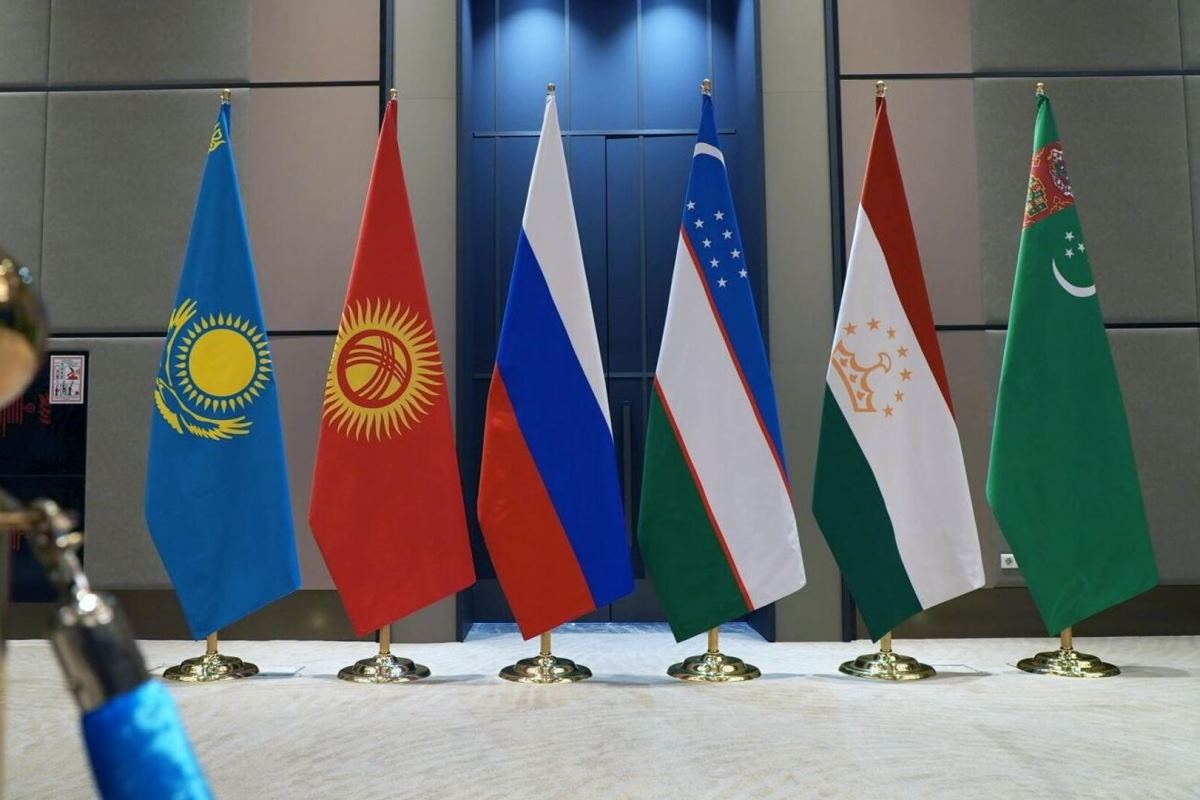
While official responses from the governments of Central Asian nations, including Tajikistan, have been absent, civil society groups in these countries voiced their objections.
In Kyrgyzstan, several politicians and public figures called for Solovyov to be declared a persona non grata and banned from entering the country. Kyrgyz media characterized his statements as a direct threat to national sovereignty.
Kazakh and Uzbek media also published reactions from experts and civil society members condemning the remarks by Solovyov and Dugin.
Maria Zakharova, a spokesperson for the Russian Ministry of Foreign Affairs, was forced to clarify that Solovyov's words were "not the official position of the state," but rather his "personal opinion." She emphasized that Russia continues to view Central Asian countries as "strategic partners."
What do experts think?
Rustam Azizi, an expert on countering violent extremism, told Asia-Plus that the statements were more of an attempt to shift the internal propaganda agenda in Russia.
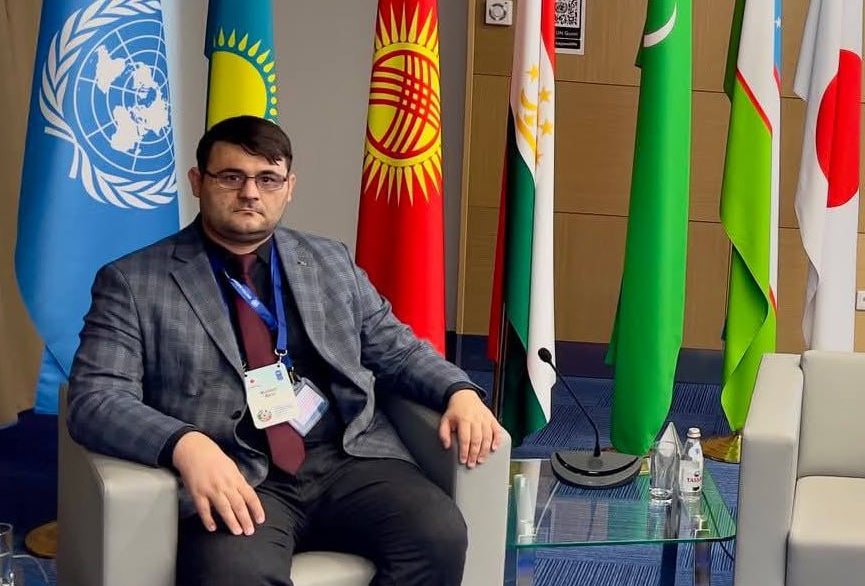
"Against the backdrop of Russia's loss of influence in several areas — such as the fall of Assad’s regime in Syria, the crisis with Maduro, and uncertainty in Ukraine — propagandists are forced to seek new themes and ideas," Azizi explained.
According to Azizi, the goal of figures like Solovyov and Dugin is primarily to create the illusion that Russia is still a great power, at least on the regional level. "This is a symbolic effort to maintain the image of a superpower in the minds of the domestic audience," he said.
Azizi believes that while these statements may not be preparing the ground for immediate intervention, they could be testing reactions and preparing for possible future actions.
Why it’s important to respond
Azizi stressed that for many years, post-Soviet countries refrained from responding harshly to such comments in order to avoid escalating tensions, and Russian propagandists took advantage of this silence. However, recent reactions from civil society activists and public figures indicate that this era may be coming to an end. "Today, even with official caution, Central Asian societies and countries are actively defending their sovereignty in the public and media space," Azizi noted.
He added that Tajikistan's response should not be emotional but must involve expressing a clear position on legal and media platforms.
"Dugin's words are the dream of an utopian"
Regarding Dugin’s statements, Azizi asserted that from an international law perspective, denying the independence of Central Asian countries is entirely unfounded. "The independence and sovereignty of Central Asian countries are recognized by the international community, including the United Nations and other key institutions, and, most importantly, they are recognized by Russia itself. From a geopolitical perspective, this is not a reality but rather a utopian dream," Azizi said.
He emphasized that the world is no longer bipolar and pointed out that the countries of the region have the ability to pursue their own political strategies, diversify their partnerships, and protect their interests. Azizi warned that such statements directly fuel xenophobia and anti-immigrant sentiments. "This is not just a political action; it's also a social and humanitarian issue. Therefore, the countries of the region must be active not only in diplomacy and media but also in protecting the rights of their citizens."
"This is not an accident; it's a deliberate policy"
Shuhrat Latifi, an expert on migration, believes that Solovyov and Dugin are voicing what the Russian leadership does not want to publicly acknowledge, but what is, in fact, part of their plans.
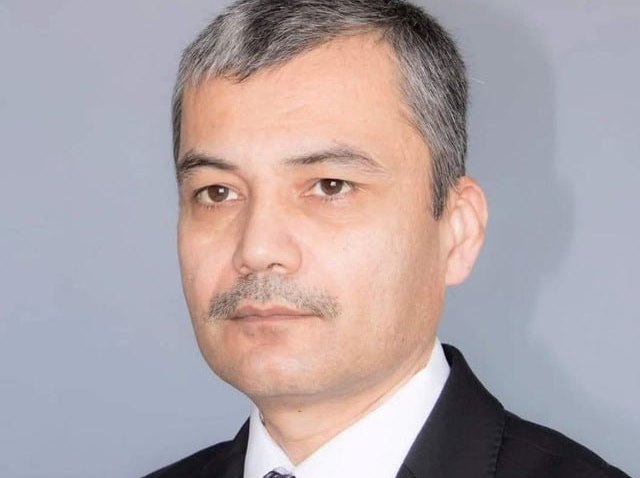
He dismissed the explanation by Russia's Ministry of Foreign Affairs as meaningless, emphasizing that "there are no personal opinions on state-controlled channels."
Latifi warned that the propagation of such ideas is part of a strategy called "the Overton window," where shocking ideas are introduced to prepare the public for more extreme actions. He highlighted that Russian propaganda has long claimed that "these states were artificially created" and "should be returned." This is a real threat, according to Latifi, who fears it could lead to actions such as raids or even the loss of citizenship.
Why should Central Asia be with Russia?
Saifullo Safarov, a political scientist and former first deputy director of the Center for Strategic Studies under the President of Tajikistan, offers a different perspective on the matter.
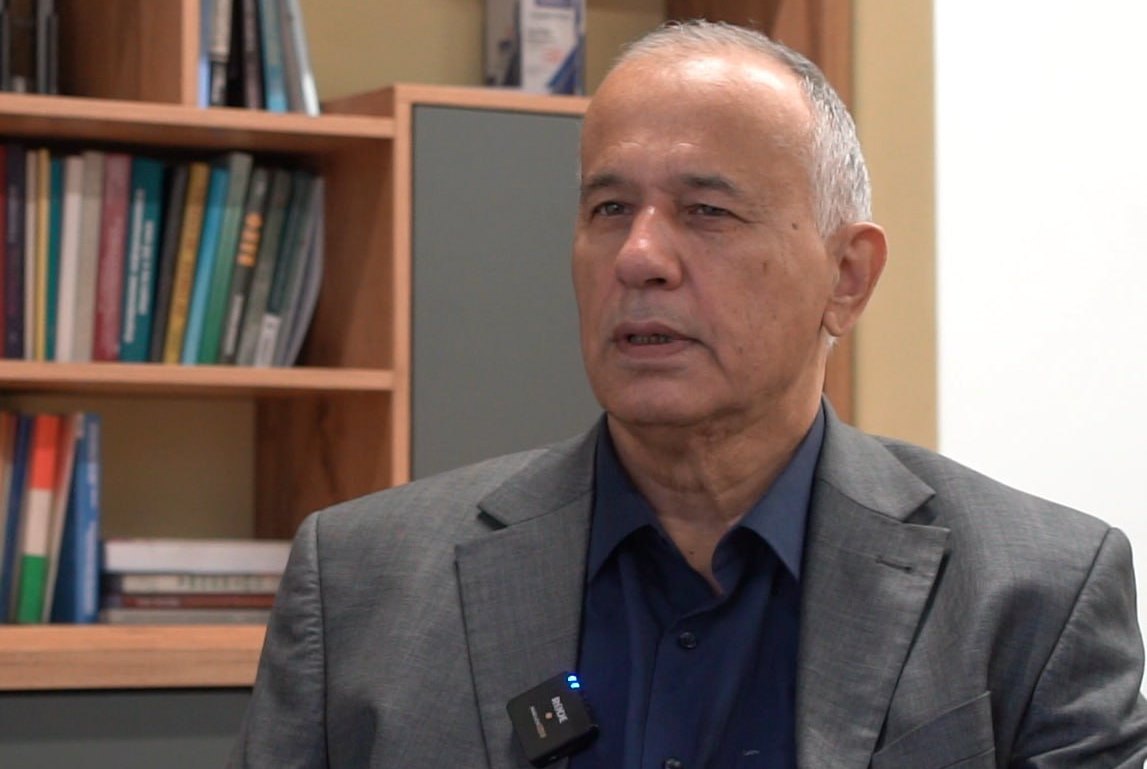
He noted that "Dugin and Solovyov express the views of certain groups, but this cannot represent the opinion of all of Russia."
"We have known for over 100 years what Russia means to us. There have always been two groups in Russia: one that is with us and another that is with others. We need to rely on those who support us," Safarov remarked.
While the political scientist did not specify who he meant by "those supporting us" and "others," he emphasized that "every day on the internet, hundreds of people support the Tajik people and Tajikistan."
"For us, being with Russia is very important. Our people see Russians as their relatives. They are just like us, except for the fascist and nationalist groups," Safarov emphasized.
Can Central Asia prevent negative outcomes?
Rustam Azizi outlined several important directions for preventing such threats: "Preventing these threats depends on internal unity, a balanced foreign policy, the development of political awareness, and the protection of the media space."
Latifi believes that Central Asian countries should maintain good relations with Russia but strengthen their sovereignty. He pointed out three factors that will restrain Russia:
· The growing role of China, which considers Central Asia an area of economic interest and will not allow disorder.
· Russia's military and economic weakness, as the war in Ukraine has depleted its resources.
· The increasing influence of Turkey, which serves as a powerful alternative in military, political, and cultural terms, especially with its close ties to the Turkic countries of Central Asia.
How real is the threat?
Rustam Azizi believes that direct military intervention in Central Asia is unlikely, but the attempt to create an ideological and informational basis for such actions could continue. He explained that the threat may not manifest in a sudden military attack but could involve a gradual preparation of the psychological and informational groundwork for future influence. However, Azizi noted that Central Asian societies have learned from the events in Ukraine and are now more vigilant: "Today, the societies of Central Asia are no longer willing to ignore threats, and this in itself is a deterrent factor."
Shuhrat Latifi, commenting on the situation in the context of Ukraine, pointed out that in Tajikistan, the Russian-speaking population is small, so the "protection of Russian speakers" argument would work much less than it did in Donbas. However, Latifi is concerned that other scenarios, such as creating unrest along the Afghan border or using the Collective Security Treaty Organization (CSTO) for military intervention, could be used as pretexts for a "soft occupation."
