
The inflation rate in Tajikistan’s consumer sector in 2025 was 3.5%, according to the country’s Agency for Statistics. The structure of inflation shows diverging trends: food products rose in price by 4.5% last year, non-food products by 1.5%, and paid services to the population by 5.7%.
Among food items, the following groups saw relatively higher price increases:
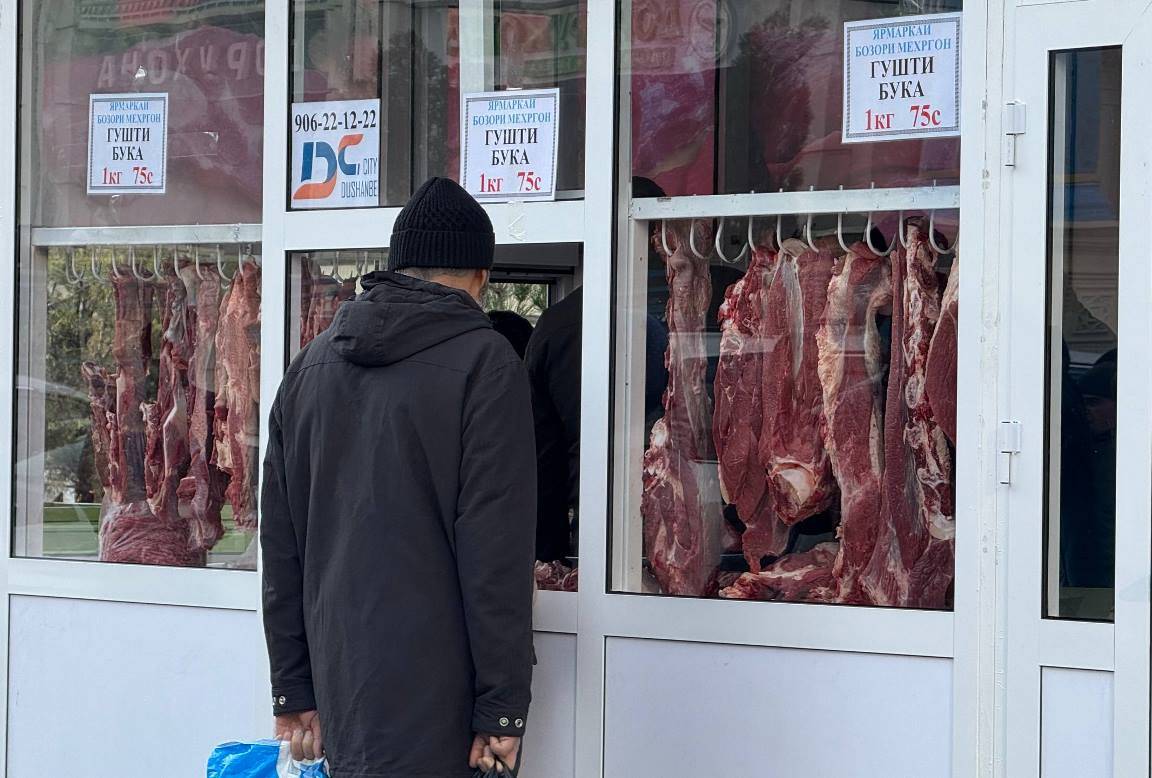
· Meat products – by 10.9%
· Vegetables – by 10.2%
· Fruits – by 7.3%
The following goods saw a more noticeable decrease in price:
· Flour – by 11.5%
· Sugar – by 8.1%
· Pasta – by 7.6%
· Rice – by 3.9%
Non-food products in 2025 became more expensive mainly due to price hikes for:
· Motor oil – by 10.6%
· Detergents – by 4.1%
· Clothing and footwear – by 3.3%
At the same time, prices for the following decreased significantly during the past year:
· Liquefied gas (LPG) – by 31.9%
· Diesel fuel – by 5.1%
· Gasoline – by 3.3%
· Pharmaceuticals – by 3.0%
Tariffs for paid services provided to the population increased mainly due to the rising cost of:
· Housing and communal services (utilities) – by 10.4%
· Personal services – by 9.8%
· Catering services (public dining) – by 9.0%
It is noted that for the fourth consecutive year, Tajik statisticians have reported an unprecedentedly low inflation rate:
Inflation Rate by Year:
· 2022 — 4.2%
· 2023 — 3.8%
· 2024 — 3.6%
· 2025 — 3.5%
Prior to this, the lowest inflation rate in all the years of the republic's independence was recorded only in 2013 — 3.7%.
Meanwhile, many residents, as in the previous three years, express skepticism regarding the official data, noting that the real increase in prices for products and services in their daily lives is much higher.
Earlier, the National Bank of Tajikistan, in a comment to "Asia-Plus" regarding the distrust of official inflation data, explained that the rise in prices for individual goods does not reflect the overall situation. The regulator notes that the consumer basket includes a wide range of goods and services; therefore, evaluating the inflation level based only on the price increase of a few items is incorrect.
A similar position was previously expressed by the statistics agency, noting that official inflation is calculated based on an expanded basket of goods and services, which differs significantly from the set of purchases of an individual consumer.
