
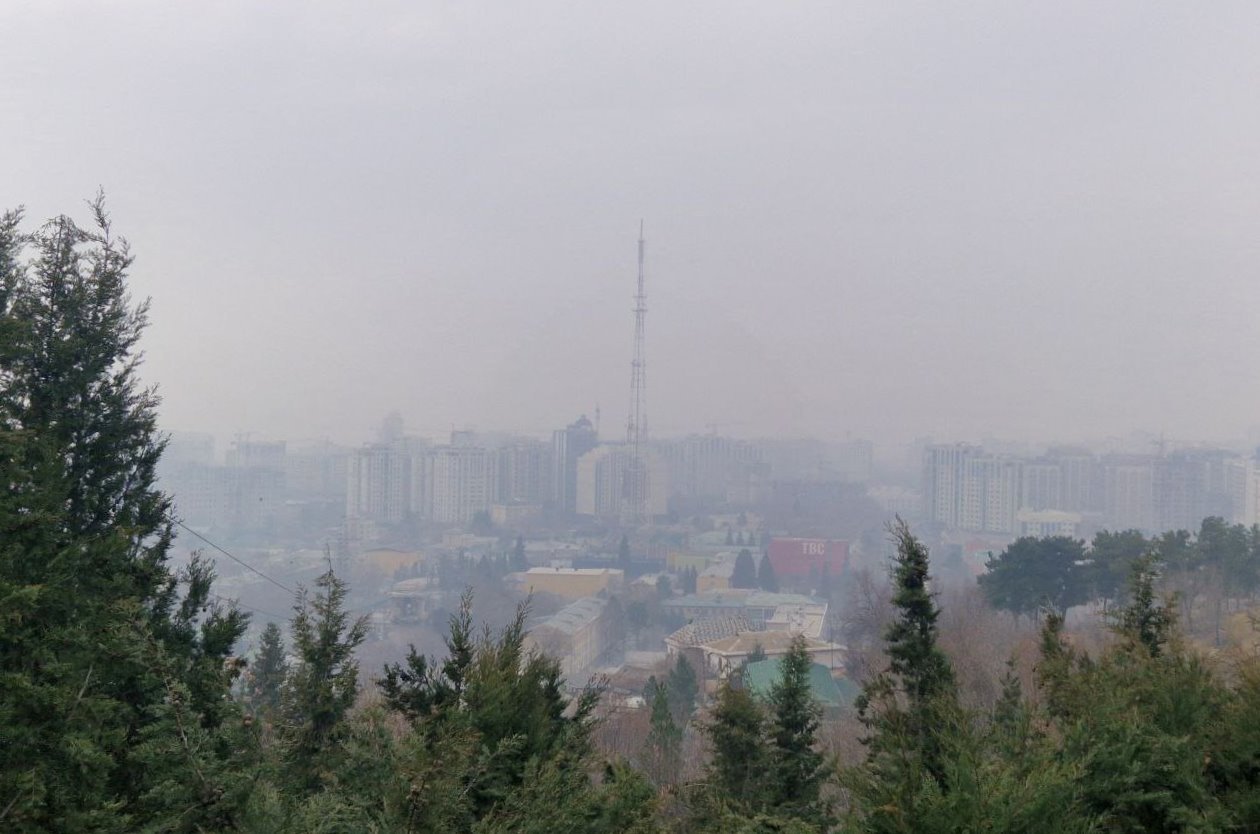
In a report released at a news conference in Dushanbe, Bahodour Sheralizoda, Chairman of the Committee for Environmental Protection, revealed on January 29 that in 2025, Tajikistan recorded 63 dust storms, which lasted a total of 216 days.
"Each dust storm that reaches our country lasts for several days. The sources of these storms are the deserts of North Africa and the Middle East, where dust and sand are carried by cyclones to our region," Sheralizoda explained.
Last year, the Committee for Environmental Protection reported 35 dust storms in 2024, although the number of days was not specified. According to the report "Situational Analysis: Dust and Sand Storms in Central Asia," the frequency of such storms in Tajikistan has increased more than tenfold over the past 30 years. While only 2-3 dust storms were recorded annually in the early 1990s, today more than 35 such storms are registered each year.
Dushanbe has consistently ranked among the most polluted cities in Central Asia for several years, with the situation continuing to worsen. In 2024, the annual average concentration of PM2.5 in Dushanbe was 46.3 µg/m³, which is 7-9 times higher than the World Health Organization's recommended limit.
Tajikistan ranked 6th globally for PM2.5 pollution in 2024, and Dushanbe had previously been listed among the top four most polluted capitals in the world.
Why are dust storms increasing in Central Asia?
The first reason is the sharp decline in rainfall in the region due to global climate change. This leads to droughts, which result in the loss of vegetation cover. As a result, wind easily lifts dust, sand, and salts into the atmosphere. According to the UN, 152.06 million hectares, or 38.43% of the land area in Central Asia, is experiencing drought conditions, with 1.33% under severe drought and 0.23% under extreme drought.
The second cause is the degradation of irrigated lands, which has intensified desertification. As a result, sand and dust are easily blown into the air, even with a slight breeze, reaching mountain peaks. Today, approximately 30% of the agricultural land in the region is subject to severe degradation.
A third factor is the drying up of the Aral Sea, which has led to increased dust, sand, and salt being lifted from its bed over the past six months. Combined with the "Afghan winds" blowing from the desert regions of Afghanistan, dust storms have reached mountainous areas.
The fourth reason, according to experts from the UN Convention to Combat Desertification (UNCCD), is that while dust and sand storms (DSS) are a seasonal natural phenomenon, poor land and water resource management exacerbates the problem. This includes excessive siltation of irrigation canals and waterways caused by DSS and drifting sands, transport disruptions, and deteriorating surface water quality.
Finally, the fifth factor contributing to the frequency of DSS is the rise in construction projects across the region, particularly in major cities. Often, these projects proceed without adequate landscaping, which leads to the suspension of dust and sand particles in the air during windy conditions. Additionally, high-rise buildings trap wind, dust, and sand in urban areas, further exacerbating the pollution.
