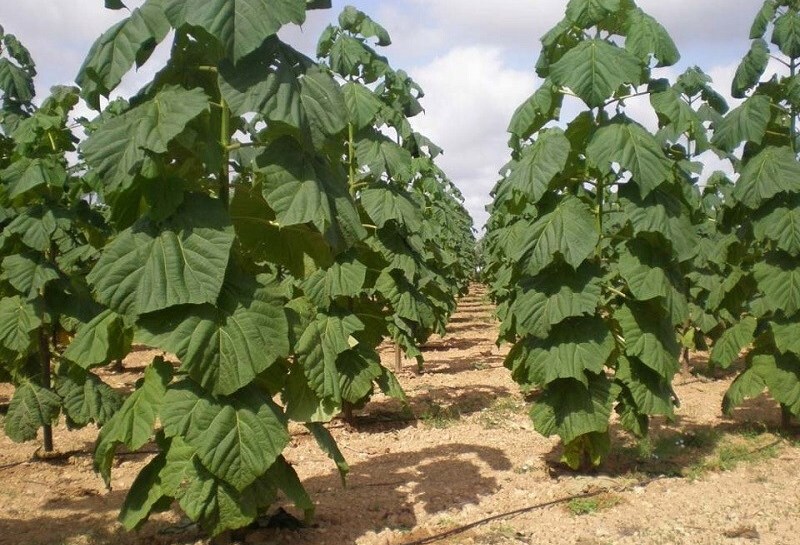
Tajikistan plans to plant paulownia trees on 100 hectares in 2026 as part of the 2024–2028 Paulownia Development Program.
The initiative aims to establish industrial plantations of the fast-growing tree to supply timber, boost beekeeping, produce livestock feed, protect agricultural land from erosion, and improve the country’s environmental conditions.
Why Paulownia?
According to the program, Tajikistan’s forests are largely composed of shrubs, making domestic production of commercial timber limited. As a result, up to 90–95% of construction timber is imported.
Experts believe that establishing industrial paulownia plantations using modern cultivation methods could help conserve natural resources and reduce pressure on existing forests.
Paulownia is a fast-growing species that can reach up to 30 meters in height. It is known for its large leaves and rapid growth. While adaptable to different soils, it performs best on irrigated and moderately moist land.
One of its key advantages is regenerative capacity: after being cut, the tree can regrow from its root system, which may remain viable for 70–100 years.
The program also highlights environmental benefits. A single tree can absorb up to 22 kilograms of carbon dioxide per year and release up to 6 kilograms of oxygen. A 10-hectare plantation could absorb up to 275 tons of CO₂ annually while helping prevent soil erosion.
Honey, feed, and timber
Paulownia is valued not only for timber production but also as a strong honey plant, capable of yielding up to 800 kilograms of marketable honey per hectare.
Its leaves can serve as livestock feed, with potential yields of 35–40 tons of green biomass per hectare annually, comparable in nutritional value to alfalfa.
The wood is lightweight, dries quickly, and is resistant to deformation, making it suitable for construction and furniture manufacturing. The biomass can also be used for pellets, biogas production, and heating.
Program targets and plans for 2026
The 2024–2028 program aims to expand industrial cultivation of paulownia, increase plantation areas, and reduce pressure on natural forests. It provides for the production of seedlings in forest nurseries, improved profitability of forestry enterprises, job creation, and continued scientific research.
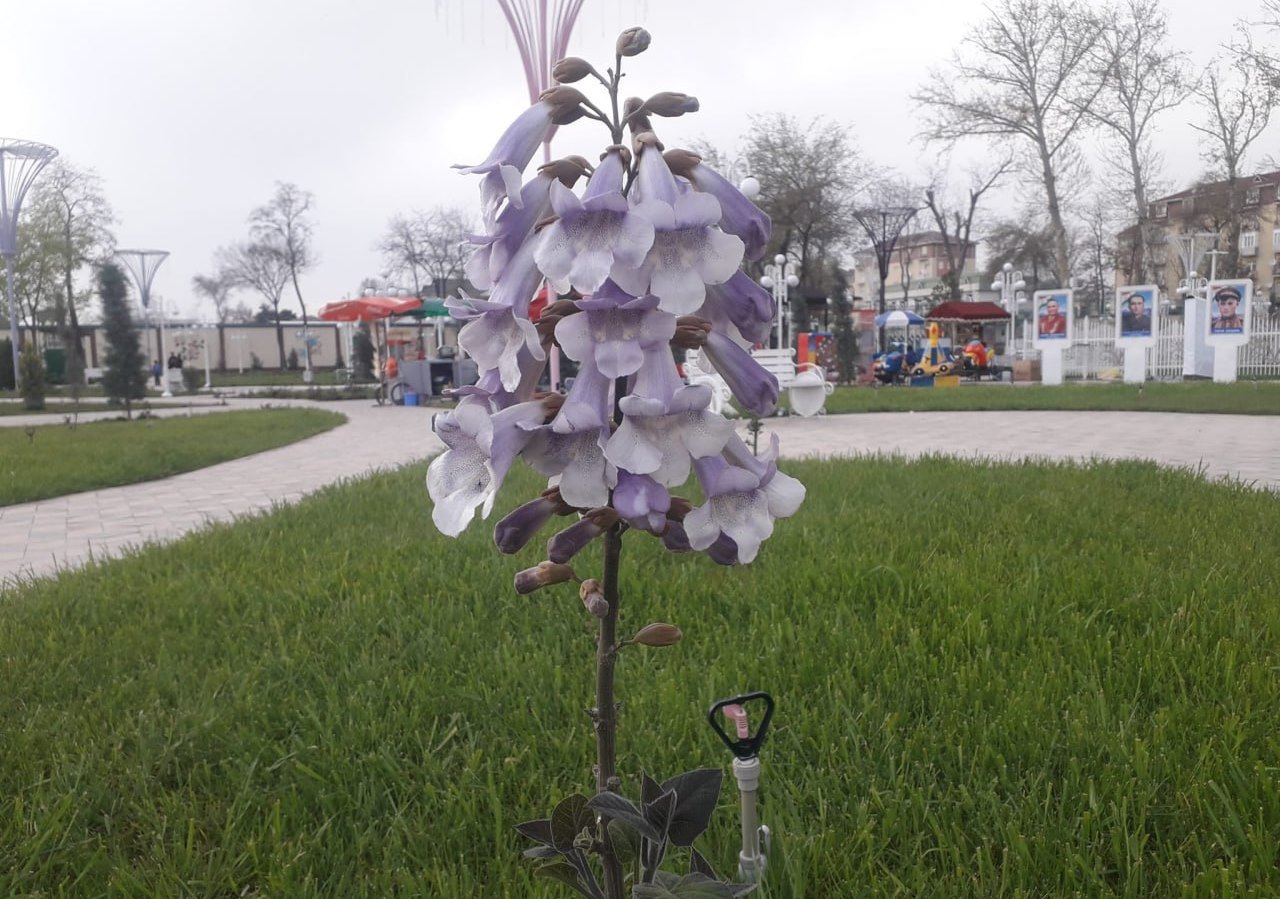
Key indicators include the annual production of up to 100,000 seedlings, the establishment of more than 200 hectares of industrial plantations, and the development of research-based cultivation guidelines.
In 2026, the third phase of the 2024–2026 action plan, authorities plan to grow 100,000 seedlings in nurseries operated by the Forestry Agency and the Ministry of Agriculture. Funding for this component amounts to 3 million somoni.
An additional 75 hectares of industrial plantations are to be established in 2026, as part of a broader target of 200 hectares over three years. Funding for plantation development next year is set at 3.75 million somoni.
Some 30,000 somoni will be allocated for continued research, while 250,000 somoni will support the development of wood processing, including the creation of a small-scale timber enterprise.
Total funding for 2026 activities exceeds 7 million somoni. By 2028, the program envisions establishing at least 1,000 hectares of paulownia plantations across Tajikistan.
Paulownia is a genus of seven to 17 species of hardwood tree (depending on taxonomic authority). They are present in much of China, south to northern Laos and Vietnam and are long cultivated elsewhere in eastern Asia, notably in Japan and Korea.
In China, it is popular for roadside planting and as an ornamental tree. Paulownia needs much light and does not like high water tables.
The genus, originally Pavlovnia but now usually spelled Paulownia, was named in honor of Anna Pavlovna, queen consort of The Netherlands (1795–1865), daughter of Tsar Paul I of Russia. It is also called "princess tree" for the same reason.
Paulownia is extremely fast growing; up to 6 meters in one year when young. Some species of plantation Paulownia can be harvested for saw timber in as little as five years.
Paulownia is also used in Chinese agroforestry systems because it grows fast, its wood is light but strong, its flowers are rich in nectar, its leaves make good fodder for farm animals, it is deep-rooting, and it is late-leafing and its canopy is quite sparse so that crops below it get both light enough to grow and shelter.