Tajikistan’s financial authorities are negotiating with the European Union to lift sanctions imposed last autumn on three commercial banks, Chairman of the National Bank of Tajikistan (NBT), Firdavs Tolibzoda, said at a news conference in Dushanbe on November 13.
According to Tolibzoda, a special working group has been established and has already held several meetings with EU representatives. An authorized EU official has been appointed to discuss the possible review of the restrictions.
The National Bank chief said domestic banks are strengthening their sanctions compliance systems to prevent violations and prohibited transactions. Banking legislation is also being revised to reduce the risk of future sanctions.
At the same time, Tolibzoda acknowledged that the restrictions have already had a negative impact and may continue to affect the banks’ operations despite enhanced controls.
How the banks were sanctioned
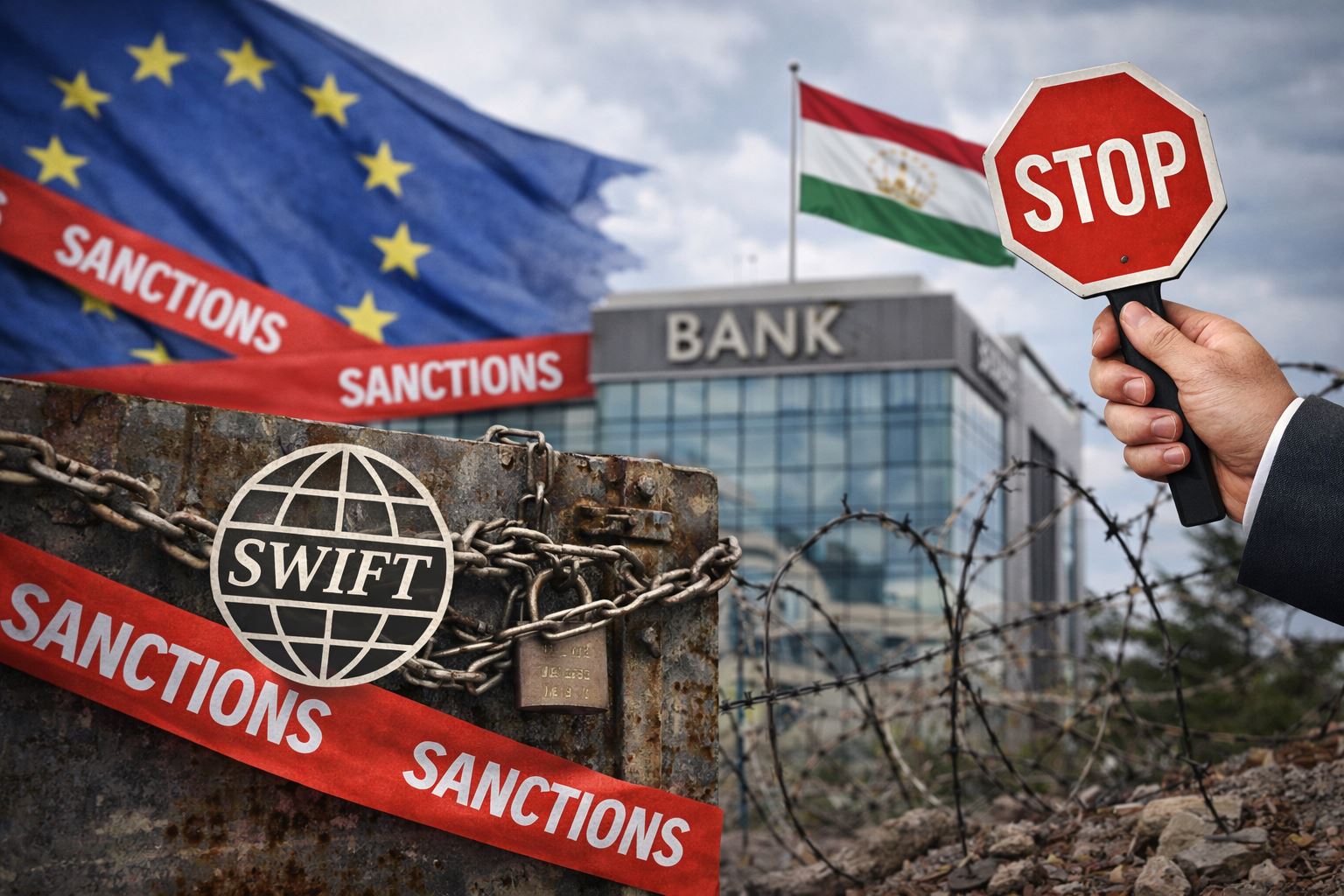
The sanctions against Open Joint-Stock Company (OJSC) Kommerzbank of Tajikistan, Closed joint-Stock Company (CJSC) Spitamen Bank, and CJSC Dushanbe City Bank were introduced under the EU’s 19th sanctions package against Russia and took effect on November 12 last year.
The EU Council prohibited European banks and companies from conducting transactions with certain financial institutions in third countries that Brussels believes may have facilitated the circumvention of anti-Russian sanctions. The list included entities from Tajikistan, Kyrgyzstan, Kazakhstan, the UAE, and Hong Kong.
The public version of the EU decision did not detail specific transactions or amounts, referring broadly to “assisting in sanctions circumvention” and “supporting the Russian economy.”
Practical implications
The sanctions bar European financial institutions from conducting any transactions with the listed banks, effectively blocking euro payments through European infrastructure and complicating international settlements.
Domestically, the banks continue to operate normally, with account services, card operations, and mobile banking unaffected. However, international transfers—particularly those involving Europe—are subject to additional checks and may take longer.
Experts note that even targeted sanctions increase scrutiny from foreign banks and payment systems, raising compliance costs and operational risks.
Reaction of authorities and banks
The day after the sanctions list was published, the NBT said it was analyzing the situation together with commercial banks and consulting international partners to minimize potential consequences.
The sanctioned banks described the measures as unfounded and assured clients that their operations remain stable. According to their statements, domestic transactions continue without restrictions, while alternative channels are being explored for certain international transfers.
Tajikistan’s Foreign Ministry expressed concern over the inclusion of the banks in the sanctions list and said steps are being taken to reduce potential damage. The government’s response has been measured, emphasizing dialogue rather than public confrontation.
Why it matters for the banking sector
Experts say the main challenge is not only the formal ban on transactions with the EU but also reputational risks. Being placed on a sanctions list can lead to stricter scrutiny by international partners, higher compliance costs, and the loss of correspondent banking relationships.
Even if domestic operations remain stable, international settlements may become slower and more expensive, while some foreign partners may limit cooperation due to heightened risk.
In this context, ongoing talks with the EU and efforts to strengthen sanctions compliance are seen as an attempt not only to lift restrictions on specific banks but also to reduce long-term risks for the country’s financial system.
About the sanctioned banks
The Kommerzbank of Tajikistan has operated since 2007 and has authorized capital of 370 million somoni. It focuses on cashless payments and support for small and medium-sized businesses. Its main shareholder (93%) is the insurance company Sughurtai Avvalini Milli.
The Spitamen Bank, established in 2014 on the basis of the microcredit institution Spitamen Capital, has authorized capital exceeding 180 million somoni. It is fully owned by Spitamen Insurance.
The Dushanbe City Bank received its banking license in 2022. Its authorized capital stands at 221 million somoni, with a 70% controlling stake held by Avesta Group.