In Tajikistan, the spring military service draft is underway and will last for two months. In 2025, a new law was adopted to protect the status of teachers, and later, amendments were made to the law on military service. According to these changes, some teachers are granted a deferment from military service.
The Ministry of Education and Science and the National Center for Legislation provided clarifications. However, not everything is clear from them…
From “rural” to “general” – changes in legislation
In Tajikistan, until October 2025, only teachers of rural schools were exempt from military service during their employment. Their colleagues in cities and districts were subject to army draft. But at the end of 2025, the Law “On the Status of a Teacher” was adopted, equating city and district teachers to rural ones.
Based on the adopted law, the parliament made amendments to the Law “On Military Duty and Military Service”: in its Article 31, the words “rural general education” were replaced with the word “general education.” Therefore, according to these amendments, teachers of general education institutions in districts and cities also received the right to deferment from military service during their activities.
Khomid Khoshimzoda, the first Deputy Minister of Education and Science, stated at the time in parliament that these changes were made to elevate the status of teachers and address the issue of staff shortages.
Now, subparagraph 11 of Article 5 of the Law “On the Status of a Teacher” grants all teachers the right to deferment from military service, but subparagraph 4 of part 2 of Article 31 of the Law “On Military Duty and Military Service” restricts this benefit. According to this point, only teachers who have completed pedagogical directions and are working in general education institutions are entitled to deferment from military service.
Let’s explain clearly – which teachers are exempt from the army?
The first condition for exemption – working in general education institutions
The Ministry of Education and Science, in a written response to “Asia-Plus,” reported that according to the requirements of Article 31, part 2, point 4 of the Law “On Military Duty and Military Service,” only teachers of “general education institutions” have the right to deferment from compulsory military service.
The group of “general education institutions,” according to the Regulation, includes:
– primary education institutions (grades 1–4);
– basic general education institutions (grades 5–9);
– secondary general education institutions (grades 10–11);
– gymnasiums;
– lyceums;
– presidential schools;
– boarding schools.
The second condition. Higher pedagogical education
At the same time, according to another norm of this law, not all teachers of general education institutions enjoy this benefit. Article 31 of the Law “On Military Duty and Military Service” emphasizes that teachers with “higher pedagogical education” are exempt from military service during their employment.
According to the Ministry of Education and Science, each graduate of an institute or university in the “pedagogical direction” receives “higher pedagogical education.”
The specialties of the “pedagogical direction” are defined by the government resolution “On the Approval of the List and Classification of Directions and Specialties of Professional Education.”
In table 6 of the annex to this resolution, more than 600 specialties in the field of pedagogy are listed.
For example, the specialty “English Language” with the code 1-02 03 06-01 belongs to the “Pedagogy” group, and its graduate is considered a “teacher.” However, the specialty “Modern English Language” with the code 1-21 06 01-02 04 belongs to the “Linguistic Sciences” group, and its graduate is considered a “Linguist. Translator” specialist.
Thus, a graduate of the first specialty, when working in general education institutions, has the right to deferment from military service, whereas a graduate of the second specialty does not enjoy this benefit and is subject to conscription.
Why is there such a difference?
The Ministry of Education and Science explained that the educational programs of pedagogical specialties are specifically aimed at training specialists in the field of education. In this direction, students study not only their subject but also teaching methods, psychology, pedagogy, and other profile disciplines.
While in other directions, educational programs are oriented towards training industry specialists, such as translators, philologists, engineers, economists, and they do not include disciplines related to pedagogy.
According to the Ministry, in addition to the Tajik Pedagogical University, pedagogical specialists are also trained in the following higher education institutions: Tajik National University, Tajik Institute of Physical Culture, Tajik International University of Foreign Languages, state universities of Khorog, Bokhtar, Kulob, Dangara, and Khujand, as well as the Pedagogical Institute in the Rasht district.
If students are studying in the specified universities in pedagogical directions and their diplomas indicate the code of this group of specialties, they receive the right to deferment from military service.
Lawyer: there is a contradiction in the legislation
According to Muzaffar Bobojonov, a lawyer with the Office of Civil Freedoms who deals with military draft issues, there is a contradiction between two laws regarding the deferment of teachers from military service – “On the Status of a Teacher” and “On Military Duty and Military Service.”
He notes that according to subparagraph 11 of Article 5 of the Law “On the Status of a Teacher,” the right to deferment from military service is granted to “teachers during their pedagogical activities,” and this norm is general and covers all teachers (regardless of the type of institution and specialty or diploma).
However, subparagraph 4 of part 2 of Article 31 of the Law “On Military Duty and Military Service” restricts this right only to teachers of “general education institutions” and only to those who have “higher pedagogical education.”
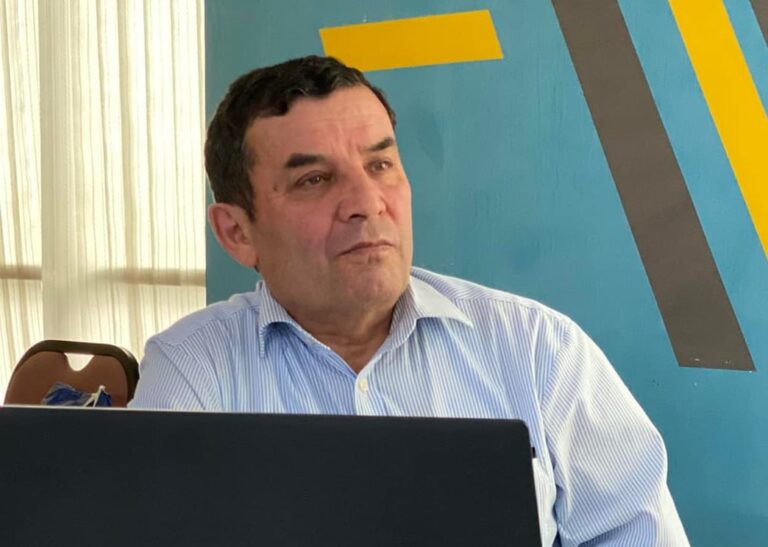
Photo: DOSH
According to him, despite the amendments made to Article 31, part 2, subparagraph 4 of the Law “On Military Duty and Military Service,” it still does not fully comply with subparagraph 11 of Article 5 of the Law “On the Status of a Teacher.”
The lawyer emphasizes the need to eliminate contradictions between the two sectoral laws.
Bobojonov notes that according to Articles 9 and 84 of the Law “On Normative Legal Acts,” both laws have equal legal force. However, in this case, the “special act” takes precedence over the “general act”:
“The Law ‘On the Status of a Teacher’ is a general normative legal act, while on the issue of deferment, the Law ‘On Military Duty and Military Service’ is a special normative legal act,” says Bobojonov.
The Ministry of Education and Science denied the existence of contradictions but referred the clarification of this issue to the National Center for Legislation.
The regulatory body does not recognize contradictions
“When applying, according to the Law ‘On Normative Legal Acts,’ preference is given to the sectoral law, that is, the Law ‘On Military Duty and Military Service,'” said Izzatullo Saidzoda, director of the Center, at a press conference on January 30.
Thus, he effectively confirmed the words of the lawyer from the Office of Civil Freedoms but stated that he does not see any contradictions, “on the contrary, there is a logical connection here,” Saidzoda said.
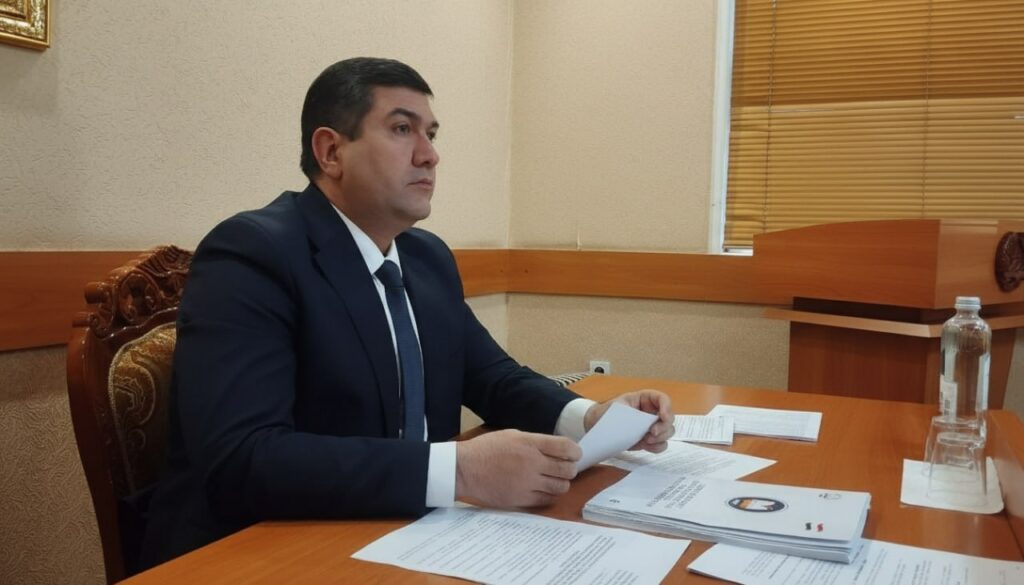
Photo asia+
To summarize. In fact, in Tajikistan, the legislation functions as follows: teachers who are exempt from military service during their employment are those who:
– firstly, work in general education institutions (schools, gymnasiums, lyceums, presidential schools, and boarding schools);
– secondly, have an education in the pedagogical direction.
Other categories, including college teachers; as well as university and institute teachers without a specialized education, working in schools with diplomas in other specialties, are subject to conscription.