
DUSHANBE, July 23, 2013, Asia-Plus – The Russian Red Cross (RSS) has opened a public reception room at Russia’s Federal Migration Service (FMS)’s office in Moscow.
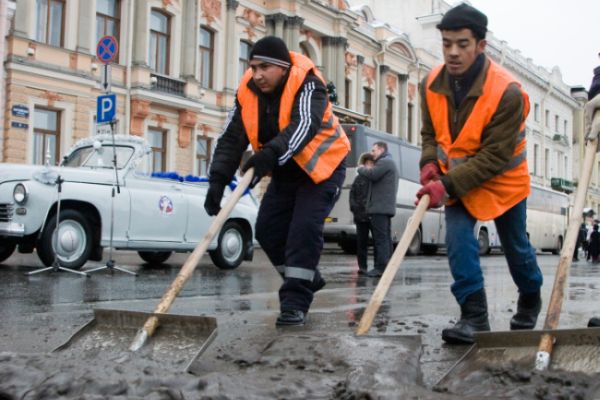
Migration is one of the world”s major issues. In a country like Russia alone around 12-14 million people – 10 per cent of the population – are migrants, the majority of them from neighboring countries. They seek work and often find work. But thousands of migrants face problems, being cheated by employers or syndicates or getting on the wrong side of the authorities simply because they are not fully aware of the rules and the laws.
A ceremony of an official opening of the public reception room reportedly took place on July 19. This event reportedly has become a key stage in cooperation between the Russian Red Cross, the International Federation of Red Cross and Red Crescent Societies (IFRC) and Russia’s Federal Migration Service (FMS) in jointly seeking solution to social and legal problems facing labor migrants and promoting their social adaptation and integration into society.
The event was attended by the main partners on the project, including FMS senior representatives, IFRC Regional Representative in Russia Davron Muhammadiyev and the RRS International Department head S. Kobets.
Representatives of Tajik and Moldavian embassies, Tajik migration service agency’s office in Moscow and partner organizations such the “Migration and Law” Integration Center, IFRC, International Organization for Migration (IOM), UN Human Rights Office, UNHCR, Russia’s FMS, and
Uzbegim
(newsletter for Uzbek migrants) also attended the event.
The public reception room for migrants has been set up in the framework of a joint project of RRS and IFRC, Strengthening Support to the Most Vulnerable Migrants through Improvement of Their Access to Medical, Social and Legal services. This project has been implemented since 2011.
The public reception room for migrants is expected to make available accurate information and consultations on migration and labor legislation, issues related to prevention of social diseases (HIV and tuberculosis), etc. Besides, a hotline for migrants has been launched and it will work in close cooperation with already existing hotlines, including the hotline of the “Migration and Law” Integration Center that will allow providing consultations to migrants not only in the Russian but also in their native languages.
