DUSHANBE, February 14, 2014, Asia-Plus – A trial in a lawsuit over an article written by the
Asia-Plus
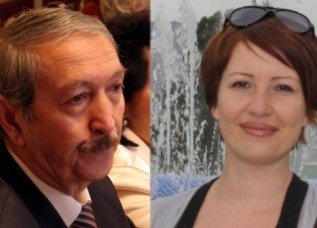
newspaper editor Olga Tutubalina is nearing completion.
Hearing of arguments took place in a court of Dushanbe’s Firdavsi district on February 13. Lawyer Inoyat Inoyatov, who represents the Asia-Plus newspaper and its editor, noted before the hearing that the defense was not ready for the hearing because there were many unclarified issues. Inoyatov, in particular, asked to conduct repeated linguistic examination.
According to him, three experts, who conducted the linguistic examination, are not specialists in the Russian language; they are specialists in the Tajik philology.
Lawyer Rustam Ustoboyev, who represents the plaintiffs, noted that the linguistic examination had been conducted after the article had been translated from Russian into Tajik.
Judge Surayo Jobirova, who presides over the trial, rejected Inoyatov’s motion for repeated linguistic examination.
By court’s decision the defense will make statement on February 17. Some experts consider that the case will be solved by that date.
We will recall that five Tajik creative unions and thee separate individuals have filed a lawsuit against
Asia-Plus
newspaper editor Olga Tutubalina in the court in Dushanbe’s Firdavsi district. They ask for 200,000 somoni as compensation for moral damage.
The case stems from the article by Olga Tutubalina published in the newspaper on May 29, 2013. In her article about Tajik intelligentsia, Ms. Tutubalina used citation from Lenin’s letter to Maxim Gorky of September 15, 1919, “The intellectual forces of the workers and peasants are growing and getting stronger in their fight to overthrow the bourgeoisie and their accomplices, the educated classes, the lackeys of capital, who consider themselves the brains of the nation. In fact they are not its brains but its shit.”
Plaintiffs say the article by Olga Tutubalina insulted honor and dignity as well as reputation of a large social group of people and caused moral damage to them. Besides, they consider that Ms. Tutubalina distorted Lenin’s words in her article.
For her part, Ms. Tutubalina said that she did not mean to insult anyone. At the same time, she insists she has nothing to apologize for.