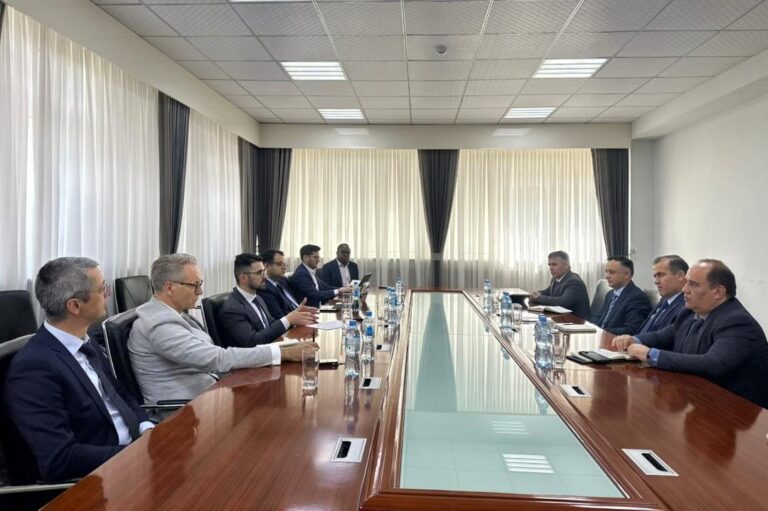
DUSHANBE, May 2, 2015, Asia-Plus — The progress of implementation of the program for trade-economic and cultural-humanitarian cooperation between Tajikistan and Turkmenistan fro 2014-2015 was discussed at the 6th meeting of the Tajikistan-Turkmenistan intergovernmental commission for trade and economic cooperation that took plc here on April 28-29.
C-chaired by Tajik Minister of Energy and Water Resources Usmonali Usmonzoda and Turkmen Minister of Finance Muhammedguly Muhammedov, the meeting reportedly discussed issues related to economic cooperation between the two countries.
The sides, in particular, discussed state and prospects of further expansion of bilateral cooperation between Tajikistan and Turkmenistan in the fields of energy, commerce, transportation, agriculture, industry, health, education and science.
A special attention was paid to diversification of economic ties between the two countries and expansion of export-import transactions.
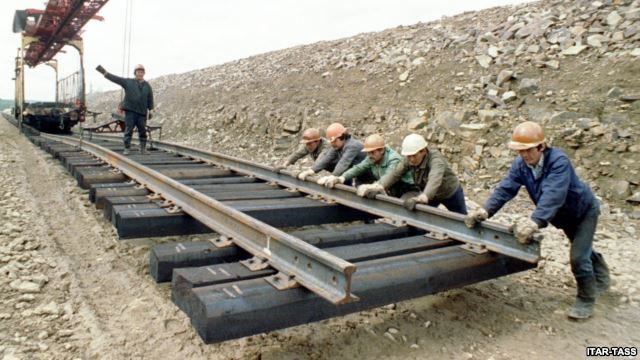
Implementation of the regional project aiming at construction of a rail link connecting Turkmenistan, Afghanistan and Tajikistan was also among major topics of the meeting.
The meeting reportedly ended in signing of a relevant protocol.
We will recall that a memorandum of understanding (MoU) for construction of the rail link connecting the three countries was signed during a trilateral meeting of the presidents of Tajikistan, Turkmenistan and Afghanistan that took place in the Turkmen capital Ashgabat on March 20, 2013.
The 400-kilometer railroad is expected to connect the Afghan town of Akina-Andkhoy to Atamurat-Ymamnazar in Turkmenistan and Panj in Tajikistan. Turkmen workers are also to build the Afghan section of the railway.
The presidents of Afghanistan, Tajikistan, and Turkmenistan officially inaugurated the construction of the railway connecting the three nations on June 5, 2013. The ceremony took place in Turkmenistan”s northeastern province of Lebap and the presidents buried a time capsule with a message to future generations under the first section of the railway line near the town of Atamyrat.
The previous fifth meeting of the commission was held in the Turkmen capital, Ashgabat, on April 21, 2014.
According to the Agency for Statistics under the President of Tajikistan a two-way trade between Tajikistan and Turkmenistan last year valued at more than 110 million U.S. dollars, which was 8 percent fewer than in 2013. Meanwhile, trade between the two countries over the first quarter of this year has amounted to nearly 25 million U.S. dollars, which was 68 percent more than in the same period last year.