


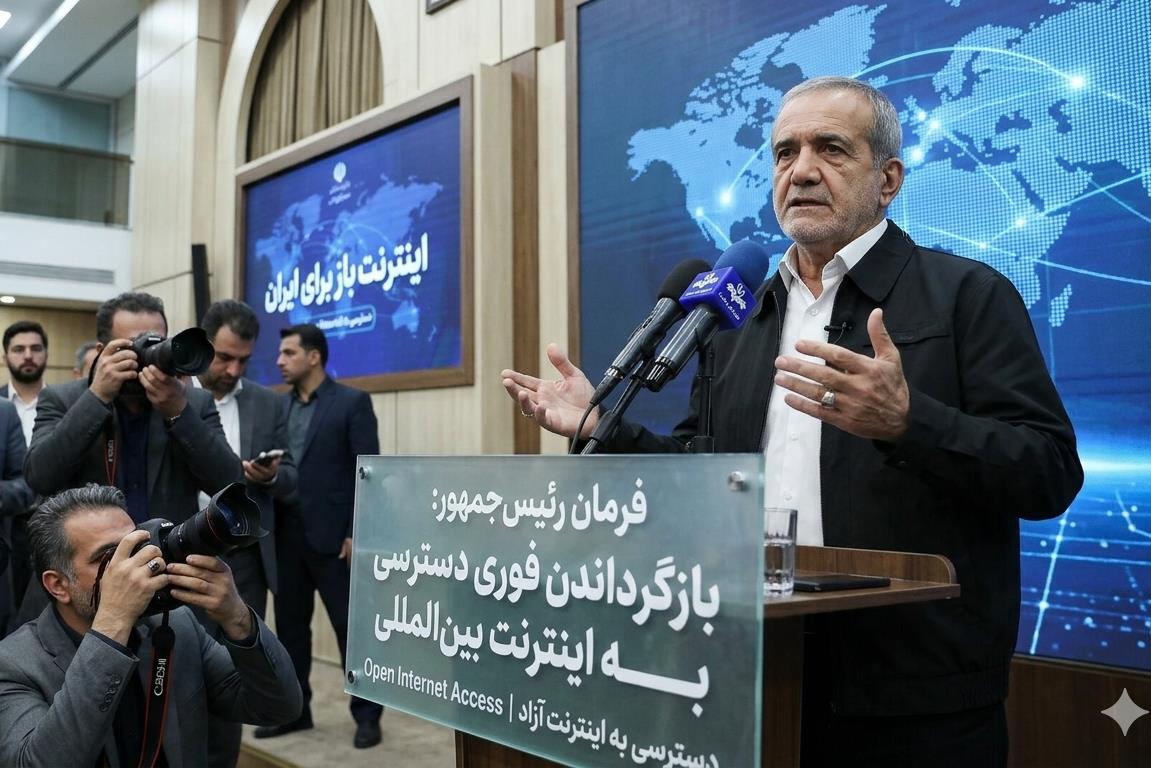
Iranian authorities have ordered the restoration of international internet connectivity to levels seen before January 8, Reuters reported on May 25 citing Iranian state-run media.
The directive was issued by Iranian President Masoud Pezeshkian, who instructed the Ministry of Communications to re-establish access to global networks following months of severe restrictions.
According to Reuters, the internet observatory NetBlocks reported on May 25 that most users in Iran had been unable to access the global internet for 87 days, with only limited access available through expensive and advanced VPN services used to bypass restrictions.
Reuters says the initial nationwide shutdown began on January 8 amid widespread anti-government protests. Connectivity was partially restored in February, but a renewed full shutdown was imposed on February 28 following military strikes by the United States and Israel on Iranian territory.
Reuters further noted that even under normal conditions, Iran maintains strict controls over internet access, with many websites blocked and users redirected to state-controlled internal networks, or intranets. This system is widely used for public services, including education, with schools increasingly relying on online learning platforms operating within the domestic network.
However, the timeline and technical process for fully restoring international connectivity remain unclear.
Meanwhile, the London-based outlet Iran International reported on May 25 that Iran’s IRGC-linked Fars News Agency has expressed support for President Pezeshkian’s decision. The agency described the move as a necessary “technical and security” step that would have been implemented eventually as cyber conditions improved.
Fars News Agency said the restrictions were originally introduced to prevent cyber espionage and protect critical infrastructure during wartime conditions and a surge in cyberattacks.
It also rejected criticism over the decision-making process, denying claims that authorities bypassed legal procedures or established a “parallel council” outside the Supreme National Security Council.
In unusually direct remarks, the agency reportedly accused some reformist media outlets of attempting to politicize the issue, urging national unity during what it described as a “full-scale war.”