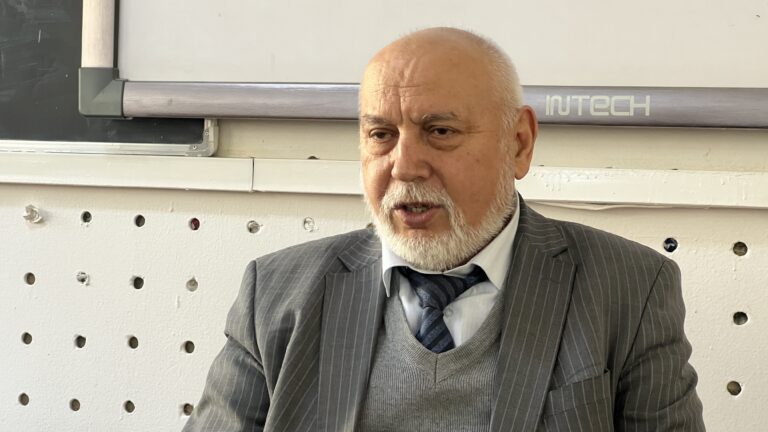
DUSHANBE, April 8, Asia-Plus — Two deminers, including one French national, have been killed and three others have been injured during mine-clearing operations in Tajikistan over the past five years, since the Tajikistan Mine Action Program was launched, Parviz Mavlonqulov, project manager, Tajik Mine Action Cell (TMAC), said in an interview with Asia-Plus.
According to TMAC, the project is funded by international donors, which have to date provided more than 1.5 million euros for mine-action activities in Tajikistan. This year, Tajikistan needs more than $300,000 for carrying out mine-clearing operations and OSCE has already expressed readiness to fund these works, according to TMAC.
This year, TMAC is working out various off-budget projects aimed at supporting measures to seek and destroy landmines and unexploded ordnance (UXOs), use mine detecting dogs and establish regional cooperation on mine-action activities.
Over 1,200 hectares of land have been cleared of landmines, 4,500 landmines have been removed and 220 cluster munitions and other UXOs have been destroyed in Tajikistan since 2003, TMAC said. Deminers have to clear another 20 million square meters of land.
According to TMAC 326 people, with more than 30 percent of them being children, have been killed and 368 others have been injured in mine explosions in Tajikistan since 1997.
The Tajik government signed an agreement with the United Nations Development Program called “Support to the Tajikistan National Mine Action Program” on June 20 2003, and the Tajikistan Mine Action Cell was established. The Cell is a governmental structure and is responsible for all mine-action-related issues in Tajikistan. It is also the executive authority of the national Commission on Implementation of International Humanitarian Law.
TMAC’s major partners are the UNDP, the Organization for Security and Cooperation in Europe, the European Union, the International Committee of the Red Cross, UNICEF, the Tajikistan Red Crescent, representatives of the donor countries in Tajikistan, the Swiss Foundation for Mine Action (FSD), the Geneva International Center for Humanitarian Demining, Ministries of Security, Justice, Interior, Foreign Affairs, Education, Labor and Social Protection, Defense, Health, and Emergency Situations, the Border Directorate within the State Committee for National Security and local executive authorities.
Tajikistan signed the Convention on the Prohibition on the Use, Stockpiling, Production and Transfer of Antipersonnel Mines and on their Destruction (the Ottawa Convention) in 2000. All signatory states undertook to ensure the destruction of all anti-personnel land mines they possess, as soon as possible but no later than 10 years after signing the convention. In the case of Tajikistan, this means that the country should be mine-free by 2010.