
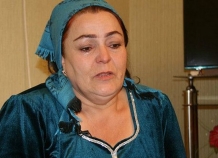
DUSHANBE, December 4, 2015, Asia-Plus – Twenty-six-year-old resident of the Tajik southern city of Kulob, Bakhtiyor Sherov – also known as Abu Ahmad Tajiki – is believed to be the first Tajik jihadist killed while fighting for Islamist terrorists in Syria.
His relatives and friends say he was calm and joyful young man and they cannot answer the question how Bakhtiyor found himself among jihadists in Syria.
Bakhtiyor Sherov was reportedly killed fighting with the Second Brigade of the ““Caucasus Emirate” in March 2014 in Aleppo.
Bakhtiyor’s mother, Khosiyat Sabourova, 49, told the
BBC’s Russian Service
that Bakhtiyor was not particularly pious before he left for Russia in 2013.
According to her, Bakhtiyor entered the Military Lyceum in Dushanbe after 8th grade . “It was my choice. I dreamed about my son becoming military officer, but he could not continue military education because we did not have money for that,” Khosiyat Sabourova said.
“When Bakhtiyor returned to Kulob, I insisted that he should study Islam. Bakhtiyor studied basic fundamentals of Islam with local known cleric Hoji Mirzo. Bakhtiyor had good voice and became muezzin,” she noted.
According to her, Bakhtiyor had gone to Moscow several times seeking better employment opportunities. “There were no any signs of aggression and radicalism in him,” said Khosiyat Sabourova.
“Bakhtiyor had read a lot and tried to live in accordance with Islamic norms.”
A neighbor from Kulob, interviewed by
RFE/RL’s Tajik Service
shortly after Bakhtiyor’s death said that he was “calm young man, who never walked at night and respected his mother.”
According to some media outlets, after leaving Kulob in spring 2013 in search of work, Bakhtiyor Sherov arrived in Syria where he joined the Second Brigade of the “Caucasus Emirate.”
Meanwhile, Edward James Lemon of the University of Exeter, who tracks Tajik jihadists in Syria, noted that practically all Tajik jihadists fighting in Syria and Iraq are young men.
Second, most Tajik jihadists are recruited in Russia.
Third, many of the fighters did not express an interest in religion before they left Tajikistan. Like many young Muslims who join extremist groups, the Tajik recruits appear to lack knowledge of the Qu’ran, Sunnah, Sharia, or hadith. Potentially, this makes them more susceptible to the messages of extremist groups- which often have weak theological groundings.
Fourth, social connections matter. A number of the recorded fighters are members of the same family or from the same village. Mr. Lemon noted in September 2014 that a quarter of the recorded Tajik jihadists are from the southern city of Kulob. Other fighters have come from the north of the country and areas around Dushanbe. Interestingly, no recorded militants come from the Rasht Valley, an area of the country long-associated with “radical Islam,” Lemon noted.
Tajik authorities have said that there are around 500-700 Tajik nationals fighting in Syria and Iraq and that more than 150 of them had died.