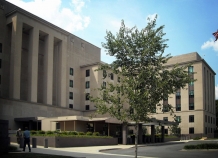
DUSHANBE, April 14, 2016, Asia-Plus — The U.S. State Department says in a new report, released on April 13, that the world faces a “global governance crisis” as both governments and nonstate actors increasingly infringe on human rights.
In its annual human rights report, the U.S. State Department says that “authoritarian governments” are reacting against an increasingly strong “civil society” throughout the world “because they fear public scrutiny, and feel threatened by people coming together in ways they cannot control.”
“In 2015, this global crackdown by authoritarian states on civil society deepened, silencing independent voices, impoverishing political discourse, and closing avenues for peaceful change,” the report says.
The report accuses governments across the former Soviet Union of both overt repression of political freedoms and bureaucratic measures aimed at stifling opposing voices.
The State Department report says Tajikistan, Uzbekistan, and Kazakhstan in 2015 all enacted new legislation against nongovernmental groups “that could restrict operating space for civil society organizations.”
The report notes that Tajikistan is an authoritarian state dominated politically by President Emomali Rahmon and his supporters. The most significant human rights problems included citizens’ inability to change their government through free and fair elections; torture and abuse of detainees and other persons by security forces; and repression of political activists and opposition groups. Other human rights problems included restrictions on freedoms of expression, press, and the free flow of information, including the repeated blockage of several independent news and social networking websites; poor religious freedom conditions; violence and discrimination against women; torture in the military; arbitrary arrest; denial of the right to a fair trial; harsh and life-threatening prison conditions; prohibition of international monitors’ access to prisons; limitations on worker rights; and trafficking in persons, including sex and labor trafficking. Officials in the security services and elsewhere in the government acted with impunity. There were very few prosecutions of government officials for human rights abuses, and no officials have been convicted of torture.
The report says Tajikistan”s government “took steps to eliminate political opposition in 2015,” including the Islamic Revival of Tajikistan (IRPT), which was recently banned and whose leaders have faced prosecution in secret trials.