
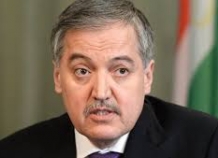
DUSHANBE, June 13, 2016, Asia-Plus – Tajik foreign minister has criticized some partner’ countries’ double standard policy towards terrorism.
In a statement delivered at the High-Level Experts Meeting on Finding Development Solutions to Preventing Violent Extremism in Dushanbe, Tajik Foreign Minister Sirojiddin Aslov noted on June 13 that Tajikistan has done considerable work in the framework of international obligations on preventing terrorism.
“Having an extensive common border with Afghanistan and being on the front line of the fight against any kind of threat, Tajikistan has been carrying out all-round work in this direction inside the country despite limited economic opportunities. Unfortunately, these efforts not always meet with support from some of our partners. Double standards used by them do not allow adequately and impartially assessing the situation, potential threats and taking into consideration the features of our region,” Aslov said.
“International and regional cooperation in this sphere facilitates development and implementation of further measures to counter violent extremism. This is especially important under conditions of complicated military and political situation in the Middle East and Afghanistan,” Tajik foreign minister noted.
Aslov called on international community to provide financial and technical assistance to Afghanistan.
He also called on international community to cautiously and sensibly assess events taking place in different regions, taking into account the specifics of each country.
“Terrorist acts in one regions are perceived as a crime against mankind, while in other regions similar crimes are assessed differently and remain without proper condemnation,” Tajik foreign minister stressed.
Aslov noted that the Government of Tajikistan, in collaboration with international partners, was elaborating the national strategy for prevention of violent extremism and radicalization leading to terrorism.
The High-Level Experts Meeting on Finding Development Solutions to Preventing Violent Extremism kicked off in Dushanbe on June 13.
The main objective of this three-day meeting is to advance our understanding of radicalization in Central Asia and the broader region and find human rights-based development solutions for national and regional responses to radicalization and violent extremism. The meeting will further function as the basis for developing a UNDP program to address radicalization in Central Asia and positioning UNDP as a lead policy and practice actor and a partner of choice for development programming in this area.
The specific objectives of the meeting include the following: develop a common understanding of radicalization in Central Asia, the regional and local ideologies and forms that it takes, the groups that are vulnerable to it, and its impact on development in Central Asia; examine current approaches to the prevention of violent extremism, including the use of social and other forms of media, their successes, failures and gaps; identify entry points and opportunities for UNDP to formulate development programming which can effectively contribute to preventing the conditions conducive to radicalization; understand the gender differentiated roles played by men and women in extremist organizations, and the necessity for a gender-sensitive approach to preventing violent extremism; and focus on the vulnerability of young adults, both men and women, and the need for engagement and opening of economic and social opportunities for them.
The meeting engages experts and practitioners by sharing their own best practices, lessons learned and experiences. The format includes panels and presentations, group discussions, experience sharing and plenary exercises.
Participation at the meeting include around 70 participants drawn from partner institutions; academia,
research centers, religious and community leaders, de-radicalized individuals, former FTF, civil society
organizations, governments, regional organizations and other agencies and departments of the United
Nations system in the region (e.g., UNICEF, UNRCCA).