Tajik clothing companies enhance their knowledge on wholesaling

Representatives of the Tajik textile and clothing companies will benefit from a two-day workshop on effective wholesales that is taking place in Dushanbe from March 15-16. The training is programmed and being held by well-known Russian company Fashion Consulting Group and is organized under the International Trade Center (ITC)’s project funded by the Government of […]

Representatives of the Tajik textile and clothing companies will benefit from a two-day workshop on effective wholesales that is taking place in Dushanbe from March 15-16.

The training is programmed and being held by well-known Russian company Fashion Consulting Group and is organized under the International Trade Center (ITC)’s project funded by the Government of Switzerland within its Trade Cooperation Program (TCP) in Tajikistan.

ITC Tajikistan says that during the two-day workshop and consultations after it the leaders of Tajikistan textile and clothing industry will learn how to launch the wholesale of their products, how to manage it, improve and control it, as well as will be introduced to stimulation methods of developing and promoting their wholesale businesses.

Ms. Natalya Chinyonova, Fashion Consulting Group’s expert and trainer on retail business technologies, says, the training includes sessions on wholesale organization and management in companies, evaluation of effectiveness of a company’s wholesale strategy, and analyze of the market’s geography.

She says: “The training participants will also learn to analyze the potential wholesale clients’ data base, and define the strategic price formation.  Wholesaling is a noteworthy part of distribution of products, as provides wider and faster opportunities to reach final customers and make higher and instant revenue in the business.”  

The International Trade Center, supported by the Government of Switzerland, aims to increase the export competitiveness of the Tajik textile and clothing sector by supporting sector companies, and relevant trade support institutions from both public and private sectors.
Join us on social media!

Article translations:

Related Article

Оби зулол
Tenisi
Оби зулол

Most Read

Коммерсбонк Точикистон

Recent Articles

President of Tajikistan instructed to develop measures for stabilizing the cement market within a week

Despite the increase in the production of this building material in the country, the domestic market faced a shortage, supply disruptions, and a sharp rise in the price of the building material.

Gusty winds and mudslides damage houses, roads, and cars in Dushanbe and some other regions

At least 9 vehicles were damaged, including three in Dushanbe and six in Vahdat.

The US struck military facilities in Iran. Trump expressed dissatisfaction with Tehran’s proposals and threatened Oman.

Earlier, Iran's state TV reported receiving a draft unofficial framework agreement between Tehran and Washington to settle the conflict.

How much did Tajikistan’s budget earn from the “Google tax”?

The law is already 5 years old, but the Tax Committee provided data only for the last 2 years.

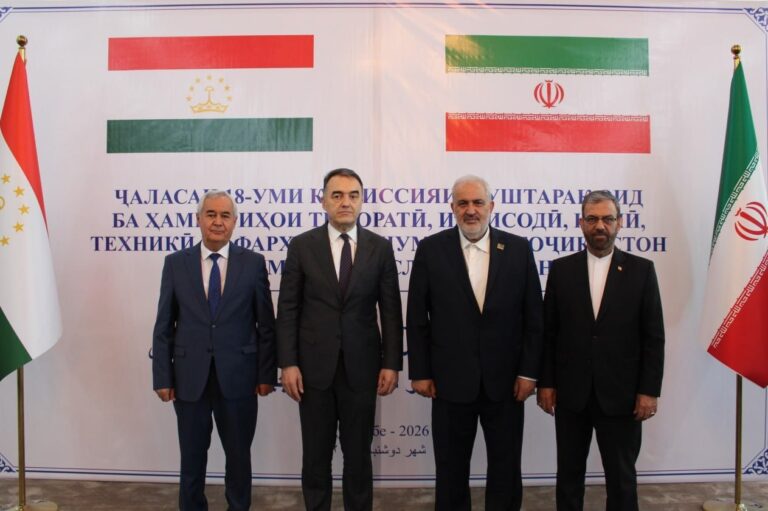
The bilateral trade between Tajikistan and Iran increased by 8% in Q1 2026

Another meeting of the joint intergovernmental commission of the two countries took place in Dushanbe.

Russia and Taliban government sign military-technical cooperation agreement

The document may open up opportunities for the exchange of weapons, military technologies, and other types of defense cooperation.

“Hit with fists on the lower back and abdomen.” A teacher from Nurobod, claiming he was beaten by a student’s brother, details the attack

According to him, he is being threatened with murder, and law enforcement agencies have not yet detained the attacker.

International internet starts coming back in Iran after long shutdown 

Western media reports says Iranians ​isolated by a long...

Tajikistan listed among countries with low generative AI usage

Among the Central Asian countries, Kazakhstan has the highest rate.

Prices in Tajikistan rise almost 2% in January-April: apples, fuel, and utilities become particularly more expensive

In April, inflation was 0.6%: food products became more expensive, non-food products increased in price comparatively less, and tariffs for paid services remained unchanged.