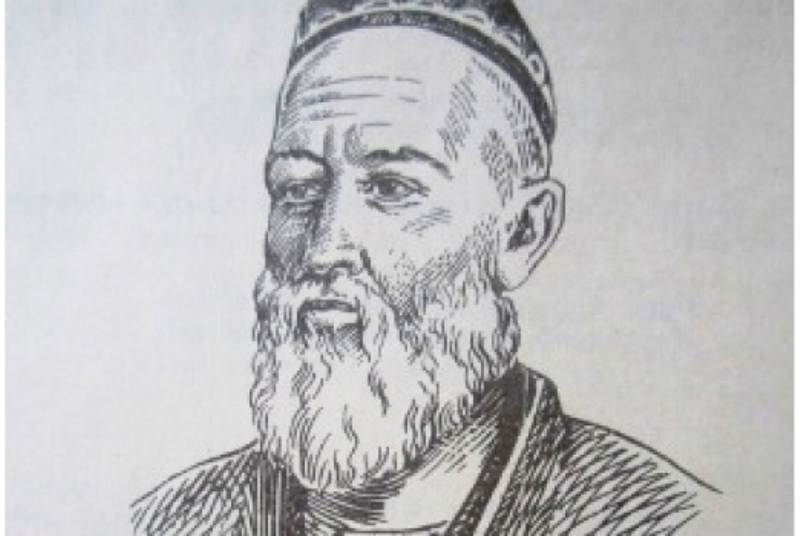
A government session that took place on May 30 made a decision on celebrating the 400th anniversary of Tajik poet Mirobid Saiido Nasafi.
The session also made decisions on the program of development of the Committee for Emergency Situations and Civil Defense designed for 2018-2020 and celebration of the 550th anniversary of Tajik poet and musician Najmiddin Kavkabi, according to the Tajik president’s official website.
Besides, the session endorsed a number of draft laws and sent them for consideration to the Majlisi Namoyandagon (Tajikistan’s lower chamber of parliament).
Mirobid Saiido Nasafi, Tajik poet (b. Nasaf, present-day Qarshi, ca. late 1640s; d. Bukhara, between 1707 and 1711).
Saiido Nasafi is considered the greatest Tajik poet of the 17th century. In his own day he was recognized as a master of the ghazal and moḵammas, and was immensely popular. Although the "Indian style" influenced his poetic means in significant ways, especially in the use of complex comparisons and allegories, and he owed much to Saʿeb of Tabriz (ca. 1592-1676, q.v.), Saiido achieved renown as an innovator of form, content, and language. His poetry has come down to us in eleven manuscript copies of his collected works.
Among the poetic genres he practiced, the ghazal, of which he wrote some 550, comprising 4,600 distichs (bayts) or over half of his Kulliyot, predominates.
Saiido was drawn to yet another genre of poetry, the so-called artisan verse (shahroshub). Others before him had practiced it, notably Saifi Bukhoroi (d. 1503), but Saiido perfected it. He wrote a series of shorter poems, each between 23 and 53 bayts and each devoted to a separate craft.
Saiido devoted a narrative (doston) to craftsmen. The Bahoriyot comprises 184 bayts, and was probably completed in 1679. It, too, expresses his critical views on social conditions in Bukhara, not openly, but as an allegory. The plot is straightforward: eighteen animals, from a mouse to a lion, in pairs, praise themselves while denigrating their opponents. When the final speaker, an ant, chastises them all for their vanity, the animals feel remorse and ask forgiveness of one another. For Saiido, the ant represents the working classes, whose virtues and superiority to all other classes, represented by the other animals, he extols.